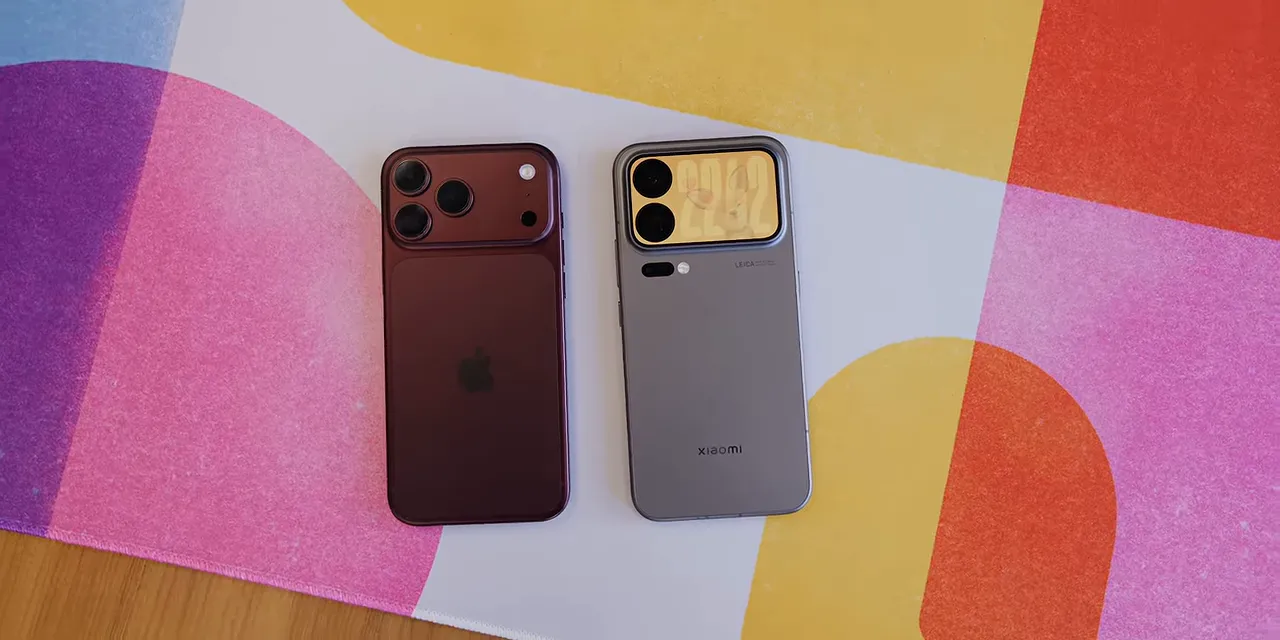
The Xiaomi 17 Pro Max was one of the most interesting phones of 2025. It looked a lot like an iPhone, but the whole point was to take the iPhone 17 Pro Max and one-up it. Bigger battery. More ambitious hardware. An entire extra screen on the back.
Now Xiaomi is back, within a month of the iPhone 18 Pro Max, doing basically the same thing again. Except there is a distinction: this phone isn't just trying to one-up the iPhone. It's trying to one-up the iPhone's update.
So, yes, the Xiaomi 18 Pro Max still has a familiar shape, familiar aesthetics, and plenty of software that will feel immediately recognizable to an iPhone user. But underneath that familiarity, there is a lot going on.
Quick Summary
- Xiaomi's privacy display adds useful side-angle protection with image-quality and viewing-angle trade-offs.
- An 8,500mAh battery and fast charging are major hardware strengths.
- The upgraded telephoto camera and rear-screen viewfinder make photography especially compelling.
- Restrictive button controls show where Xiaomi's software still needs refinement.
Table of Contents
- A Privacy Display That Actually Adds Something New
- A 2-Nanometer Chip With a Ridiculous Name
- An 8,500mAh Battery, Without the Weight Penalty
- Two 200-Megapixel Cameras, and a Much More Interesting Zoom
- The Rear Screen Is Still the Standout Feature
- A Useful Extra Button, Held Back by Software
- The Real Goal: Make Switching From an iPhone Feel Easy
A Privacy Display That Actually Adds Something New
The iPhone's big front-facing change this year is a slightly smaller Dynamic Island. Xiaomi already had a small hole-punch camera, so there wasn't much left to shrink without moving the camera under the display and taking a serious image-quality hit. The ultrasonic fingerprint reader was already under the screen, and it was already very fast.
Instead, Xiaomi borrowed an idea from the Galaxy S26 Ultra: a privacy display.
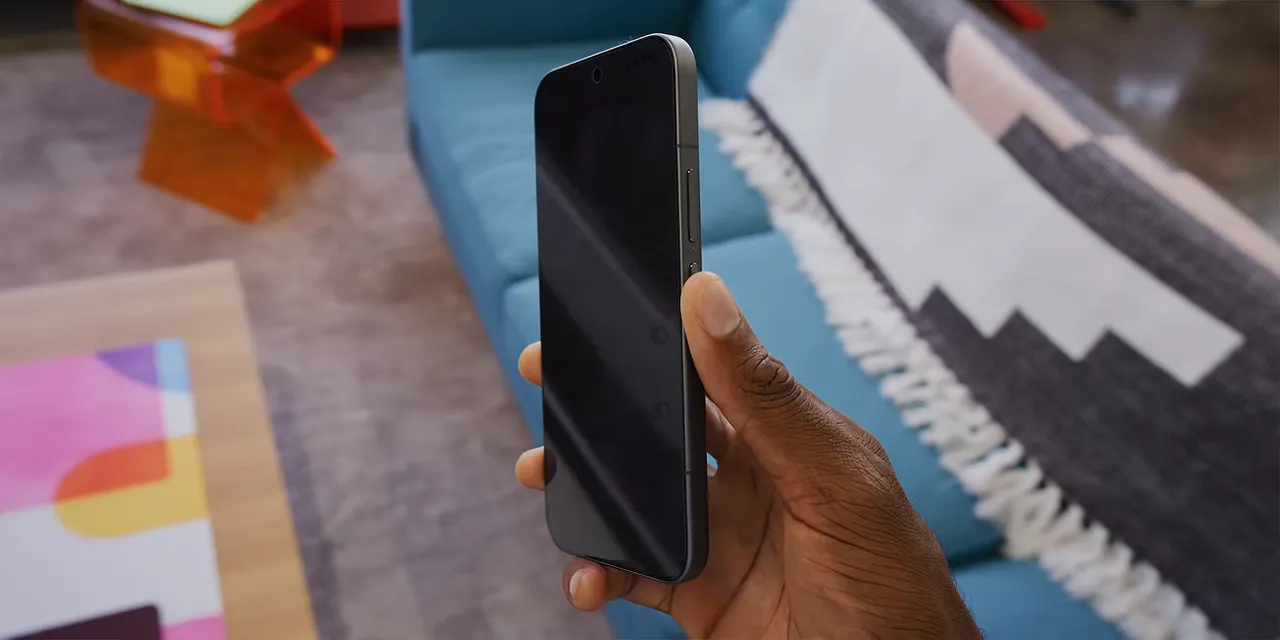
With a button press, the screen can dramatically restrict its side-viewing angles. You can enable it across the entire display, set it to activate for particular apps or notifications, or have it turn on in certain places.
Then Xiaomi added something pretty funny: gaze detection. If the front camera detects somebody other than you looking at the screen, the phone can notify you and suggest switching on the privacy display. Your phone is effectively telling you that somebody is looking over your shoulder.
The Display Trade-Offs
Xiaomi's implementation isn't quite the same as Samsung's. Samsung uses a combination of normal and narrow-viewing pixels. Xiaomi calls its approach HyperRGB, with a complete red, green, and blue subpixel array for every pixel. Switching into privacy mode produces less of a perceptible resolution drop.
There is a catch, though. Xiaomi's privacy mode restricts the view from the left and right, not from above and below. So it preserves more image quality, but it doesn't obscure the screen from every direction.
Some of the other compromises are still here, too. Overall viewing angles are a little worse, and there's a rainbow-like sheen when you look at the display off-axis. Xiaomi has made the whole panel brighter to help compensate, reaching a stated 4,000 nits.
Personally, I think the privacy feature is worth those trade-offs. It's a genuinely useful upgrade, not just another number on a spec sheet.
My small complaint is where Xiaomi put the controls. You would expect a feature called privacy display to live in Display settings. Nope. It's under Privacy settings. Fine, technically logical, but still a little odd.
A 2-Nanometer Chip With a Ridiculous Name
Apple moved from the A19 Pro to the A20 Pro, its first 2-nanometer chip, and got substantial performance gains. Xiaomi's answer is also a first-generation 2-nanometer upgrade: the Snapdragon 8 Elite Extreme Gen 6.
That name. Qualcomm, please.
For clarity, there are two versions involved here:
- Xiaomi 18 Pro: Snapdragon 8 Elite Gen 6.
- Xiaomi 18 Pro Max: Snapdragon 8 Elite Extreme Gen 6, with slightly higher clock speeds.
The Extreme version has cores reaching 5 GHz, which is a pretty wild number to be talking about in a phone. Benchmarks show roughly a 15 to 20 percent improvement over the already excellent chips from last year.
This is one of the first phones shipping with the new processor, and chips from Qualcomm's Snapdragon platform will be powering plenty of other high-end phones over the following year. I'm curious to see how those implementations compare.
Here, Xiaomi pairs the chip with 16GB of LPDDR5X RAM, UFS 4.1 storage, and a huge vapor chamber. Moving around the interface and opening apps, it absolutely flies. Even this Chinese version, with its considerable collection of preinstalled apps, feels extremely quick.
The hardware could comfortably belong in a gaming phone. But this isn't a gaming phone. It's just Xiaomi's regular top-end flagship.
An 8,500mAh Battery, Without the Weight Penalty
The iPhone's battery improvements come from a combination of its more efficient chip and a little extra capacity. Xiaomi gets the new-chip benefits, too, but then takes its battery from 7,500mAh to 8,500mAh in the Pro Max, thanks to higher silicon density.
These capacities are getting ridiculous. The OnePlus 16 launched in China with a 9,000mAh battery, and phones are starting to cross the 10,000mAh mark.
At some point, it starts feeling like the megapixel race. A bigger number doesn't automatically guarantee the best real-world result. Software, efficiency, and how you use the phone still matter. But having that much capacity certainly doesn't hurt.
What's especially impressive is what Xiaomi didn't sacrifice to get there. The SIM tray is still here, and the phone doesn't weigh more than the iPhone Pro Max it's competing against.
Fast Charging That Makes a Difference
Xiaomi still includes a 100W charger in the box. The iPhone's move to 50W is welcome, but it's hard to compete with the charging rates these silicon-carbon battery phones are achieving.
In a quick charging test, the Xiaomi stayed around 80W for five minutes and went from 12 percent to 25 percent. That's a useful amount of charge in the time it takes to make a quick stop.
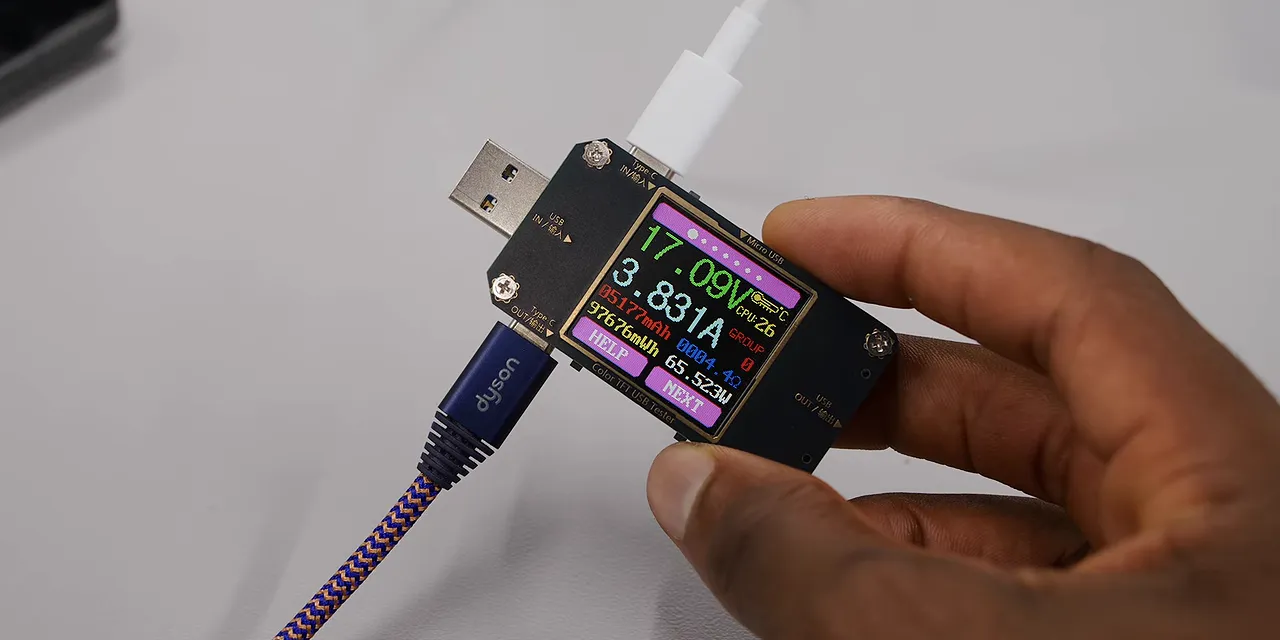
There's also 50W wireless charging with the right accessory, plus reverse wireless charging. The battery is large enough that the idea of using this phone as a power bank for an iPhone, charging that phone from empty to full and still having capacity left for your own day, becomes part of the pitch.
That's a pretty crazy flex for something that's still supposed to be your phone.
Two 200-Megapixel Cameras, and a Much More Interesting Zoom
The iPhone 18 Pro Max's camera update keeps its 48-megapixel cameras but adds a variable-aperture lens to the main camera. It's an interesting feature, particularly with manual controls, although the resulting differences can be subtle.
Xiaomi went in a different direction. Rather than bringing back three 50-megapixel cameras, it rebuilt the system around:
- A 200-megapixel main camera.
- A 200-megapixel telephoto camera with 3.2x optical zoom.
- A 50-megapixel ultrawide camera.
There is no variable aperture here. Xiaomi is leaning on the upgraded sensors instead, and the telephoto is the particularly interesting one. Its sensor is about the size of the primary camera sensor in plenty of other phones.
That combination of a large sensor and 200-megapixel resolution gives you a lot of room to crop beyond the native 3.2x view. And in use, the zoom upgrade is very welcome.
The main camera was already huge and very good last year. It's huge and very good again. But the telephoto is the kind of upgrade that makes me want to go out and take more zoom photos. It's a great example of a tool changing your behavior: give me a really good zoom camera, and suddenly I'm finding more things to photograph with it.
The rest of the camera app is appropriately full-featured. There's a dedicated 200-megapixel mode, different Leica color profiles, and 8K video recording.
The ultrawide is the weak link. It still feels like something of an afterthought next to those two much more ambitious cameras, which is almost apparent just from looking at the hardware. Still, I'd rather have it than not.
The Rear Screen Is Still the Standout Feature
All those camera upgrades come with an advantage that most phones simply don't have: a rear display you can use as a viewfinder.
That means you can frame selfies using the much more capable rear cameras instead of relying on the front camera. It's one of the most practical uses for the extra screen, and it makes that big camera system useful in another way.
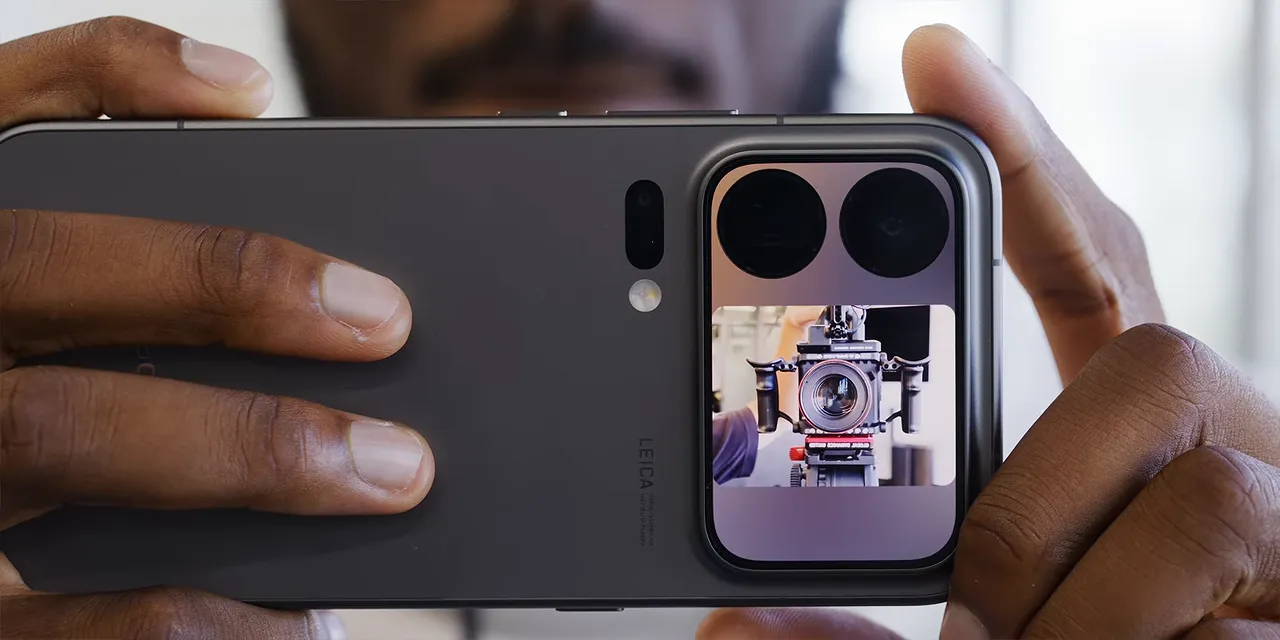
Xiaomi has also made the camera rings flush with the glass. Swiping across the rear screen to open the camera feels smoother as a result. Of course, running your finger across that area might also make it easier to smudge the camera glass. Small trade-off.
Otherwise, the appeal remains the same. The rear screen is highly customizable, with options including a desk calendar, step counter, weather information, and animated fuzzy pets. There are more designs available to download, too.
Does the camera island have a familiar shape? Absolutely. But is the iPhone putting a tiny animated animal or a desk calendar back there? No. This is where Xiaomi is doing something that feels entirely its own.
The Speaker Placement Is Less Convincing
There are now speakers tucked beneath the rear-screen area, one at the top and one at the bottom. I thought that placement might do something unusual to the sound, but it doesn't dramatically change the quality.
Mostly, it sounds like the speakers are facing away from you. Cupping a hand behind the phone helps direct more of the sound toward you. It's not a disaster, but it's not an obvious improvement either.
A Useful Extra Button, Held Back by Software
Xiaomi added a new side button, and somehow managed to restrict it more than Apple restricted its Action Button.
Officially, this is an AI button. A single press can either do nothing or save what you're doing to Xiao AI memory. That's it. I don't use Xiao AI, so neither option does much for me.
A long press is more useful. You can assign it to:
- Start a voice note.
- Switch to silent mode.
- Enable Do Not Disturb.
- Turn on the privacy display across the whole screen.
That last option is a nice match for gaze detection. Get an alert that somebody is looking at your screen, hold the button, and enable privacy mode.
But I'd still like to launch an app of my choice with a single press. The hardware is already there. Just let people do more with it.
The Real Goal: Make Switching From an iPhone Feel Easy
A little context matters before treating all this as a final buying recommendation. These are hands-on impressions, not a full review. Xiaomi supplied the phone, and this is the Chinese version. I was able to install Google Play and spend time using it, but I couldn't make it my everyday phone here. A global launch is rumored, not confirmed.
I also haven't used the built-in assistant enough to assess it. From what I've read and heard, it's tightly integrated with Xiaomi's wider ecosystem. And that ecosystem is substantial: tablets, smart lights, appliances, and even cars.
That broader picture helps explain the phone's familiar software. The goal isn't only to win a spec comparison. It's to make an iPhone user feel comfortable switching.
A lot of the stock apps look and behave similarly. Like the Dynamic Island? Xiaomi has its own version. Prefer quick controls accessed from the top-right corner? Those are here, too. Into the translucent Liquid Glass aesthetic? There's a familiar-looking option for that as well, even if the name is different.
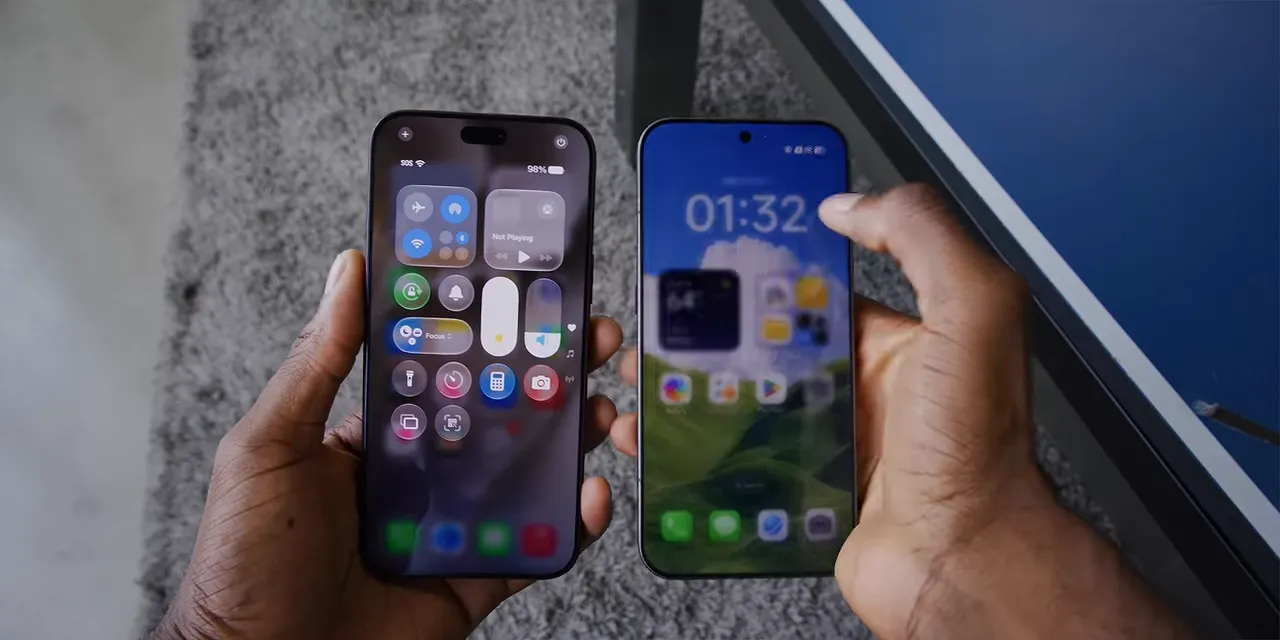
And Xiaomi's willingness to offer familiar alternatives doesn't stop with this Pro Max. There's also its own take on the iPhone duo concept.
Usually, the response to these comparisons is that numbers aren't everything. Android flagships can have enormous batteries, huge camera resolutions, and incredible benchmark scores, while the iPhone's appeal comes from the experience: optimization, smoothness, and efficiency.
That's a fair point. But those things don't have to be mutually exclusive.
The Xiaomi 18 Pro Max already has the raw horsepower, the battery capacity, the ambitious cameras, and a rear screen that genuinely adds something different. A few software decisions, especially around the extra button and feature organization, still need work.
If Xiaomi can pair this hardware with equally thoughtful optimization, it can have both. Not just bigger numbers, but the experience to make those numbers matter. That's what makes this phone so interesting.


