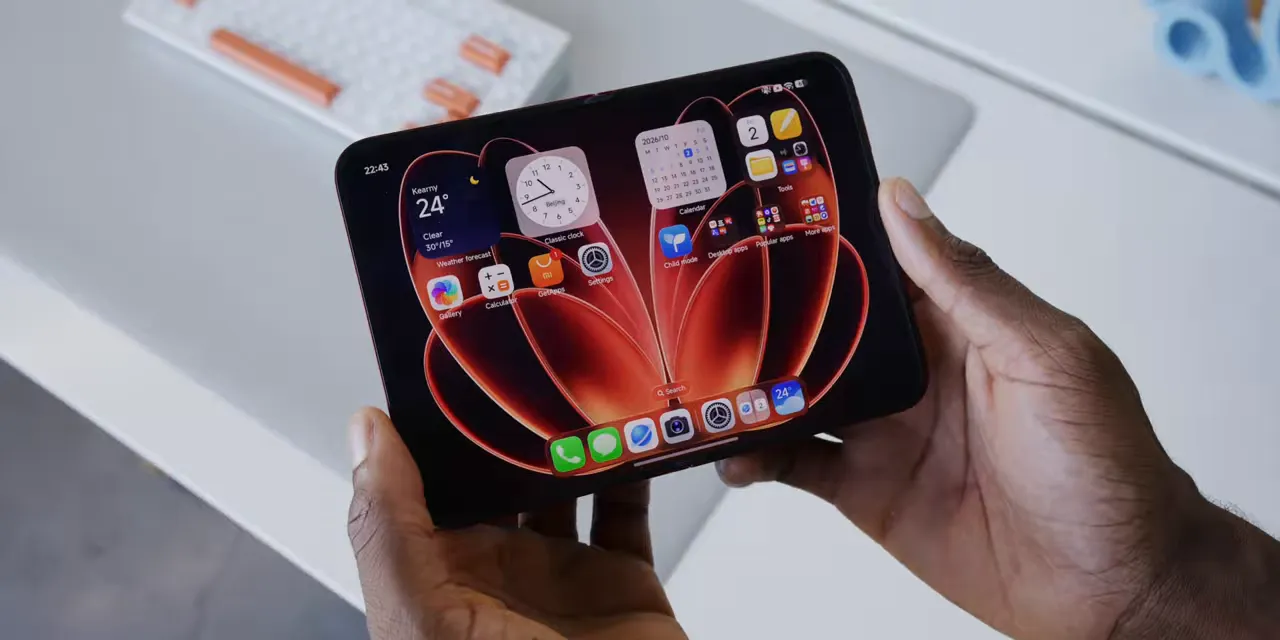
This is not an iPhone Duo. It is the Xiaomi 18 Fold, a folding phone with the same height and width, down to the millimeter, and the same aspect ratios for both the inside and outside screens. Even that distinctive D-shaped display treatment looks familiar.
But the interesting part is not just how closely Xiaomi has matched Apple's folding phone. It is that Xiaomi announced its phone first, then managed to beat the iPhone on several pretty important hardware specs.
So there are really two questions here: How do two phones end up looking this similar when they launch just two days apart? And once you get past the resemblance, which differences actually matter?
Key Takeaways
- Supply-chain leaks and faster development can let a similar phone launch before its apparent inspiration.
- Xiaomi combines a lighter body with a 6,000 mAh battery and fast charging.
- A dedicated telephoto camera gives Xiaomi more zoom flexibility than the iPhone Duo.
- Apple emphasizes display continuity, while Android offers more flexible multitasking and practical foldable camera controls.
How Xiaomi Can Launch First and Still Borrow Apple's Design
The timing is what makes this confusing. Xiaomi unveiled the 18 Fold on September 7, 2026. Apple unveiled the iPhone Duo on September 9. Naturally, that creates two competing reactions: Apple copied Xiaomi, or Xiaomi somehow copied a phone that had not been announced yet.
Neither launch date tells you the full story. Announcement order is not development order. These products take many months, usually years, to develop.
Apple is extremely secretive about unannounced hardware. The people working on a new product can operate under restrictions so tight that they cannot even tell their families what they did at work. While a design stays inside Apple's walls, it can remain pretty well contained.
Eventually, though, Apple has to manufacture it.
That means talking to suppliers and factories, asking about production capabilities, and ordering components. A folding phone requires folding OLED panels of a particular size, hinges that work a particular way, and chassis built to specific dimensions.
Those conversations spread information beyond the company. And those other companies are not necessarily as good at keeping secrets.
This is how fairly accurate physical mockups can exist months before a new iPhone arrives. A competitor does not need Apple's exact final CAD files to get a useful picture of the product. Enough information about dimensions, components, and proportions can provide a starting point.
Then speed becomes the advantage. A company willing to move quickly can commit to its own interpretation and aim to announce it before Apple's fairly predictable September event.
We have seen this kind of timing before. Samsung teased the ultra-thin phone that became the Galaxy S25 Edge months before the iPhone Air's September announcement, and Samsung's phone arrived first.
That does not make the launch calendar proof of who copied whom. But it does explain how a phone can arrive first while still appearing to borrow from an unreleased competitor. And Xiaomi has not exactly been shy about borrowing Apple's aesthetic in an effort to attract some of Apple's customers.
Software is a different story. It does not have to travel through that same physical supply chain, so it tends to leak less. That distinction becomes important later.
The Same Shape, With Less Weight
I like the passport-style shape of the iPhone Duo. It is compact and reachable in a way that makes sense for a folding phone. What I do not love quite as much is the weight.
At 254 grams, the Duo is the heaviest iPhone so far. It feels substantial, and I am sure some people will associate that heft with quality.
But after spending a lot of time with foldables, I tend to appreciate the opposite: something lighter and less fatiguing to hold.
The Xiaomi 18 Fold is a full 30 grams lighter, putting it much closer to the weight of a normal large slab phone. That is a meaningful difference in your hand, especially when you are holding the phone open for a while.
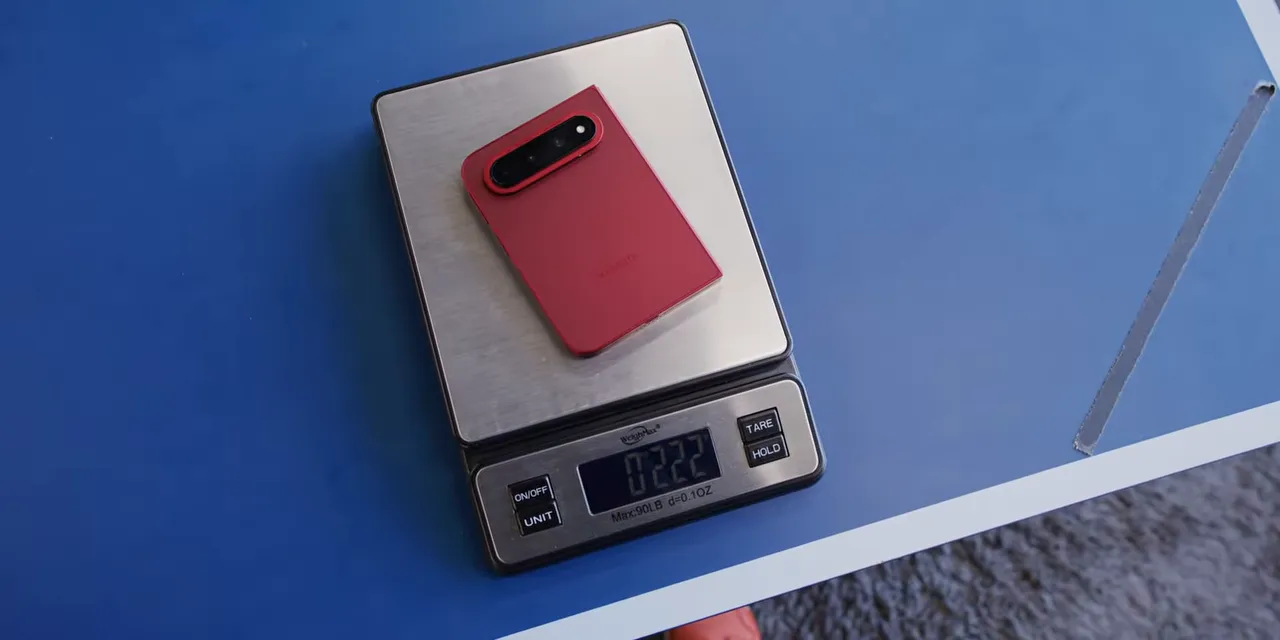
What makes that more impressive is that Xiaomi has not achieved it by putting in a tiny battery.
A 6,000 mAh Battery Makes Sense in a Foldable
The Xiaomi 18 Fold has a 6,000 mAh silicon-carbon battery, along with 67-watt wired charging and 50-watt wireless charging with the right accessory.
Those are strong numbers for a phone that is also lighter than the Duo.
Apple's exact battery capacity is still unknown at this stage. Estimates put the Duo around 5,000 mAh combined across its two sides, which would be smaller than the iPhone 18 Pro Max's battery. That remains an estimate, not a confirmed specification.
My concern, ahead of full testing, is that battery life could be either the weakest or second-weakest part of the Duo. Apple is typically conservative with physical battery capacity. It is not using silicon-carbon here, and it is not chasing particularly fast charging.
The A20 Pro may be great, but it still has a roughly 7.5-inch display to power when the phone is open.
That is a familiar foldable problem. The Galaxy Z Fold 8 has a 4,800 mAh battery, and using its large inner screen for an extended period drains it noticeably faster than using the outside display.
A folding phone is exactly where I want to see a high-capacity silicon-carbon battery. You have two thin halves, less available internal volume, and a hinge splitting everything down the middle. Then you unfold it and ask it to power a huge screen all day.
Capacity alone is not a battery-life verdict. But fitting 6,000 mAh into this form factor is a very useful place to start.
Three Cameras Instead of Two
The other obvious difference is the camera bar.
The iPhone Duo has a primary camera and an ultrawide. There is no dedicated zoom camera. Xiaomi fits three cameras on the back:
- Primary: 200 megapixels with a 1/1.56-inch sensor.
- Ultrawide: A separate camera for wider shots.
- Telephoto: 50 megapixels with 3.5x zoom.
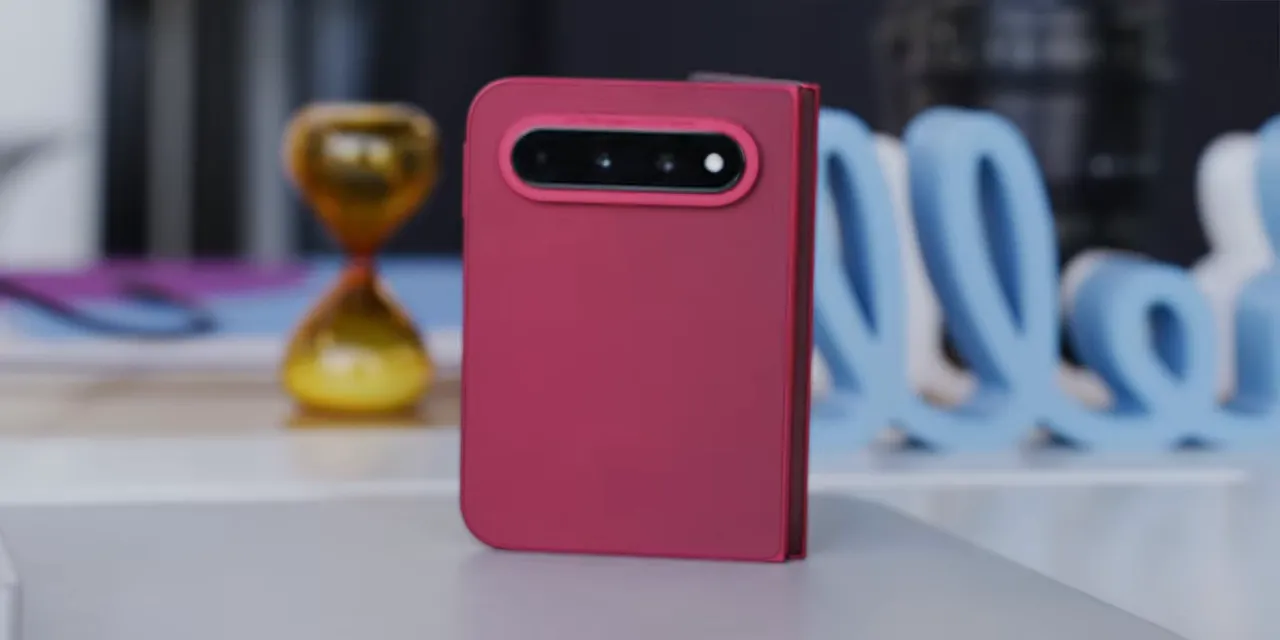
Camera hardware is a challenge in these ultra-thin foldables because there is so little depth available. That same space constraint is why the iPhone Duo does not have Face ID. There simply is not much room for extra hardware or large camera sensors.
Even with that limitation, Xiaomi appears to have done more with the space, at least on paper.
My best guess is that the Duo uses the same main camera as the iPhone 17E. Apple's descriptions match, including the 48-megapixel resolution and Hybrid Focus Pixels wording. If that identification is correct, it is a 1/2.55-inch sensor, substantially smaller than Xiaomi's 1/1.56-inch sensor.
That is not a final judgment on image quality. We still need to see how the Duo performs and whether the A20 Pro's image signal processor gets anything extra out of that hardware.
But Xiaomi has a clear hardware advantage in zoom versatility: it actually has a dedicated telephoto camera.
Also, a small ergonomic bonus: I like the camera bar as a place to rest a finger when holding the open phone in portrait orientation. It is almost a little handle. Probably a very effective way to smudge the cameras, too, but it feels nice.
The Inner Display Has a Couple of Trade-Offs
Xiaomi has gone with a standard hole-punch selfie camera in the corner of the inner display. Apple hides its inner camera underneath the screen.
I would expect the conventional hole-punch camera to have the image-quality advantage. And honestly, tucked into the corner, it does not bother me much.
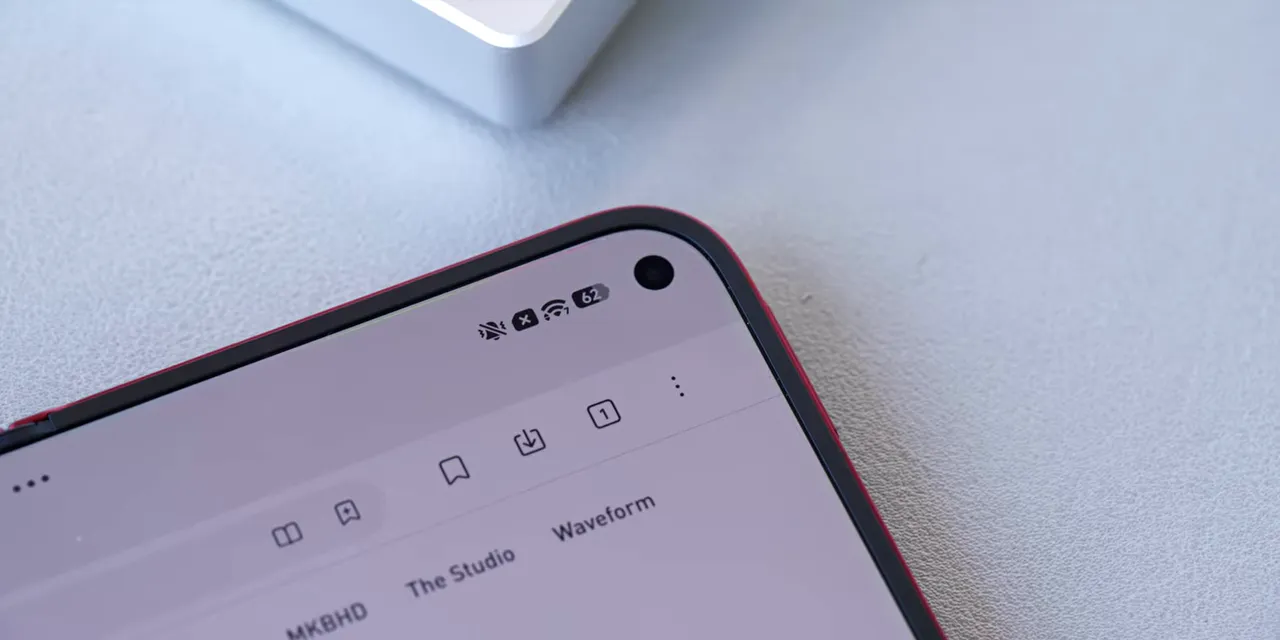
The uninterrupted surface of the iPhone Duo is definitely cool, though. Without a visible cutout and with such a well-hidden crease, it gets closer to that little-iPad feeling.
Xiaomi's crease is more visible. It is not terrible, but there is no anti-glare finish, and reflections can occasionally draw your eye toward the fold.
If the iPhone Duo and Oppo Find N6 earn a subjective nine out of ten for making the crease disappear, I would put Xiaomi around a seven. Noticeable sometimes, but not problematic.
So this is not a clean sweep for Xiaomi's hardware. Apple has made some different trade-offs, and the cleaner inner display is one of the benefits.
Software Is Where the Phones Start to Feel Different
Remember how software is harder to uncover through supply-chain leaks? Apple's opening and closing animations are a good example.
The glassy transition between screens was a genuine surprise. It contributes more than you might expect to how responsive and polished the Duo feels.
Android foldables have had their own opening and closing animations for a while, but the underlying behavior is often different.
Does Closing the Phone Mean You Are Done?
On most Android foldables, closing the phone is treated as a signal that you are finished. The outside display does not simply continue the session by default. If you want to keep going, you swipe or wake it up.
I have used foldables long enough that this feels normal to me.
The iPhone Duo takes the other approach. About halfway through closing it, the outside screen lights up so the animation and your activity can flow onto that display.
I do not hate that. It is a different interpretation of the same action: Android generally treats closing as stopping, while Apple treats it as a potentially continuous transition.
Two Apps Is a Starting Point, Not the Ceiling
The first thing I want Apple to expand is multitasking.
The iPhone Duo allows two apps side by side. That is useful, but it is also the limit.
Android foldables offer a much broader range of options, including floating windows, overlays, bubble windows, and three-app arrangements. The platform's multi-window support gives some useful background on these different windowing modes.
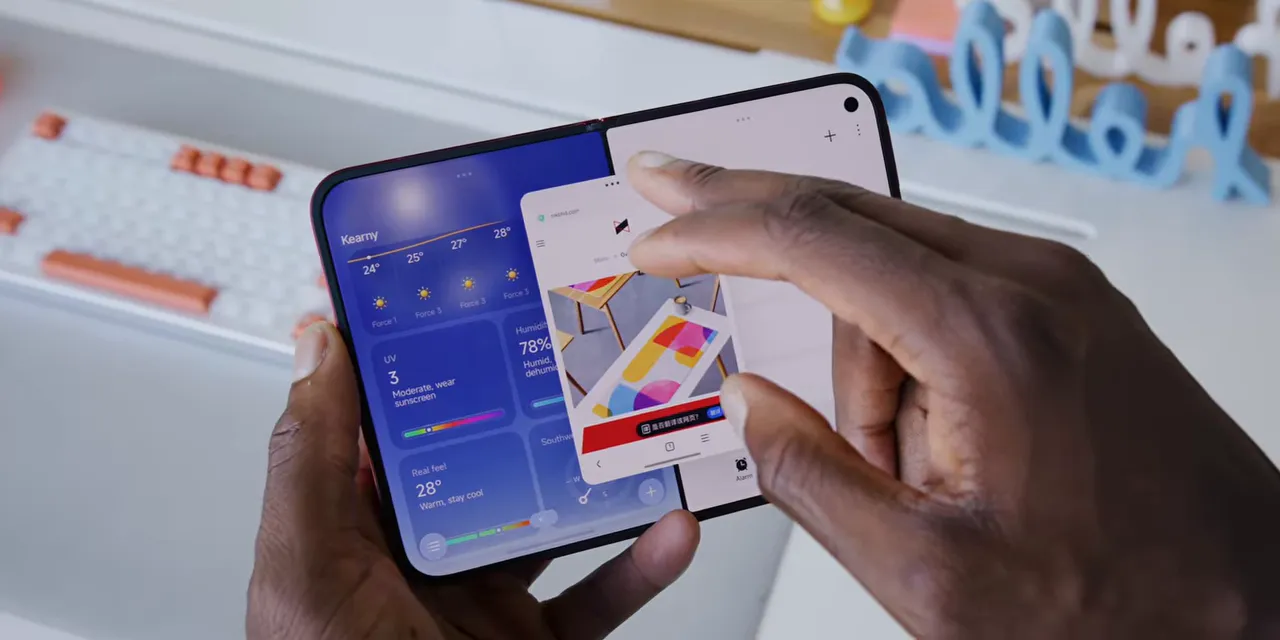
These devices are supposed to be multitasking machines. Once you open something into a small tablet, having tablet-like flexibility makes sense. Two apps is not bad. I just wonder how long it will take Apple to add a third.
A Small Camera Detail Apple Should Borrow
The second feature is less flashy, but it is smart.
When you use the rear cameras to take a photo of yourself, a foldable can put the preview on the outside screen. That means the large inner screen is facing away from you, right where your fingers may be holding the phone.
Android foldables have figured out that they should disable touch input on that inner screen during this mode. It prevents accidental taps while you are framing your photo. This is something MrMobile has highlighted, and it is exactly the kind of practical detail that comes from experience with the form factor.
The iPhone Duo does not appear to do this yet. I would be surprised if Apple did not eventually add it, but it is something that still needs checking in fuller testing.
Familiar Design, Meaningful Differences
The resemblance is hard to miss. Xiaomi has produced a folding phone with the same basic dimensions and screen proportions as Apple's, and announcing it two days earlier does not settle where that inspiration came from.
But stopping at the resemblance misses the more useful comparison.
Xiaomi offers less weight, a substantial silicon-carbon battery, faster charging, a dedicated zoom camera, and more flexible multitasking. Apple counters with a cleaner inner display and some genuinely polished software transitions.
The Xiaomi 18 Fold is not just interesting because it looks familiar. It is interesting because, within that familiar shape, Xiaomi has made several choices I would like to see more foldables make.
A Quick Desk Pad Update
Separately, our desk pad collaboration with Omnitype is now available. It is large, 4 millimeters thick, and has stitched edges plus a rubber underside to keep it in place.
There are two surface options: smooth and rough. Smooth feels like a conventional mouse pad and is probably the safer choice if you want something familiar. Rough adds texture for more precise movements, and that is my preference. The mouse pads I use tend to have that textured feel.
|


