Okay. Wow. A redesigned Tesla Roadster, a car driving up a wall, another moment hanging upside down, a flying car doing a kickflip, and a claimed 0 to 60 mph time of 0.6 seconds. As product demonstrations go, that is pretty insane.
It is also possible for an incredible engineering demonstration to distract from the product it is supposed to introduce.
That is where I land with the new Roadster. Some of this is genuinely fascinating automotive engineering with obvious performance benefits. Some of it is so extreme that I do not expect it to become a car you or I can actually buy. And the more useful details largely arrived afterward, through Tesla’s refreshed website and separate pieces from MotorTrend, Hagerty, and Top Gear.
The important distinction is not whether the demo was cool. It absolutely was. It is whether the cool thing on stage tells us anything useful about the car Tesla now promises for 2028.
Table of Contents
- Key Takeaways
- A Completely Different Roadster
- The Wall-Climbing Demo Needs Some Context
- There Are Actually Four Roadster Versions
- The Fan System Is the Most Interesting Part
- The Thrust Version Adds a Very Serious Pressure Vessel
- The Rocket Version Is an Engineering Spectacle
- The Roadster Specs I Wish Tesla Had Spent More Time On
- Will the New Tesla Roadster Actually Ship in 2028?
- Incredible Engineering, Very Effective Marketing
Key Takeaways
- The four proposed Roadster versions range from a conventional EV to an invite-only airborne demonstration machine.
- Fan-generated downforce offers meaningful grip and handling benefits, including at low speeds.
- Cold gas thrusters raise unresolved questions about crash safety, noise, legality, and refill practicality.
- The 2028 delivery promise remains uncertain, regardless of how impressive the engineering demonstration was.
A Completely Different Roadster
First, goodbye to the Roadster unveiled in 2017 and originally promised for 2020. That design never became a delivered production car, and this new version looks almost nothing like it.
The replacement looks like a cyberified interpretation of a Lamborghini, maybe a Murciélago if I am being generous. It is minimal, angular, and full of triangular shapes. There are narrow headlights, a light bar across the front, another across the rear, and doors that now go up instead of out.
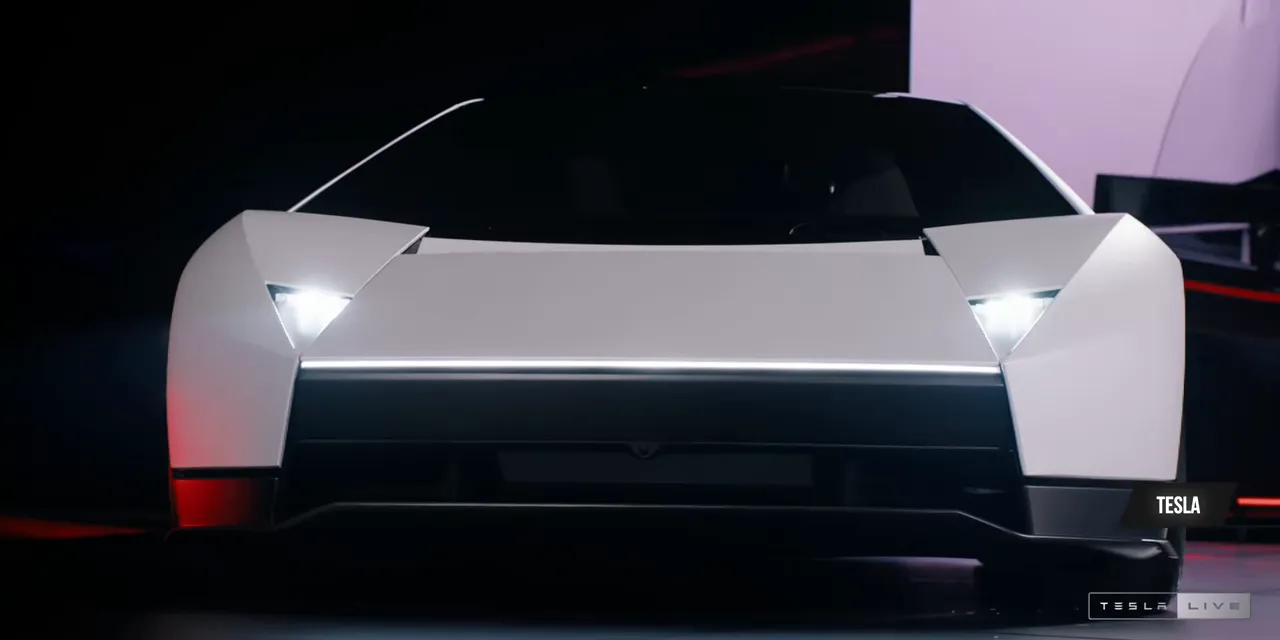
At the back, there is a huge movable wing and what look like exhaust pipes. Exhaust pipes on an electric car sound ridiculous, but there is an explanation for those.
Personally, I do not love the redesign on first impression. I thought the old Roadster was genuinely pretty. This one has parts I like and parts I do not. It might grow on me. Given the delivery history, it should have plenty of time.
The Wall-Climbing Demo Needs Some Context
The first big trick was the car approaching a curved ramp and climbing to increasingly impossible angles until it was completely upside down, roughly 60 feet above the ground.
The claimed downforce was over 4,000 kilograms, even while the car was stationary. That last part matters. This was not a conventional wing working because air was rushing over it at speed. It revealed that the Roadster was a fan car.
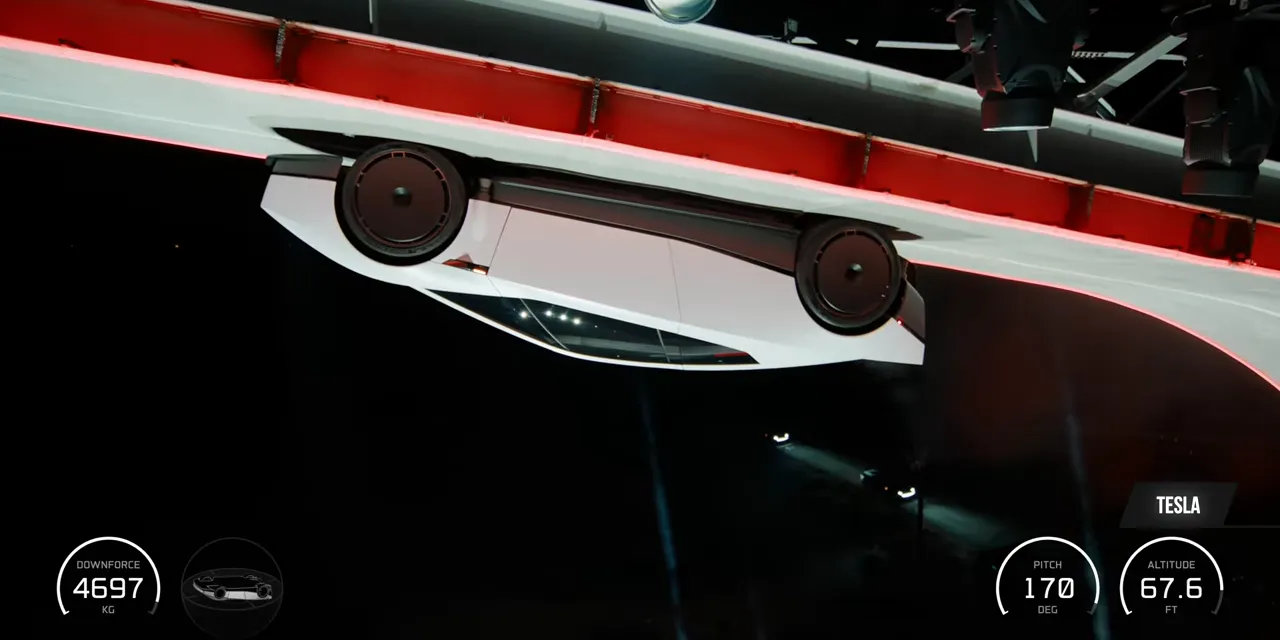
Then it went up again, launched off the ramp, rotated through the air, landed on its tires, and drove away. That requires more than suction. It requires thrusters pointed in different directions, enough force to move the car through the air, and enough stored gas to control the rotation and landing.
Clearly, a ridiculous amount of engineering went into that.
But this was also an autonomous, pre-scripted demonstration with nobody inside the car. Think of a Boston Dynamics robot performing a carefully prepared routine: an impressive demonstration of capability under favorable, controlled conditions, not proof of an everyday use case.
Was the demonstration vehicle full production weight? Did it have the battery a customer car would need? Those questions remain unanswered. I would not assume either way. If I were responsible for safely making a car jump off a wall, I would probably be looking for every sensible way to reduce risk.
So, yes, the demo was remarkable. And, yes, asking whether it is legal, practical, safe, or useful is completely reasonable. Both things can be true.
There Are Actually Four Roadster Versions
The event did not make the product lineup particularly clear. The information released around it points to four versions, and separating them makes the whole story much easier to understand:
- Base: A conventional electric Roadster without the fan system or thruster tricks. This version was discussed by Tesla designer Franz von Holzhausen in MotorTrend’s coverage, rather than featured on the website.
- Performance: The Roadster with a fan system that generates downforce, but without cold gas thrusters.
- Thrust: The fan-equipped car with rear-facing nitrogen thrusters for additional acceleration.
- Rocket: The extreme, single-seat version with additional directional thrusters, intended to perform the airborne maneuvers.
These are very different propositions. A fan-assisted electric sports car is one conversation. A single-seat car that can jump and rotate in the air is another conversation entirely.
The Fan System Is the Most Interesting Part
For decades, sports cars have used increasingly sophisticated aerodynamics to generate more grip. Wings, splitters, and shaped bodywork redirect moving air to push the car toward the road.
Put your hand out of a car window on the highway and tilt it. The way the air pushes your hand up or down is the basic idea.
The catch is speed. Conventional aerodynamic surfaces need airflow to do their work. They are much less useful when the car is moving slowly or sitting still.
A fan car attacks that problem differently. Fans remove air from a partially sealed area beneath the car, creating lower pressure underneath. The higher air pressure above then pushes the car down. That means downforce can exist before the car starts moving.
McMurtry Has Already Shown Why This Works
The obvious reference is the McMurtry Spéirling, a single-seat electric car with a fan system underneath and at the rear.
It lowers a skirt toward the ground to help seal the underbody, then uses extremely fast-spinning fans to pull air out. The resulting downforce exceeds the car’s own weight. McMurtry has already demonstrated the upside-down stunt, even if it did not get this level of attention.
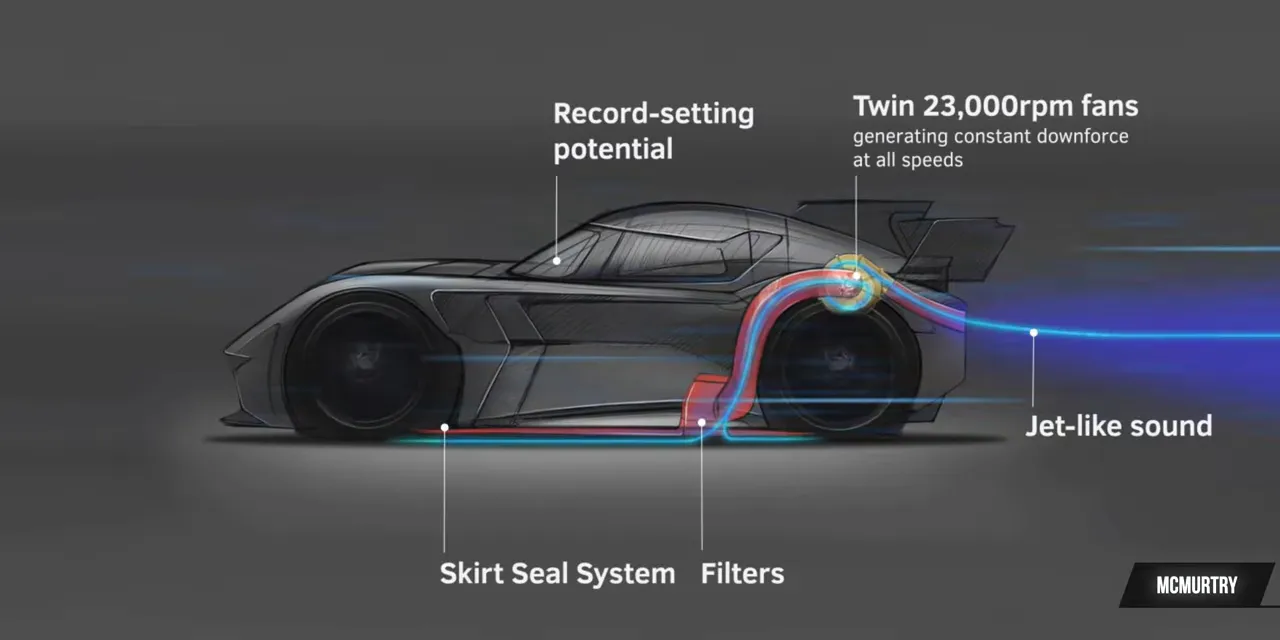
More importantly, the Spéirling shows what that grip does on a circuit. It carries extraordinary speed through slower corners, where conventional aero cars cannot generate the same downforce. The footage of it going around extremely capable track cars is just nuts.
It also helps at launch. With more than 1,000 horsepower and grip available immediately, the McMurtry can reach 60 mph in around 1.4 seconds.
Tesla’s fan-equipped Roadster carries a claimed 1.6-second 0 to 60 mph time. That is already wild, without adding a single rocket-style party trick.
Road Use Is Still a Real Question
The engineering makes sense. The everyday-road situation is less clear.
Both the Spéirling and Roadster use flexible, replaceable skirts because anything dragging close to the ground will wear. Potholes, bumps, and imperfect pavement are obvious complications.
Then there is everything sitting on the road. A fan system pulls in air from beneath the car, along with material in that air. Filters can stop larger objects from reaching the fans, but smaller debris can pass through and exit at the rear. That creates questions for anyone driving behind it.
Tesla describes the Performance version as road ready. That signals its intention, but it does not answer every regulatory question in every location. If the fan system cannot operate legally on public roads, one possibility would be restricting it to circuits or drag strips through location-based controls. That is a possibility, not a confirmed feature.
Still, this is the part I can get excited about. More grip, better cornering, and faster laps are actual performance benefits.
The Thrust Version Adds a Very Serious Pressure Vessel
Now those exhaust-looking pipes start making sense.
At the rear of the Roadster, the four lower fans belong to the suction system. The four larger pipes above them are the thrust outlets.
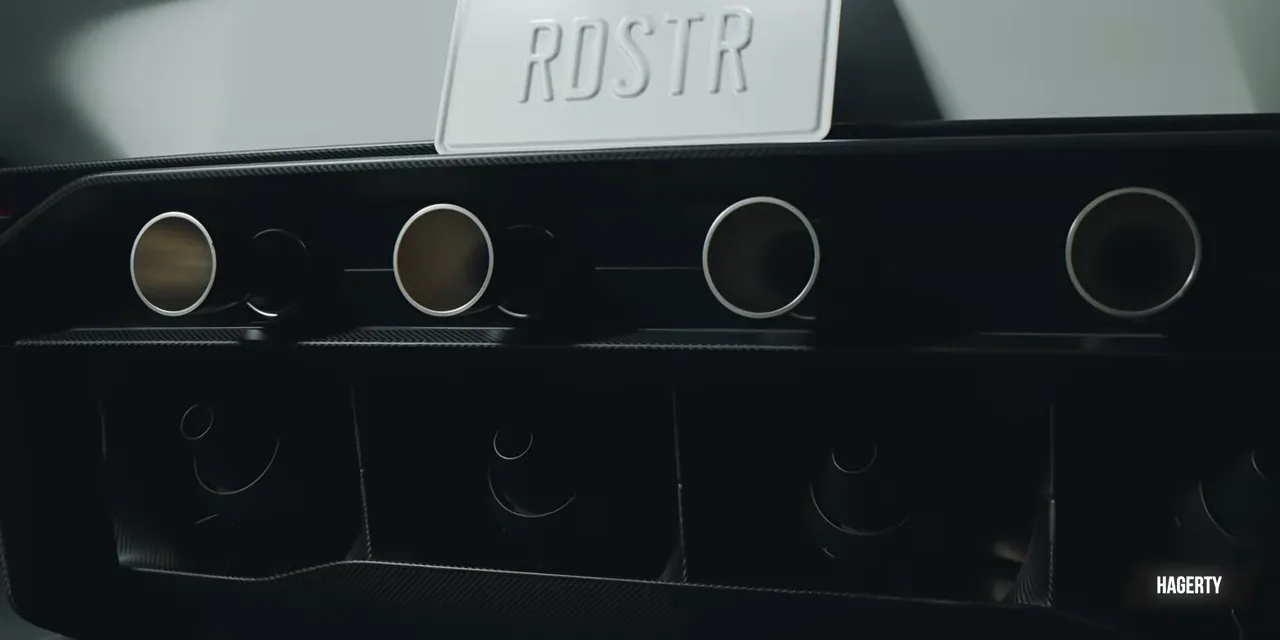
The Thrust version connects those outlets to a carbon-overwrapped pressure vessel with a reported capacity of 200 liters. Filled, it carries more than 100 kilograms of pressurized nitrogen at approximately 10,000 PSI, positioned behind the driver.
That is a lot to have sitting near your head.
Combined with the fan system, the rear thrusters are supposed to push the Roadster below one second to 60 mph. At that point, acceleration is no longer coming only through the tires. The car is generating thrust directly by expelling gas out the back.
My rough estimate puts that kind of launch in the neighborhood of 3 G of longitudinal acceleration. That is an extraordinary experience in a car. For comparison, the roughly 1.2 to 1.3 G tire-grip figures I am used to discussing with conventional performance cars are already serious numbers.
This is not just a slightly faster EV launch. It is a different category of experience.
Noise and Crash Safety Matter More Than the Launch Number
The demonstration took place hundreds of feet from people, with hearing protection provided. The thrusters are incredibly loud, on top of fans that are already loud. Noise regulations alone could complicate public-road use.
But the bigger question for me is crash safety.
A high-pressure gas vessel can make sense in aerospace engineering. A road car also has to deal with collisions, damaged bodywork, and all the other safety requirements of a consumer vehicle. What happens to this system in a serious crash? How is the vessel protected? What is the failure-management plan?
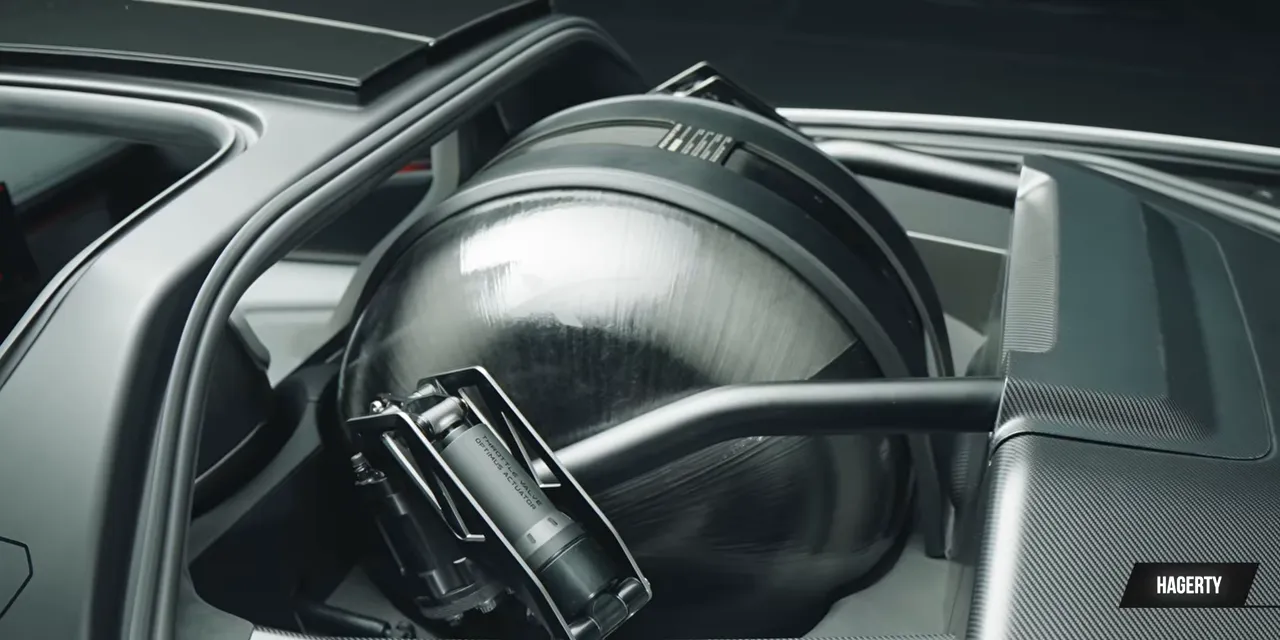
I do not have those answers, and the launch presentation did not provide them. That does not establish that the system is unsafe. It establishes that a pretty important part of the product story is missing.
The Thrusters Are Also a Very Short-Lived Trick
There is another major limitation: the thrust lasts about three to five seconds before the tank is empty.
In Hagerty’s detailed Roadster coverage, the refill time discussed was six to seven hours. So this is essentially a single burst followed by a substantial reset, not a performance boost you can keep using through a track session.
That also makes the talk of reaching half the speed of sound pretty hard for me to take seriously. With such a short thrust window, I am very skeptical of that claim becoming a meaningful capability of the delivered car.
You can make an argument for a spectacular straight-line drag-racing feature. Fine. But the practical limitations belong in the same conversation as the acceleration number.
The Rocket Version Is an Engineering Spectacle
The Rocket specification goes further again. It retains the fans and rear thrusters, adds six more thrusters around the car facing different directions, and puts a massive 400-liter compressed-gas tank in the passenger-seat area.
Which means there is no passenger seat anymore. It becomes a one-seater.
That extra gas and directional control are what enable the jumps and airborne rotations. Tesla also claims a 0 to 60 mph time of 0.6 seconds, which sounds less like a feature I need and more like something my body would like advance notice about.
The website makes two important limitations clear: this version is invite-only, and it is not approved for public-road use.
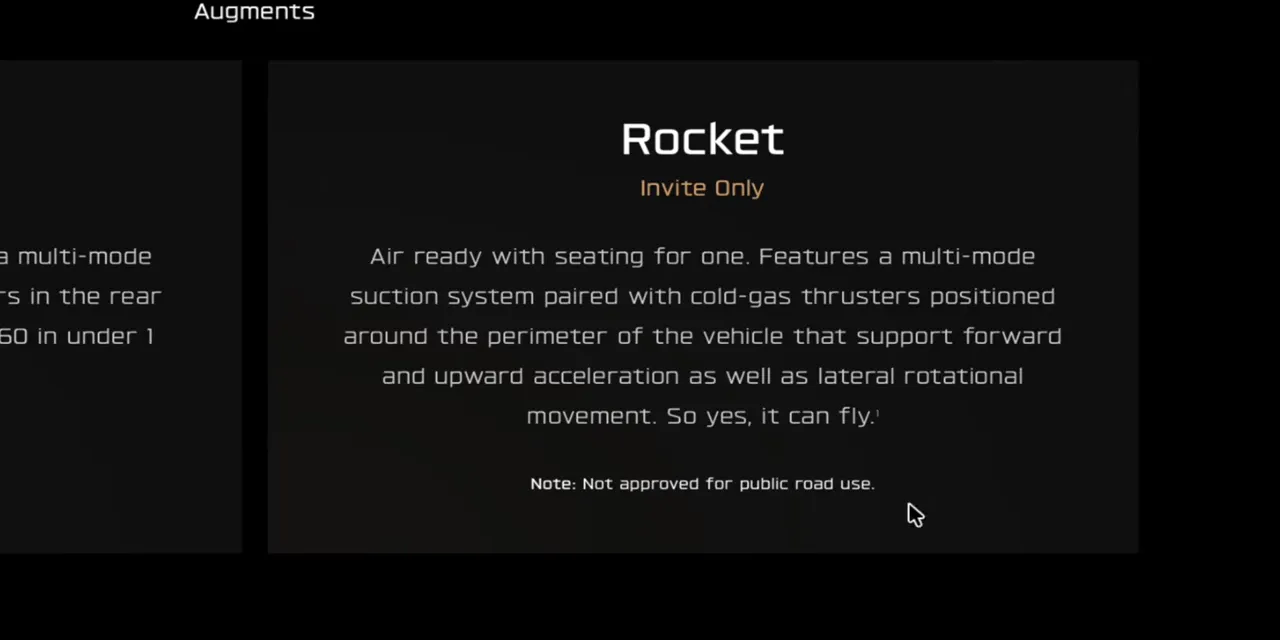
That is a convenient way to show an extraordinary machine without committing to making it broadly available. I would not treat this as a normal upcoming consumer product.
I also struggle to connect a kickflip over a 40-foot stretch of road to useful automotive performance. The fan system has a clear purpose. Rear thrusters at least have an obvious straight-line application. You could imagine an argument for directional thrust helping in an extreme braking situation, although that is not the same as a demonstrated safety feature.
But jumping off a ramp and landing on the wheels? Where are you supposed to do that? In your driveway? On what kind of approved course?
And, honestly, think about the driving you encounter on an ordinary commute. Do we really need to add the ability to jump?
None of that takes away from the engineers. Making a car climb a wall, hang upside down, launch itself, rotate, and land is a huge accomplishment. I just do not think engineering difficulty automatically translates into product value.
The Roadster Specs I Wish Tesla Had Spent More Time On
Here is the strange part: underneath all the thruster noise, there is a genuinely interesting electric sports car proposal.
The technical details that emerged afterward are the ones I would have preferred to hear about on stage. These remain promises and development targets, not independently verified production-car results, but they deserve attention.
Weight, Power, and Rear-Wheel Drive
- Carbon-fiber body panels: Tesla is proposing an all-carbon-fiber exterior.
- Weight below 1,700 kilograms: An ambitious target for a high-performance EV carrying a battery.
- Rear-wheel drive: Rather than relying on all-wheel drive for acceleration, the layout is intended to emphasize driving engagement.
- Dual rear motors: The claimed output is 1,300 horsepower and 1,400 newton-meters of torque, from motors described as smaller and more power-dense than those in Plaid.
That combination is worth discussing. A relatively lightweight electric sports car putting all that power through the rear wheels, assisted by fan-generated grip, is a much more interesting handling story than another big acceleration number by itself.
Range, Charging, and Sustained Track Performance
The range promise has dropped substantially, from the old car’s roughly 600-mile ambition to more than 300 miles. In return, Tesla is discussing 500-kilowatt charging at new V4 Superchargers and a claimed 15% to 80% charge in 10 minutes.
It is also promising 25 to 30 minutes of maximum-attack track driving.
That matters because a fast EV needs more than a strong first lap. Thermal management can limit how long it maintains peak performance. A car that can run hard for a meaningful session, then recharge quickly, has a much clearer path to being useful at a circuit.
Chassis and Design Details
There is more: active aerodynamic elements, a charging port behind the rear wing, a movable pedal box, double-wishbone suspension, brake-by-wire, and steer-by-wire.
Even the windows have a gold-accent tint intended to evoke a spacesuit visor.
That is a lot of actual car development to talk about. I would have preferred a launch that explained how these pieces work together instead of spending so much time on the airborne routine and leaving the product explanation for everyone else.
Will the New Tesla Roadster Actually Ship in 2028?
Now for the familiar question.
Tesla says 2028. Do I believe a broadly available, flying Rocket Roadster will arrive then? No. The invite-only positioning makes it particularly easy for that version to remain a demonstration or an extremely limited project.
The base car is more plausible. Even the fan-equipped Performance version seems possible to me. The underlying engineering has precedent, and Tesla has the resources to pursue it.
But possible is not the same as prioritized.
My read is that Roadster is Tesla’s least important product commercially. It would be low volume, with little effect on the company’s overall business compared with Model 3, Model Y, or its ambitions around humanoid robots. Even established vehicles such as Model S and Model X have been described as expendable when their sales no longer justify their place in the lineup. A niche sports car has an even harder time demanding attention.
McMurtry, by contrast, has been doing extensive public development around this specific fan-car idea. Tesla having a bigger bankroll does not automatically mean it has a stronger incentive to finish its version.
The earlier Roadster already demonstrated how long this project can remain unfinished without becoming an urgent problem for Tesla’s bottom line. I am not going to assume a fresh unveiling suddenly changes that.
A Reservation Is Not a Delivery Guarantee
I also checked my own Tesla account. The referral-reward Roadster is still there, now with an updated image. So apparently that possibility still exists. Whether I actually receive one is another question.
More revealing is the reservation agreement. Its delivery provision explains that the car remains under development and does not guarantee either when a vehicle will be delivered or whether it will be delivered at all.
That is a pretty important distinction for anyone who has spent years waiting with money committed to the original car, only to see the product change completely.
A promised year on stage and a guaranteed vehicle in your driveway are not the same thing.
Incredible Engineering, Very Effective Marketing
I think Henry Catchpole’s broader point in the Hagerty piece is fair: an extremely fast electric car does not create the same excitement it once did. We have seen that. Tesla itself already demonstrated it with Plaid.
A flying car, though? That still captures people’s imagination. It generates headlines in a way that another quick EV does not.
So Tesla replaced a long-delayed fast-car promise with something much more spectacular. Even if the extreme version never ships, the engineering exercise has already created a new reason to talk about the company.
My honest reaction is that the fan-assisted Roadster is worth taking seriously as an engineering concept. The lighter weight, rear-wheel-drive layout, sustained track-performance target, and fast charging are all worth following. The flying version is something I would treat as a spectacular demonstration, not a purchase plan.
The event succeeded at making people talk. Whether it succeeded at introducing a car Tesla will actually deliver is a question the kickflip cannot answer.


