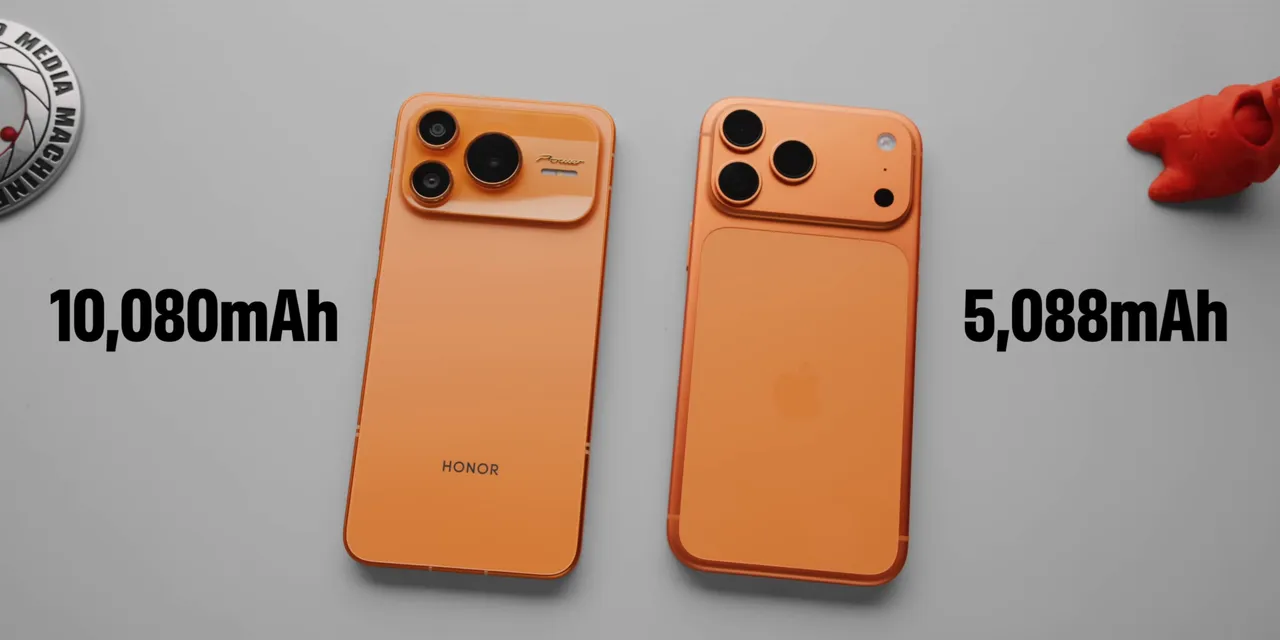
The iPhone 17 Pro Max has a battery of about 5,000mAh. The Honor Power 2 has a battery of about 10,000mAh. And somehow, the Honor is thinner.
Yes, its design looks very familiar. But the battery is the interesting part. We now have phones with capacities that used to belong in power banks, without turning those phones into bricks. That is a pretty massive shift, and silicon-carbon battery technology is making it possible.
So here is the obvious question: if this technology is that good, why aren't Apple, Samsung, and Google using it in their latest phones?
For a while, I thought the answer might mostly be supply. After conversations with people in the smartphone industry, I think there is a more important concern: how these batteries swell and age over time.
Key Takeaways
- Silicon-carbon batteries enable much larger capacities without requiring thicker smartphone designs.
- Silicon's expansion during charging creates engineering challenges around mechanical stress and long-term reliability.
- Charge-cycle testing cannot fully account for every condition a battery encounters over years of use.
- Market competition and ecosystem loyalty influence how urgently manufacturers adopt new battery technology.
Why Silicon-Carbon Batteries Look Like a No-Brainer
The main advantage is simple: higher energy density. You can fit more battery capacity into the same amount of space.
Conventional smartphone batteries rely on graphite in the anode. Silicon-carbon designs incorporate silicon, which can store much more lithium than graphite. These are still lithium-ion batteries, but with a different approach to the anode material.
That gives phone manufacturers two very appealing options:
- Keep the phone roughly the same size and fit a much larger battery inside.
- Make the phone thinner while preserving a more normal battery capacity.
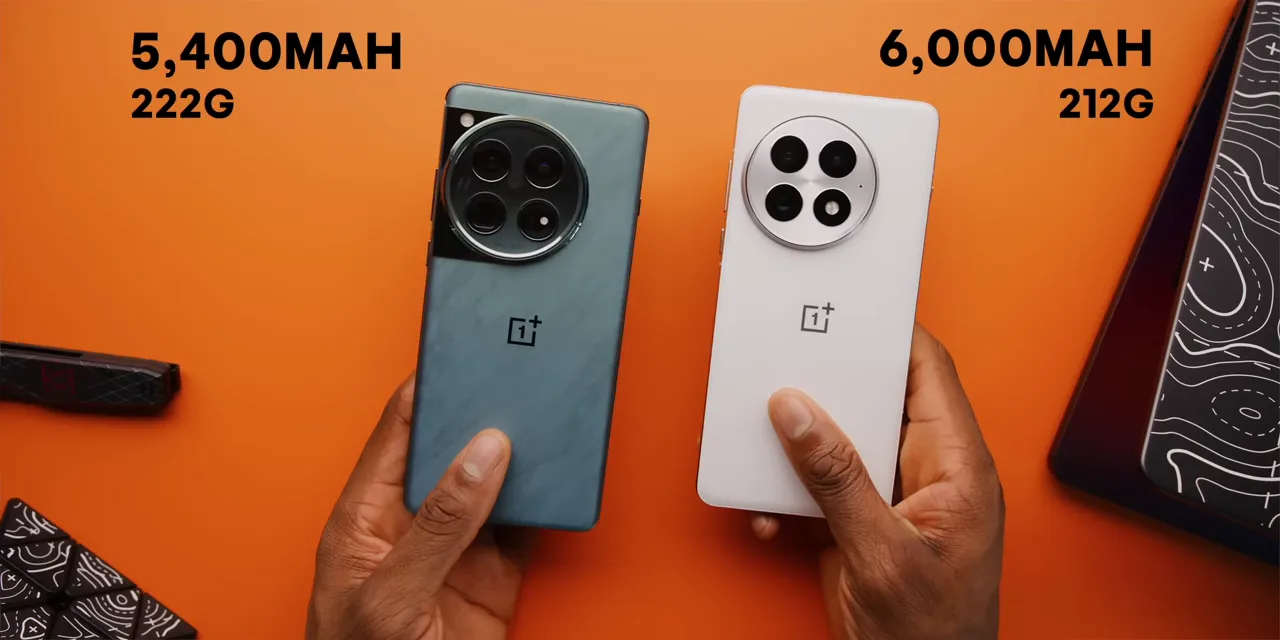
We are already seeing the first option change expectations. OnePlus went from a 5,400mAh flagship battery to 6,000mAh with silicon-carbon, then reached 7,300mAh later that same year. That is not the usual tiny annual improvement. It starts to reset what a flagship smartphone battery should be.
The second option seems particularly perfect for ultra-thin phones. Something like the Galaxy S25 Edge or iPhone Air could benefit from a battery that takes up less space without sacrificing as much capacity.
Except neither of those phones used silicon-carbon. New Samsung flagships, iPhones, and Pixels have continued arriving without it, too. On the surface, that feels like leaving an obvious upgrade on the table.
The Supply Explanation Doesn't Tell the Whole Story
The first theory makes sense. A company launching a major phone cannot just find an exciting battery in a lab and order a few thousand of them. It needs enormous quantities, reliably manufactured and ready on schedule.
If Apple asks a supplier for 10 million batteries for a new iPhone, maybe a relatively new technology cannot meet that demand yet. Fair enough.
But then you look at who is already using silicon-carbon: Xiaomi, Realme, Honor, Oppo, Huawei, and others. Xiaomi is a huge company. This technology is clearly reaching phones in substantial volume.
Meanwhile, Google ships far fewer Pixels than the biggest smartphone makers, and it is sitting out as well.
So supply could be part of the explanation. It just doesn't explain the whole pattern.
Over the past year, I received separate emails from people working at smartphone companies. I am not identifying their employers, but their concerns lined up: swelling and longevity. After following up with other industry contacts, I became much more confident that these are major reasons some manufacturers are holding back.
That is not the same as a public statement from every company explaining its decision. But it is a much more convincing explanation than manufacturing volume alone.
The Catch: Silicon Expands as It Stores Lithium
Batteries are not perfectly static objects. They experience heat, and their materials change as they charge and discharge. With silicon, the dimensional change is especially important.
As silicon absorbs lithium during charging, it can expand to around three times its original volume.
To be clear, that does not mean the entire phone battery triples in size. It describes what can happen to the silicon within the battery. But managing that expansion is a serious engineering challenge.
Imagine a sponge that grows to three times its size when it gets wet, then shrinks again when it dries. Now make it do that over and over. Eventually, all that movement can create mechanical stress and cracking.
Materials need room to move. It is the same broad reason bridges have expansion joints and sidewalks have deliberate gaps. The cause of silicon's large charging-related expansion is lithium entering the material, rather than simply temperature, but the mechanical problem is familiar: repeated changes in size put things under stress.
What the Carbon Is Doing
Manufacturers are not putting a solid block of silicon into a battery and hoping for the best. The silicon is finely divided to help manage mechanical stresses, and the carbon structure helps accommodate its expansion.
That is the balancing act behind the silicon-carbon name.
Companies can increase the proportion of silicon to chase higher capacity in the same space. But pushing that percentage higher also makes controlling expansion more demanding.
- More silicon offers the potential for greater battery capacity.
- Managing expansion becomes increasingly important as manufacturers push the design.
- Internal damage is a concern if repeated stresses cause cracking.
I have even been told that certain devices use a literal steel enclosure around the battery to help restrain swelling. That gives you an idea of how much engineering can go into keeping these cells under control.
The concern is not just that a battery might lose capacity. Internal damage can become a safety issue. In the worst case, a battery failure can lead to thermal runaway, which is absolutely not something you want happening in your pocket.
That does not establish that every silicon-carbon phone is unsafe. It explains why manufacturers might have different comfort levels with pushing this technology.
Why 1,000 Charge Cycles Don't Answer Every Question
At this point, the reasonable response is: aren't these batteries tested?
Of course they are. Manufacturers often advertise results such as retaining 80% of battery capacity after 1,000 charge cycles. That is useful information. It provides evidence that a battery can survive repeated charging and discharging while retaining much of its capacity.
But a phone's life is not just a neatly controlled series of charge cycles.
Over several years, it may also experience:
- Outside heat and cold.
- Accidental drops.
- Changes in pressure.
- Changes in humidity.
- Different combinations of those conditions as the battery ages.
Testing matters enormously. The challenge is accounting for all those variables, together, over a long period of time.
A capacity-retention result is valuable, but it is not a complete picture of long-term reliability. Real-world aging data answers a different set of questions.
A Rare Problem Becomes Bigger at Massive Scale
One source described getting issues below a rate of one in 250,000 as a result that can feel very good. And intuitively, it does. That sounds extremely rare.
But put that rate against tens of millions of phones, and the calculation starts to feel different. An issue that is unlikely for an individual customer can still affect a meaningful number of people across a huge product launch.
For a battery safety problem, that matters a lot. Samsung's Galaxy Note7 recall in 2016 remains a reminder of the consequences. It is not evidence of a silicon-carbon defect. It is an example of why a smartphone company might be extremely conservative about battery risk.
Without enough long-term field data, some companies would rather keep refining conventional battery designs than rush to adopt a denser alternative.
There Is Also Less Pressure to Take the Risk
There is something else Apple, Samsung, and Google have in common: a major presence in the United States.
The U.S. is a particularly software-focused smartphone market. Ecosystems, messaging, and platform familiarity do a lot of the work of keeping people on their current phones. Sometimes, people really do just want the blue bubbles.
If customers are not going to buy the next iPhone specifically because it has silicon-carbon, and they are not going to leave the iPhone because a competing phone has it, Apple has less incentive to accept the uncertainty right now.
In other markets, where people are happy using WhatsApp across platforms, switching hardware can be easier. That creates more direct pressure to compete on the hardware itself.
If one phone offers a 40% bigger battery and another suddenly looks behind, that difference can be enough to move a purchase.
So the decision is not only about whether a company can build a silicon-carbon phone. It is also about whether the benefit is compelling enough, in its market, to justify adopting the technology sooner.
The Missing Piece Is Time
As of 2026, silicon-carbon is still a bleeding-edge smartphone battery technology. The benefits are real, and the capacity gains are genuinely exciting. But the long-term picture is still developing.
The first phones using it arrived about three years ago, with many more entering everyday use over the past year. That growing population should tell us much more about how these batteries actually age.
For now, there are two approaches: push energy density forward and manage the engineering challenges, or stick with more established designs while gathering more evidence.
I still think silicon-carbon is incredibly promising. A thinner phone with roughly double the battery capacity is hard not to get excited about. But the number on the spec sheet is only half the story.
The other half is what happens after years of charging, heat, cold, drops, and everyday use. Another year or two of real-world data should make that story a lot clearer.


