OnePlus is still alive in 2026. That is important, because a headline declaring that the company is being dismantled recently made its way onto my timeline. Pretty big news, if true.
But after reading the article, I did not find exclusive information establishing that claim. I found speculation about why the brand might eventually shut down, wrapped in writing that felt suspiciously AI-generated. That is not the same thing.
The more interesting story is the one we can actually trace: how OnePlus went from making the ultimate enthusiast phone to making fairly ordinary phones for everyday people. It completed a transition that has killed plenty of other companies, and somehow lost much of what made people love it along the way.
TechAltar explored this pattern years ago in Why Enthusiast Brands Will Betray You. It remains remarkably relevant. Companies keep starting with a passionate niche, trying to reach a bigger audience, and discovering that those two groups want very different things.
OnePlus has accidentally become a blueprint for surviving that transition. And betrayal is part of the blueprint.
The OnePlus One: The Right Phone at the Right Time
Breaking into the US smartphone market is brutally difficult. Apple and Samsung dominate the conversation now, and they were already the giants back in 2014. LG, HTC, Motorola, and others were fighting for the space around them.
Then the OnePlus One showed up.
The hype was ridiculous, and the reason was pretty simple. Here was a phone with flagship-level specifications, a current Snapdragon 800-series chip, a clean design, and a starting price of about $300. Comparable Apple and Samsung flagships cost $600 or $700.
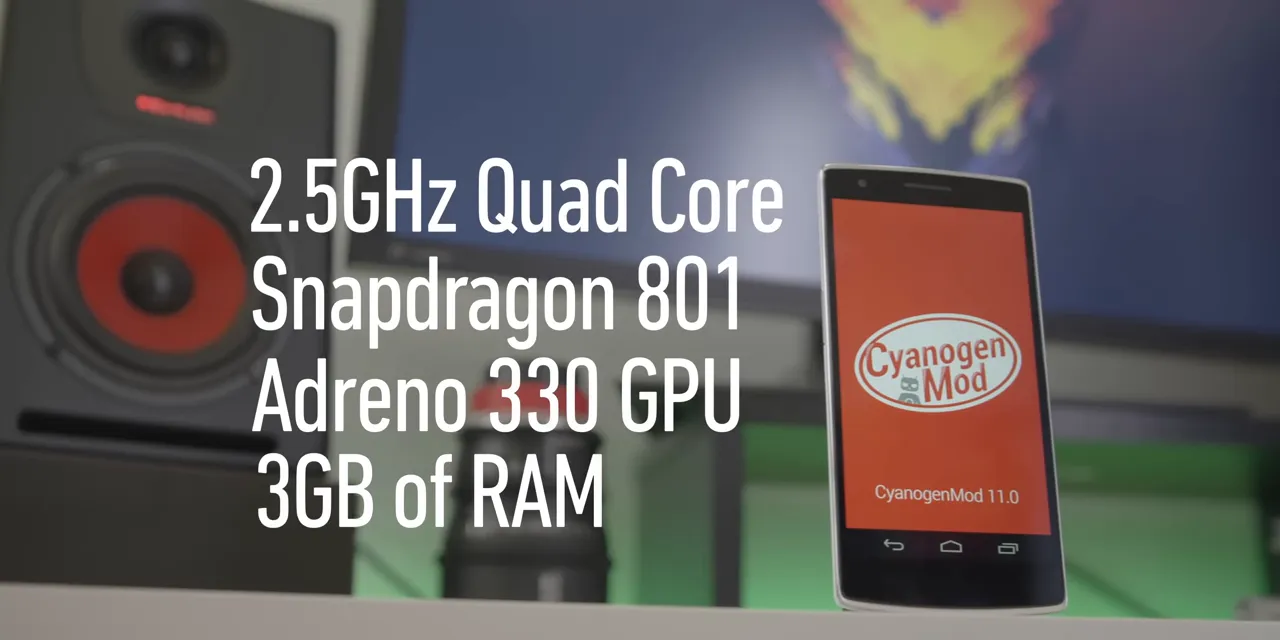
It also had personality. The sandstone finish was different. CyanogenMod offered clean, developer-friendly software without the usual load of unwanted extras. For the people who cared about this stuff, it felt like someone had finally built a phone around their priorities.
The “flagship killer” pitch practically wrote itself. Why pay twice as much for a big-name phone when this existed?
Of course, you had to know it existed first. You also needed an invitation to buy one. This was not a phone you casually discovered on a carrier-store shelf. It was something you researched online, got excited about, and then worked a little too hard to purchase.
Despite that friction, OnePlus sold more than a million of them. For a new smartphone brand, that was a spectacular start.
It also created a problem.
Enthusiasts Are an Amazing Starting Point and a Difficult Customer Base
OnePlus had won over arguably the toughest group of customers imaginable: tech enthusiasts.
I include myself in that group. We get excited about specifications, software optimization, unusual materials, and clever compromises. We can generate a lot of attention for a product that gets those things right.
But we are also picky. Our standards are high, and our loyalty can be surprisingly low. If another company delivers slightly better hardware or a more interesting experience for the money, we may just buy that instead.
And relative to the entire smartphone-buying public, we are a small group.
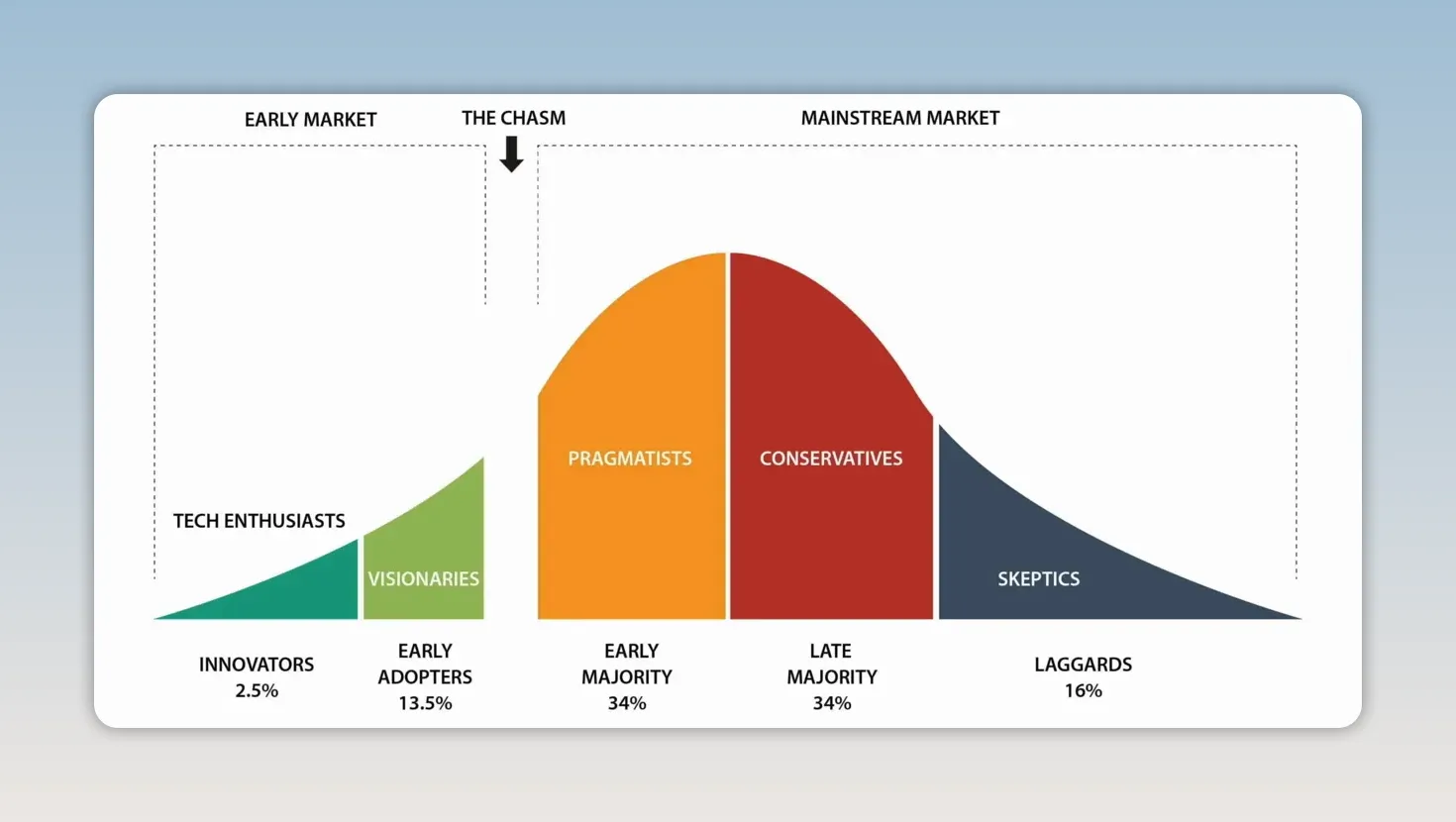
This adoption curve is a useful way to visualize the problem. Getting the enthusiasts and early adopters excited puts you on the map. It does not automatically persuade the much larger audience that follows them.
Most people still did not know what OnePlus was. A million enthusiastic customers was a hell of a start, but it was not a complete long-term growth strategy.
Generation Two Revealed the First Wobble
I have said this many times: the second generation of a product tells you a lot about the company making it. You get to see what it learned, which criticisms it took seriously, and what direction it wants to pursue.
The original OnePlus made deliberate tradeoffs. It skipped things like an official IP rating and a major advertising push, keeping costs down and passing those savings to customers. Enthusiasts loved that. We were happy to evaluate the tradeoffs ourselves.
With the OnePlus 2, the company seemed almost afraid to disturb the formula. It kept a similar design, made the expected specification upgrades, and nudged the price up to about $330.
But it also introduced the OnePlus X.
That was a different idea: a roughly $250 midrange phone with a stronger emphasis on design, including a limited ceramic version. It was reasonably priced. It just was not a flagship killer, and it was not particularly aimed at the enthusiasts who had made the company successful.
It was a small wobble in an otherwise focused strategy.
The OnePlus 3 and 3T brought the company back toward its original audience with high-end specs, rapid iteration, and interesting features. The direction looked clear again. Still, that early experiment showed that OnePlus was willing to look beyond its original niche.
Peak OnePlus Was More Than a Good Spec Sheet
Ask longtime fans when OnePlus peaked, and you will probably hear the OnePlus 5 or OnePlus 6. By the OnePlus 7 series, the company was absolutely on a roll.
The hardware kept improving: thinner bezels, better fingerprint-reader implementations, bigger batteries, and much faster charging. But the software was just as important.
OnePlus had moved on from CyanogenMod and developed OxygenOS into a real selling point. It was clean, smooth, fast, and clearly optimized by people who cared about responsiveness. Animation timing and little interactions made the phones feel unusually quick.
At this point, OnePlus was well beyond being an obscure recommendation passed between phone nerds. Across reviews and tech blogs, there was broad agreement that these were some of the best-value smartphones available.
My review titles reflected that enthusiasm. The OnePlus 6 was right on the money. The OnePlus 7 Pro was silly fast. The 7T Pro was an already excellent phone with a few careful refinements.
My personal favorite is probably the OnePlus 7T Pro. That is a phone I genuinely believe I could still enjoy using today: modern design, clean software, ridiculously responsive performance, very fast charging, and that pop-up selfie camera. All for about $660.
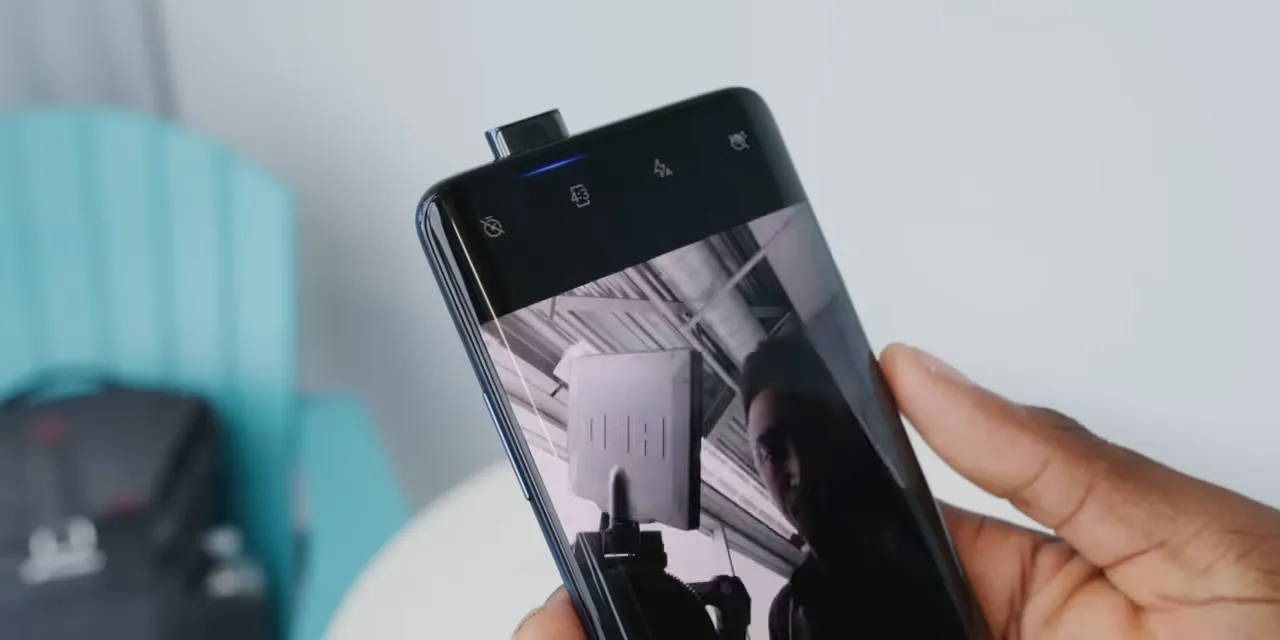
I loved that thing.
But even at this high point, critical acclaim was not the same as mass-market adoption. OnePlus was successful with people who researched phones, read reviews, and might preorder something online.
Most people were doing something else: walking into a carrier store every three or four years and choosing a safe, familiar replacement for their last phone.
That was the opportunity. Maybe OnePlus could finally challenge Apple and Samsung in the US. Maybe it could scale in a fast-growing market like India. A carrier deal here, some advertising there, and this enthusiast success could become something much bigger.
Just one problem: the enthusiasts still liked the company exactly as it was.
The Features That Win Enthusiasts Can Lose Mainstream Buyers
The central tension is not simply that enthusiasts want good phones and everyone else does not. Both groups want good phones. They evaluate them differently.
To an enthusiast, leaving out an expensive certification while preserving useful hardware capabilities can look like a brilliant cost-saving decision. Selling directly online instead of spending heavily on commercials and retail distribution can look equally smart.
To a mainstream customer, the safer purchase may be the phone with an official rating, a familiar name, and a place on the shelf at their carrier store.
For context, an IP rating describes a device enclosure’s tested protection against things like dust and water. That official, recognizable specification matters differently from a company simply suggesting that its phone can handle a splash.
So the same decisions can land very differently:
- Direct online sales: enthusiasts see lower prices; mainstream buyers may see a less convenient purchase.
- Fewer mainstream extras: enthusiasts see smart prioritization; mainstream buyers may see missing reassurance or convenience.
- Maximum specifications for the money: enthusiasts see exceptional value; other customers may prioritize familiarity and camera confidence instead.
The changes that make a niche brand easier for everyone else to buy can make its original fans less interested.
That is the realization every enthusiast-focused company eventually has to confront. And handling it gracefully is much harder than recognizing it.
ASUS Shows How Difficult the Jump Can Be
ASUS tried more than one approach.
The early ROG Phones were unapologetic gaming devices: aggressive styling, high refresh rates, and hardware features aimed squarely at gaming enthusiasts. Over time, ASUS toned down the look and made room for more mainstream features, including wireless charging.
It was a gradual softening of the original idea, but it did not produce a durable escape from the niche. ASUS’s decision not to launch phones in 2026 makes that outcome especially stark.
The Zenfone took a more abrupt route. The Zenfone 9 and Zenfone 10 were enthusiast favorites because they delivered a compelling experience in a compact phone.
But broad demand favors big screens. So ASUS pivoted to the much larger Zenfone 11 Ultra, moving away from the very characteristic that had earned those phones their following. That transition did not go well either.
The challenge is a race: you have to build your new audience faster than you lose your old one. Move slowly and you may never scale. Move quickly and you may strip away your appeal before anyone else cares.
OnePlus Made the Jump and Lost Its Identity
My OnePlus 8 review title captured the change pretty well: it was no longer special.
That does not mean OnePlus stopped trying. It tried a lot of things, gradually adopting the features and business practices of a mainstream smartphone company.
- Its designs shifted from metal backs toward the familiar all-glass flagship look.
- Official IP ratings became part of the offering.
- Prices climbed over successive generations until flagship models were around $900.
- The Nord line created a lower-priced, midrange alternative beneath those expensive flagships.
- US carrier partnerships put phones in front of customers who bought in stores.
- A Hasselblad partnership, beginning with the OnePlus 9 series, aimed to strengthen confidence in the cameras.
These were not random decisions. Carrier distribution is a different business model from selling directly to enthusiasts. Cameras matter enormously to mainstream buyers. A broader lineup gives a company more price points to compete at.
But taken together, the changes made OnePlus feel less like OnePlus.
Co-founder Carl Pei left during this broader period of transition. By the OnePlus 10 generation, the phones looked increasingly similar to devices from its related company, Oppo.
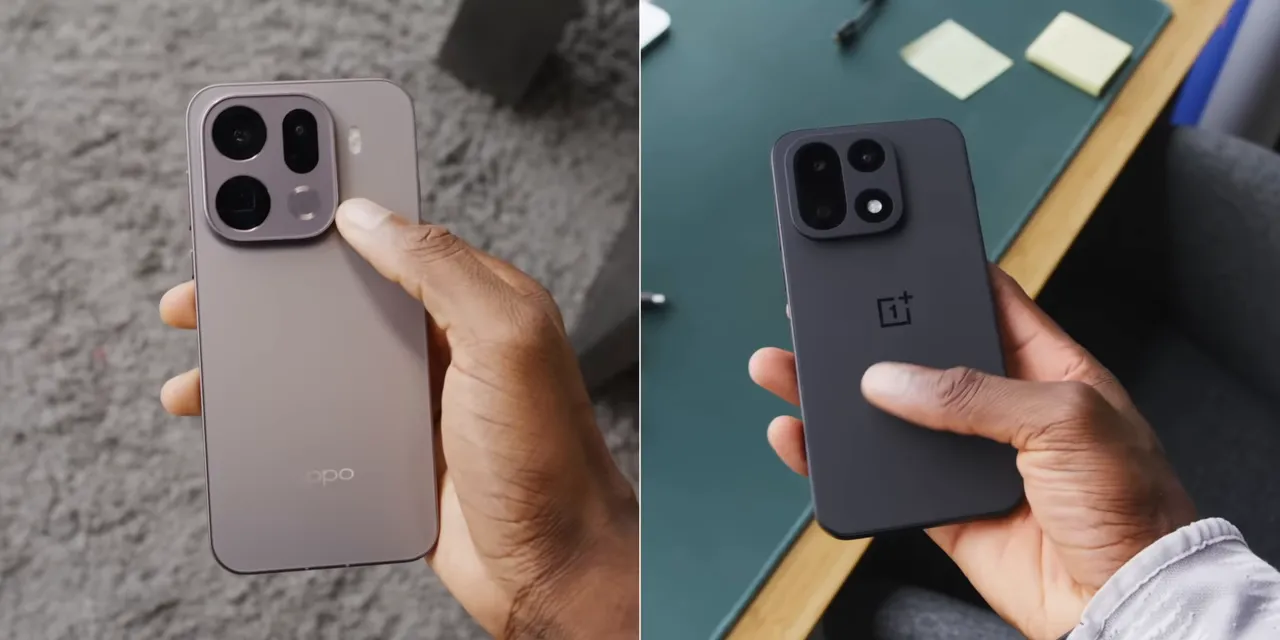
Fast charging remained. Some familiar software touches remained. But OxygenOS increasingly resembled Oppo’s ColorOS rather than the clean, distinct experience that had helped define the brand.
ColorOS is not inherently bad. It is just fine. And “fine” is a very different emotional response from the one those earlier phones inspired.
For enthusiasts, peak OnePlus might have been the 6 or 7 series. From the company’s business perspective, I would guess the broader lineup around the OnePlus 10 era may have looked more like a peak. That is a guess, not a claim about its financial results.
Either way, it illustrates the disconnect: a company can become more commercially conventional while becoming much less distinctive to the people who first championed it.
The OnePlus 15 Is Good. That Is Part of the Story.
We are now at the OnePlus 15, which I have been using as my daily phone for a couple of months.
It is solid. Performance is still smooth, battery life is great, and charging is really fast. The design is fairly generic, and the cameras are not especially good, but the overall experience is perfectly usable.
It is also the kind of phone I can recommend more readily to everyday people than some of those early enthusiast experiments.
Meanwhile, enthusiasts have had plenty of other places to go: Poco, Sony Xperia, Nothing, and various interesting phones in between. The original audience did not sit around indefinitely waiting for OnePlus to return to its roots.
So, was the transition successful?
Technically. Barely.
OnePlus made it from a pure enthusiast proposition to a more mainstream product, and the company still exists. That deserves some credit. Plenty of brands never make it that far.
The Lesson Is About Survival, Not a Confirmed Shutdown
The future of OnePlus is still uncertain. There are rumors about a canceled foldable and a canceled successor to its compact flagship. Those are not the same as confirmation of what happens next. I would expect a OnePlus 16 sometime in 2026, but that is an expectation, not an announcement.
What we can study is the path already taken.
OnePlus gradually peeled away its enthusiast edges, added the features and distribution needed for a broader audience, and kept enough momentum to stay alive. It did not become the triumphant duopoly-breaker that its early trajectory made easy to imagine. It also did not disappear like so many other ambitious phone brands.
There is an irony here, too: Carl Pei’s Nothing sometimes looks like it is speeding through a similar process. But that is another story.
The downfall of OnePlus is worth studying precisely because it is not simply a story about a company dying. It is a story about a company surviving while much of its original identity falls away.
Any enthusiast brand hoping to make that same leap should pay attention. Finding a bigger audience is difficult. Keeping your first audience while you do it is even harder.
And enthusiasts do not forget.
|


