For years, my test for foldables has been pretty simple: they make sense for regular people when the only meaningful difference between a folding phone and a regular phone is that one happens to fold in half. No long list of compromises attached.
The original Galaxy Fold was exciting because it folded. But getting there meant accepting a tiny cover screen with huge bezels, lesser cameras, a smaller battery, questionable durability, and a very obvious crease down the middle.
Seven years of engineering later, the Oppo Find N6 feels like we have finally reached the other side of that checklist. It is thin, it has a huge battery, the outside screen feels normal, and the crease is almost imperceptible.
Aside from the price tag, this is about as close as we have gotten to a regular flagship phone that just happens to unfold. Which raises an interesting question: if this is peak foldable, what happens next?
Quick Summary
- The Find N6 approaches regular flagship dimensions while retaining a genuinely usable 6.6-inch cover screen.
- A 6,000 mAh battery, high-end cameras, and flagship-class processing remove several traditional foldable compromises.
- Oppo’s individually smoothed hinges make the crease almost imperceptible, though long-term durability remains a manufacturer claim.
- A rumored folding iPhone could differentiate through wider proportions and software rather than folding hardware alone.
A Foldable That Feels Normal Before You Open It
The first problem with early book-style foldables was that they were not especially good phones when closed. They were thick, the bezels were awkward, and the outside screen often felt like something you tolerated until you could open the better display inside.
The Find N6 does not feel like that.
From the front, it looks like a normal 6.6-inch phone. There are a few clues: the metal frame is asymmetrical, with rounded corners on one side and squarer corners along the hinge. But otherwise, the size and proportions are familiar.
It is just under 9 millimeters thick and weighs around 230 grams. For context, the iPhone 17 Pro Max is also just under 9 millimeters thick and around 230 grams. We are effectively at regular flagship dimensions, before opening the thing.
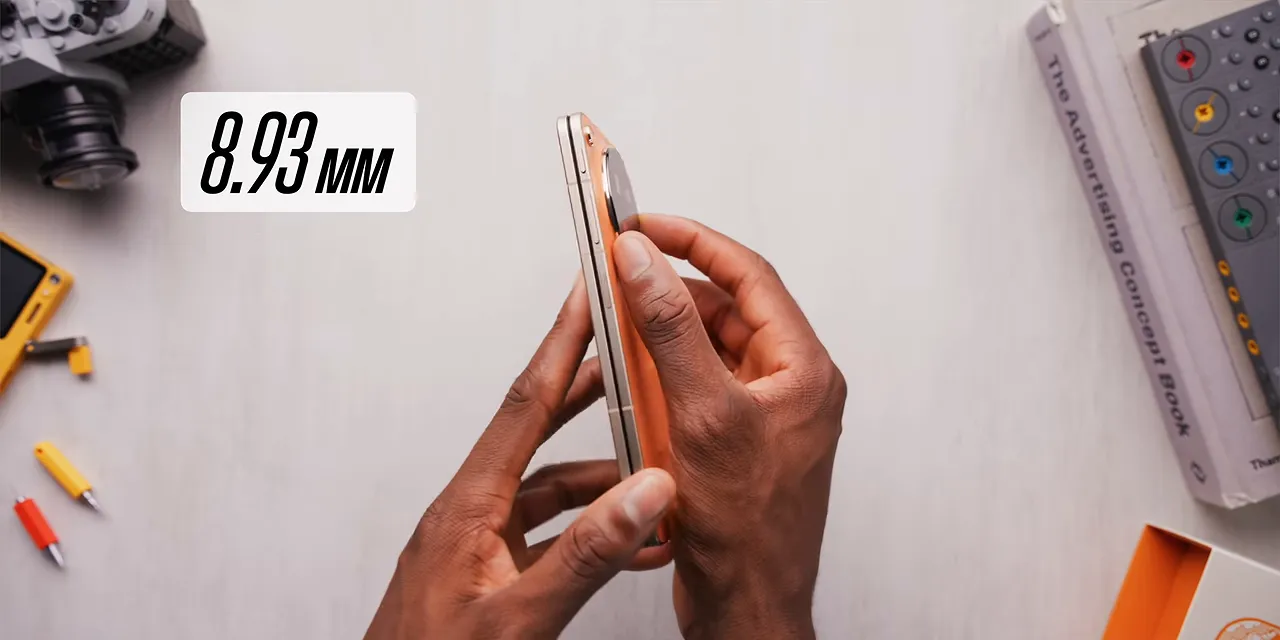
That changes how you use it. You can take pictures, play videos, and text on the cover display without feeling like you should unfold it first. The keyboard is not squeezed into a weirdly narrow aspect ratio. It is just a normal phone screen.
And it is a proper flagship screen, too:
- 6.6-inch cover display with a normal phone-like aspect ratio.
- 3,600 nits peak brightness and 1,800 nits fullscreen brightness.
- 1 to 120Hz LTPO adaptive refresh rate.
- High-frequency PWM dimming.
It is responsive and easily usable outdoors. More importantly, the outside display no longer feels like the price you pay to get the big screen inside.
The Battery, Cameras, and Chip Have Caught Up
Folding a phone introduces some pretty unavoidable packaging problems. You have two thin halves, a hinge occupying space between them, and a larger display to power. Historically, that meant smaller batteries, compromised cameras, and less room for cooling.
But it is 2026, and the technology inside those thin halves has evolved.
A 6,000 mAh Battery in a Folding Phone
The Find N6 has a 6,000 mAh silicon-carbon battery. That is more capacity than plenty of regular slab phones, inside a device that is both extremely thin and split around a hinge.
It also supports 80-watt wired charging and 50-watt wireless charging. So the battery capacity and charging specifications are no longer obvious reasons to choose a non-folding phone instead.
That is a pretty big reversal from the early days, when foldables had smaller batteries while asking those batteries to power bigger screens.
High-End Cameras Without Much Depth to Work With
Cameras still have to obey physics. A thin half of a foldable does not offer the same front-to-back space as a conventional phone. There is simply less depth available for the sensor and camera assembly.
One answer is developing large sensors specifically designed for shallow camera modules. The Find N6 uses the same Samsung ISOCELL HP5 sensor found in the Galaxy S25 Edge:
- Main camera: 200 megapixels, a 1/1.56-inch sensor, and optical image stabilization.
- Ultrawide: 50 megapixels.
- Telephoto: 50 megapixels with 3x optical zoom.
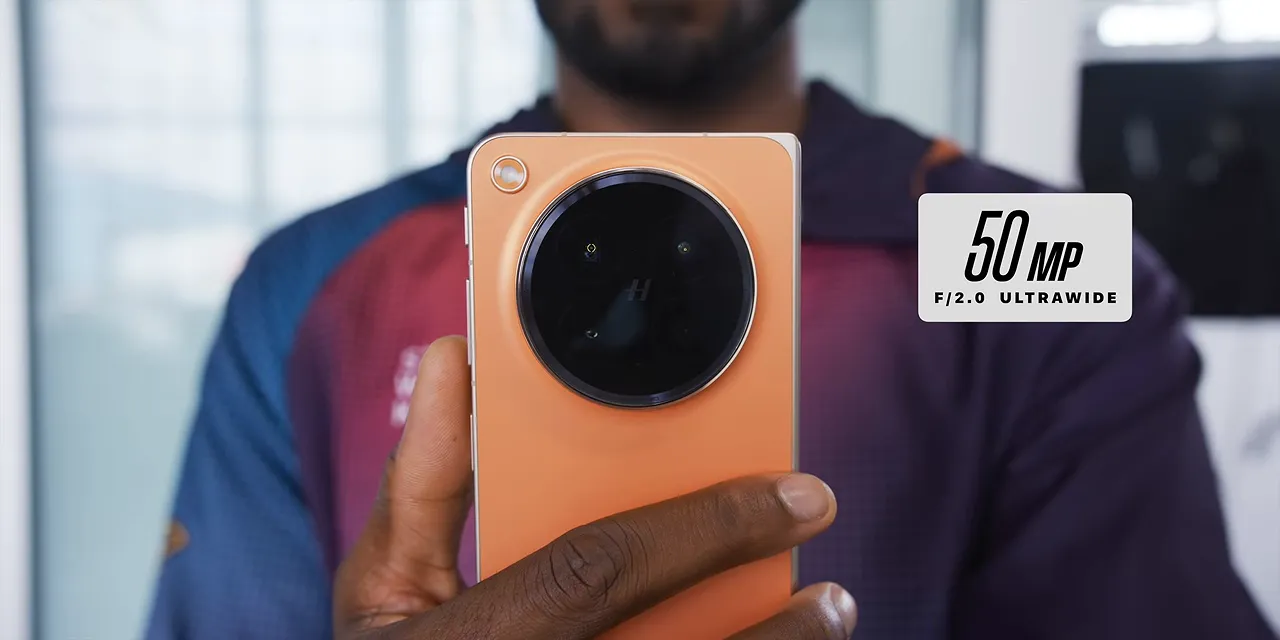
This does not magically give a foldable unlimited room for camera hardware. But it does mean we are talking about a serious high-end camera system, rather than automatically accepting lesser cameras because the phone folds.
Flagship Performance, With One Qualification
Inside is a Snapdragon 8 Elite Gen 5, although it is a binned version with one fewer CPU core. That qualification matters, but for all practical purposes, I would still call this a flagship chip, packaged for the limited space available.
There is also a dedicated S1 chip intended to improve network performance.
Add an IP59 water- and dust-resistance rating, and the list becomes pretty impressive: flagship displays, flagship-class processing, a large battery, high-end cameras, and substantial water resistance. If the rating terminology is unfamiliar, the IP code system explains what those protection numbers refer to.
Not long ago, this combination would have sounded ambitious for a foldable. Now it is the setup for the most interesting part.
The Crease Is Finally Almost Gone
The real standout feature of the Find N6 is the inside display.
Most modern folding screens already look good most of the time. The crease is a bit like a bezel: when you are reading, typing, or looking at content, your brain mostly ignores it.
Then the light hits at the right angle. Or your finger crosses the middle. And suddenly you remember that, yes, there is a dent running through your screen.
Oppo calls its solution the No-Feel Crease. I was skeptical of the marketing, especially because much of the early coverage I encountered was sponsored. But actually using it is genuinely impressive.
Opened up, you get an 8.1-inch, roughly square display with the same 1,800-nit fullscreen brightness, 1 to 120Hz LTPO refresh rate, and high-frequency PWM dimming as the cover screen.
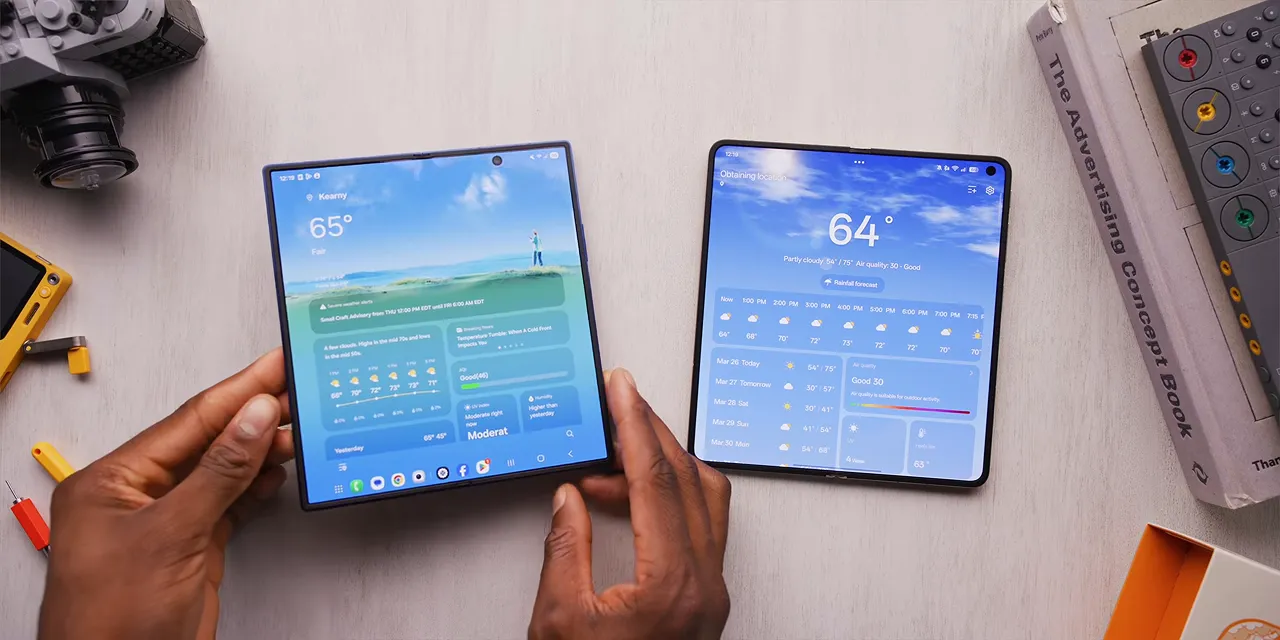
There is still a little crease if you really go looking for it. So I would not call it literally nonexistent. But compared with other foldables I have used, this is effectively crease-free in normal use.
The improvement is not just that the middle looks flatter. It also feels flatter. That is the last little bit of polish that makes the screen feel less like a technical demonstration and more like an ordinary display.
The Surprisingly Complicated Engineering Behind a Flat Screen
Getting that final improvement takes a lot more than simply making a better hinge.
Oppo already uses the familiar teardrop-shaped fold, which softens the bend instead of forcing the display into a tight crease. The more unusual work happens on the surface supporting the screen.
The process goes like this:
- Laser-scan each individual titanium hinge to map tiny variations across its surface.
- 3D-print liquid polymer into the microscopic gaps based on that specific hinge’s scan.
- Harden the polymer with ultraviolet light to create a smoother supporting surface.
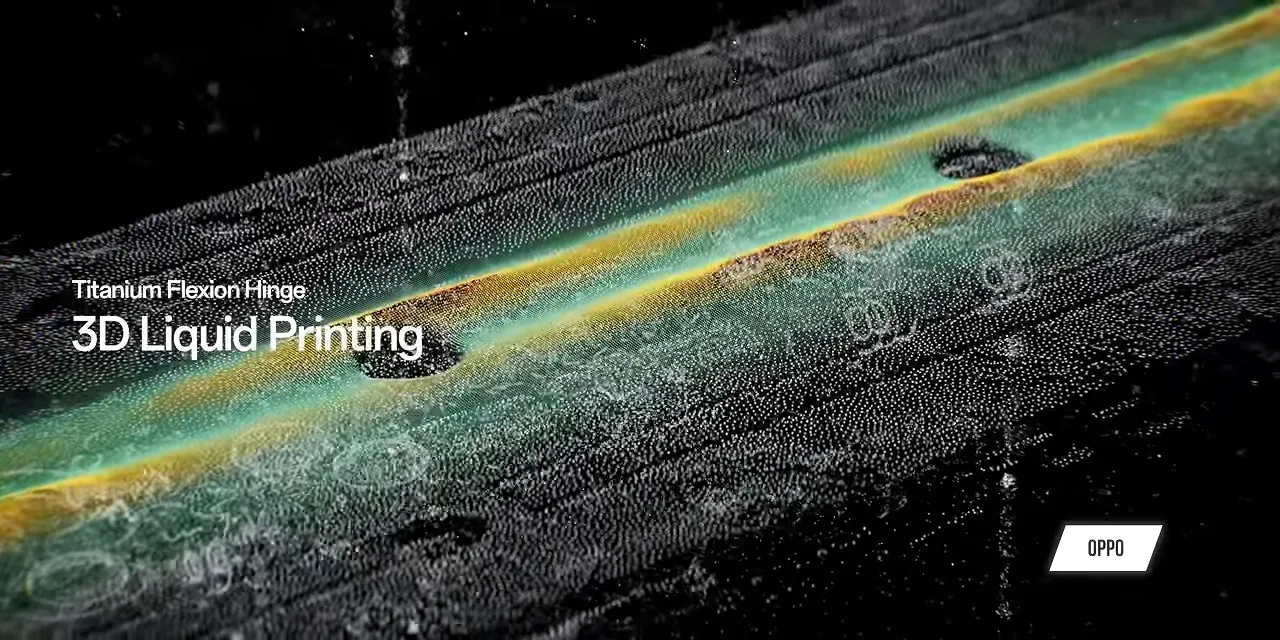
Oppo says this reduces surface variations from 0.2 millimeters to 0.05 millimeters. Combined with a slightly thicker top glass layer, that produces a noticeable difference in both appearance and feel.
That is an intricate manufacturing process to solve something measured in fractions of a millimeter. But those fractions are exactly what your eyes and fingers pick up when they cross the center of a folding display.
There is also the question of how long it stays this way. A lot of foldables look their best straight out of the box, then develop a deeper crease as they are opened and closed.
Oppo claims 600,000 folds without a significant crease developing. I have folded and unfolded this phone plenty of times, but nowhere near that many. So that remains a manufacturer claim, not something I can independently confirm from my own use.
The immediate result, though, is real: the crease stops being something that regularly reminds you this screen folds.
And Yes, It Supports a Pen on Both Screens
The cherry on top is pen support, something Samsung’s current Fold does not offer.
There is a snap-on half case that holds the pen against the back of the phone, positioned near the charging coil so it can charge wirelessly from the phone’s battery.
The pen works on both the outside display and the big inside screen, with more than 4,000 levels of pressure sensitivity and minimal lag. If you like drawing or taking handwritten notes, the digitizer support is here.
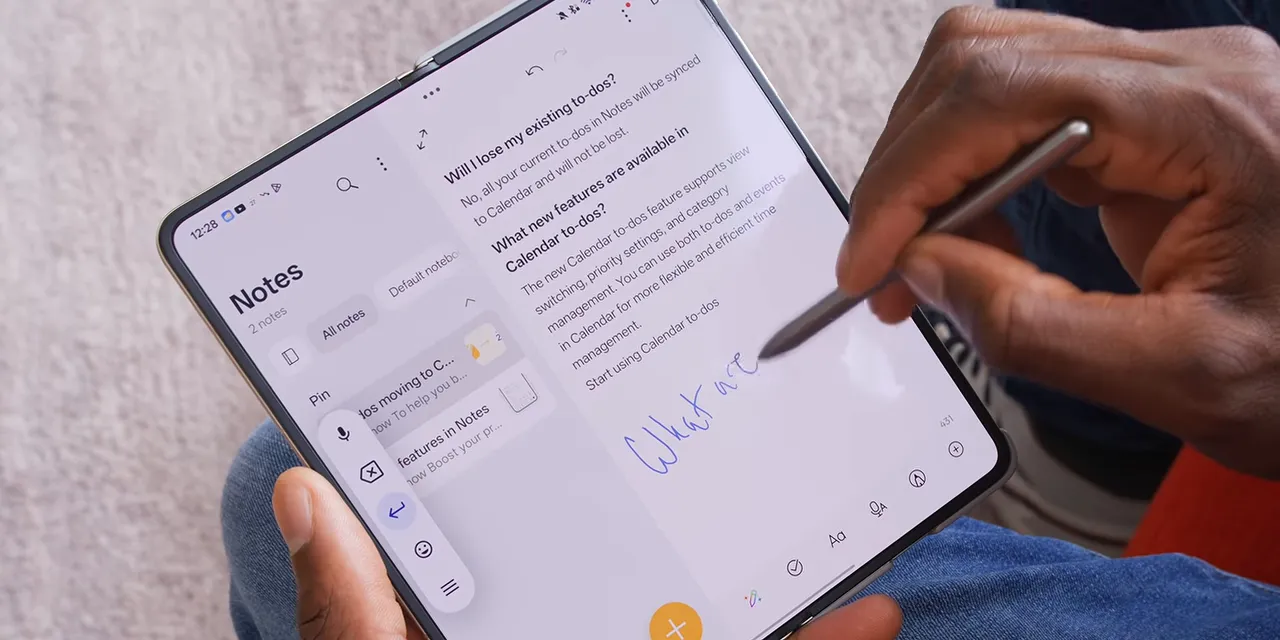
It also has Bluetooth, which is why it needs charging, and can act as a remote camera shutter.
So it is not just a passive pointer for the large screen. You get pressure-sensitive input on either display, a way to carry and charge it, and a remote photography function.
Peak Foldable Does Not Mean the Story Is Over
As far as I am concerned, the Find N6 feels complete.
The awkward closed dimensions, the undersized battery, the lesser chip, the compromised camera hardware, the obvious crease: one by one, those traditional foldable problems have been substantially engineered away.
Price is still the big exception. And there are qualifications, like the camera packaging limits and the long-term crease claim that still needs time. But the everyday hardware experience has reached the point I have been waiting for.
That makes the timing of a possible folding iPhone especially interesting.
Rumors point to Apple entering the category toward the end of 2026. That is not a confirmed launch, but the timing would fit a familiar pattern: let other companies go through the earliest, roughest generations, then arrive once the underlying technology is mature enough to make an Apple version.
Vision Pro entered an existing headset market. HomePod entered an existing smart-speaker market. Even the original iPhone entered an existing mobile-phone market. Apple does not need to invent the category to reshape it.
The question is what its particular twist would be here.
What Would an Apple Version Actually Add?
Often, Apple’s shortcut into a category is making the version that works especially well with the iPhone. But a folding iPhone would already be the iPhone. So what is the trick?
Would it offer something resembling iPadOS when unfolded? Would multi-window support and more advanced multitasking finally make their way onto an iPhone? Those are possibilities, not established features.
The more concrete direction in the rumors is a different aspect ratio.
Many modern book-style foldables have converged on a regular phone shape when closed. Open that shape, and you get something close to a square. It is a bigger canvas, but not an ideal shape for widescreen video.
The rumored folding iPhone instead has a short, squat, passport-style shape:
- Closed: a display around 5.5 inches.
- Open: an almost 8-inch widescreen display, more like a portable iPad mini.
That would be a different balance between the outside and inside experiences, not an entirely new idea. Earlier Oppo Find N phones already explored shorter, wider proportions. The category used to have more variety in its shapes, and it could again.
The interesting test will be how much of the rest makes it across: the nearly invisible crease, the extremely thin build, silicon-carbon batteries, and high-end cameras.
The Find N6 has made folding hardware feel mature. The next question is what companies choose to do with that maturity. Different proportions? Better multitasking? A more convincing phone-and-tablet combination?
We have reached the point where folding itself is no longer enough to be impressive. Honestly, that is a pretty good place to be.
Disclosure: Oppo provided the Find N6 for review.


