The Galaxy S26 lineup looks like a pretty familiar Samsung update: similar designs, a new chip, some camera tweaks, and a whole bunch of AI. But buried in that otherwise conservative refresh is one feature that looks genuinely awesome: the S26 Ultra’s Privacy Display.
It is the kind of hardware idea that makes me more interested in a phone than another collection of AI image generators. Unfortunately, the other thing that immediately stands out this year is the price. The S26 and S26+ both cost $100 more.
One important caveat: these are early impressions, not a full review. More than two feet of snow kept me from getting to California, but Brandon from our team made it, tried the phones, and sent back footage. So this is based on that material and the spec sheets, with actual testing still to come.
Quick Summary
- The Galaxy S26 and S26+ cost $100 more, while the Ultra’s starting price stays unchanged.
- The Ultra’s Privacy Display can obscure the whole screen or selected areas from off-angle glances.
- Hardware changes are modest, with most physical upgrades concentrated on the Ultra.
- Samsung’s new AI features show mixed potential and still need real-world testing.
Galaxy S26 Prices: The Starting Point Moves Up
Normally, pricing comes near the end because it barely changes. Not this time. Here are the starting US prices, all with 256GB of storage:
- Galaxy S26: $899, up from $799 for the S25.
- Galaxy S26+: $1,099, up from $999 for the S25+.
- Galaxy S26 Ultra: $1,299, unchanged from the S25 Ultra.
There is some context for the base phone’s increase. Last year’s $799 S25 started with 128GB, while the S26 doubles that to 256GB. You are paying more, but you are also getting more storage.
The Plus is a tougher sell on that front. It already started at 256GB, so this year’s extra $100 does not come with the same storage bump. The Ultra stays at the same price and starting capacity.
Samsung typically adds a Fan Edition later in the year as the more affordable option. This pricing almost feels like it is clearing space for an $800 FE. That is speculation, not an announced price, but the broader point is pretty clear: there is a lot of price creep happening here.
Which raises the obvious question: what is actually new to justify it?
The Hardware Is Mostly a Familiar Refresh
The designs are very close to last year’s phones. There are slightly different colors and a revised camera treatment, with a little raised plateau around the lenses. Nobody is going to mistake these for anything other than Samsung phones.
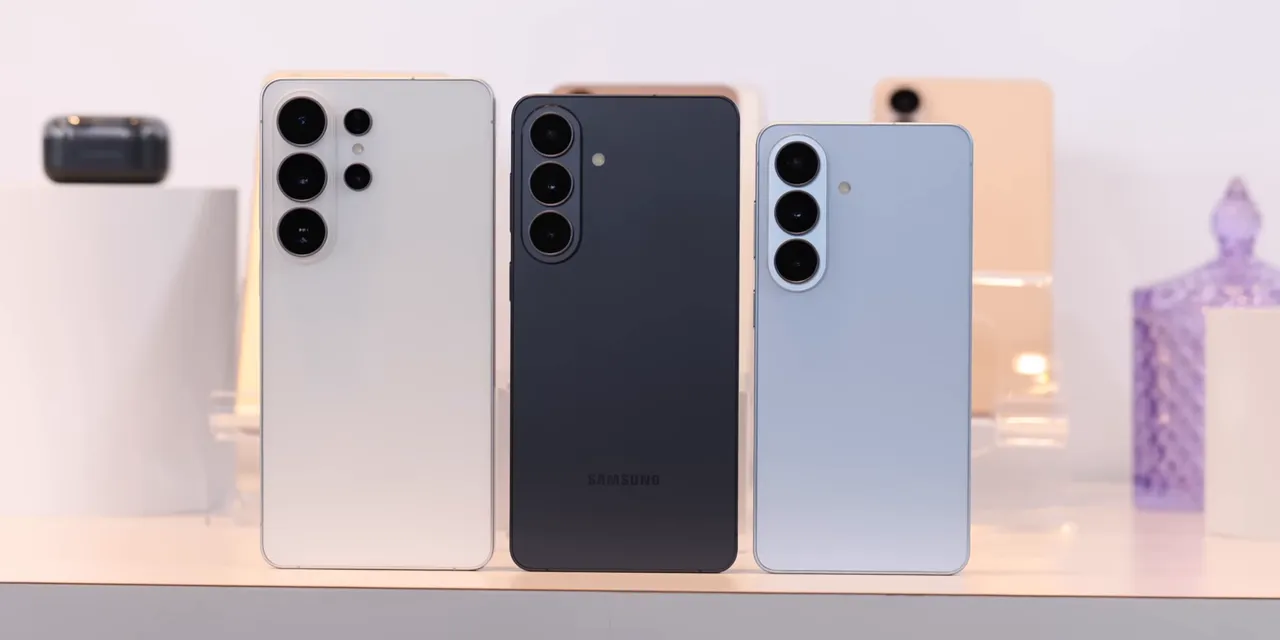
The expected processor update is here: Snapdragon 8 Elite Gen 5 for Galaxy. The regular version of this chip has already looked excellent, and Samsung is talking up NPU optimizations for AI tasks in its version. It looks promising, but that is not a substitute for testing performance, thermals, and battery life.
The advertised charging powers are:
- Galaxy S26: 25W.
- Galaxy S26+: 45W.
- Galaxy S26 Ultra: 60W.
Nothing dramatic, but the Ultra’s 60W figure is a welcome part of the update.
The Ultra Gets Most of the Physical Changes
The S26 Ultra is a little thinner and a little less boxy, with softer corners than before. Samsung has also moved back to aluminum sides instead of titanium and redesigned the vapor chamber to fit the thinner body.
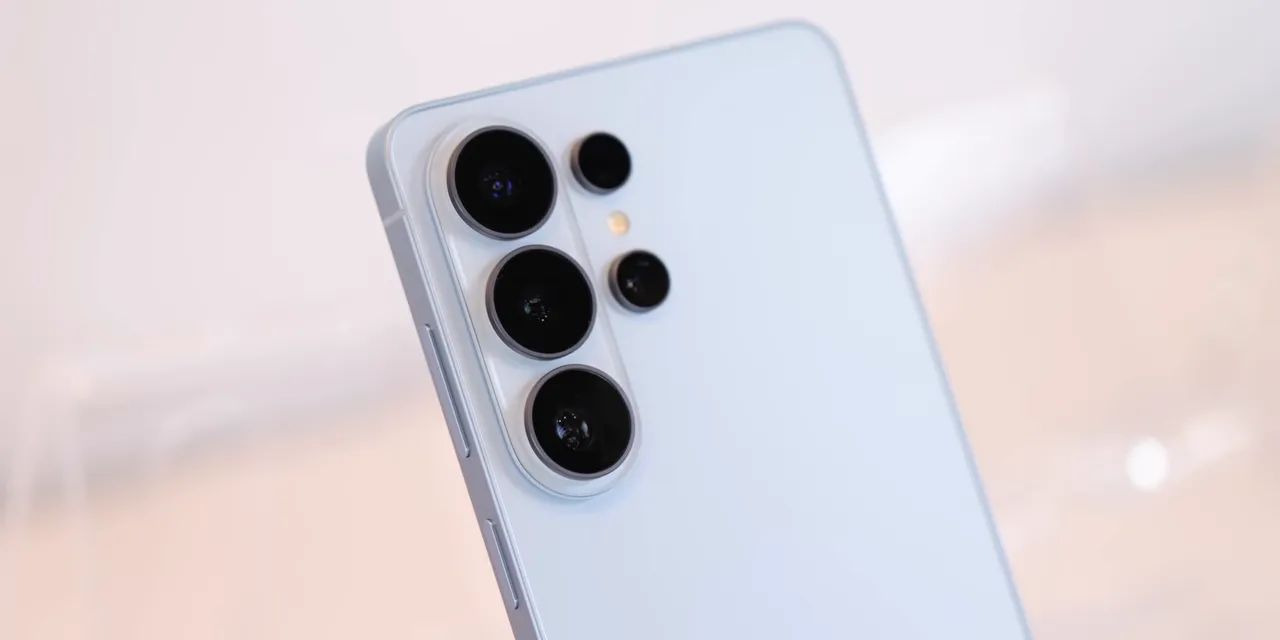
The primary and telephoto cameras get wider apertures, while otherwise remaining largely unchanged. The main camera moves from f/1.7 to f/1.4, and the 3x telephoto moves from f/3.4 to f/2.4. The idea is straightforward: let more light in.
Whether that translates into a meaningful improvement in actual photos is a review question. On paper, these are fairly modest camera hardware changes, not an entirely new camera system.
And two things are still missing: built-in magnets and silicon-carbon batteries. So, outside of the display feature, this is not Samsung taking a huge hardware swing.
The S26 Ultra’s Privacy Display Is the Interesting Part
You know those privacy screen protectors that make a phone harder to read from the side? They serve a purpose, but they also tend to look pretty bad. And their privacy effect is always there, whether you need it or not.
Samsung’s Privacy Display takes that idea and builds it into the display hardware. It uses hardware-level control over the display’s pixels, and you can turn the effect on or off.
Straight on, the screen is supposed to look normal. Move off-axis, and it fades toward gray and almost black. That applies horizontally and vertically, so the idea is to obscure the screen from someone next to you or looking over your shoulder.
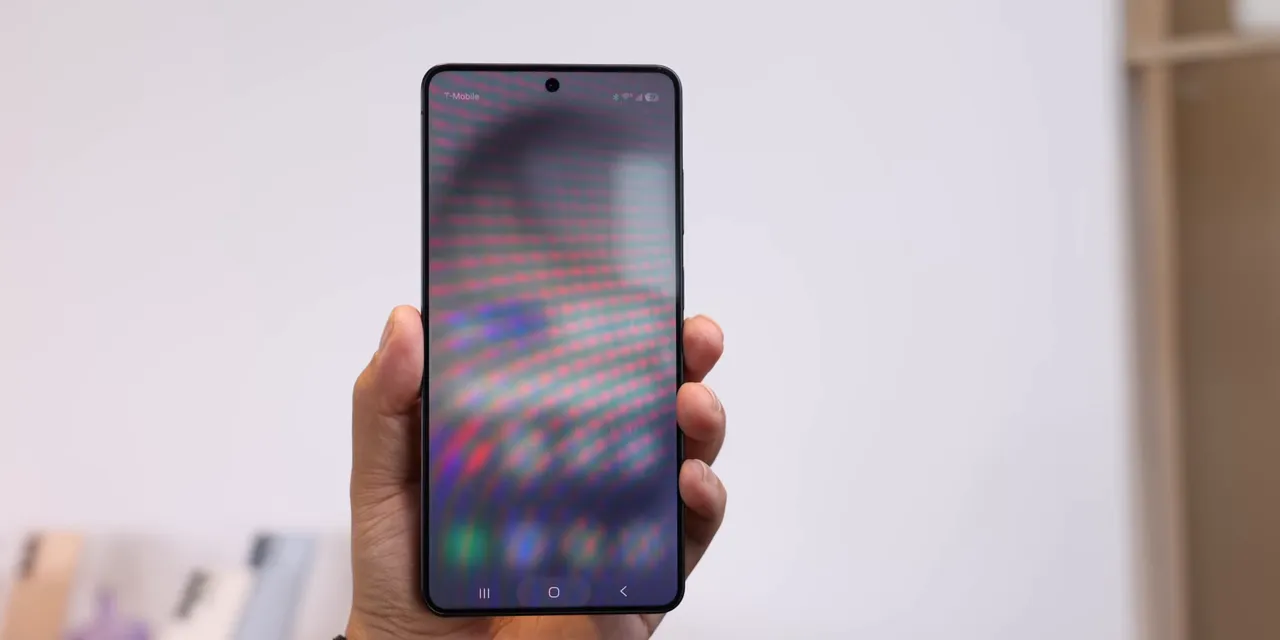
That already looks sick. But the customization is what makes this more interesting than just an electronic version of a privacy screen protector.
Privacy Can Apply to Apps, Locations, or Just Part of the Screen
You can manually switch Privacy Display on and off, but you can also have it activate automatically in particular locations or for selected apps. Maybe you only want it for your banking app. Maybe your photos app. No judgment.
It can also target specific parts of the display rather than hiding everything:
- Password fields: obscure the sensitive field while you enter a password.
- Notifications: hide the notification area from off-angle glances.
- Selected apps: apply the effect where you need it instead of leaving it enabled everywhere.
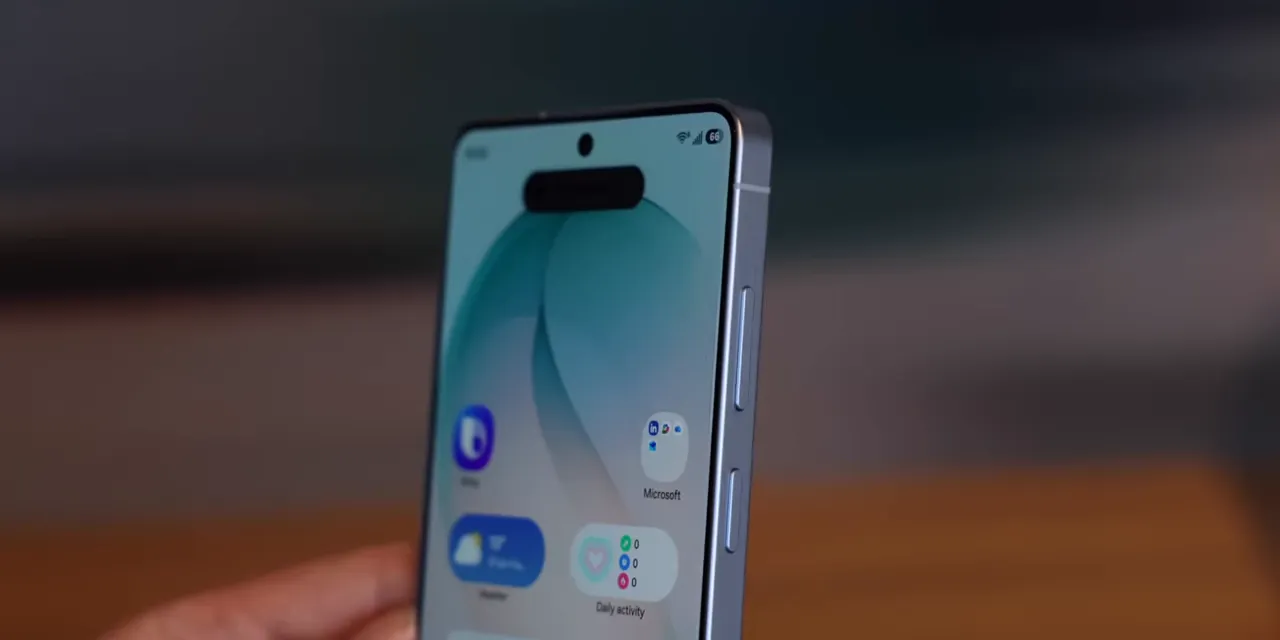
That is a genuinely useful distinction. A conventional privacy protector changes how the whole screen looks all the time. This gives you control over when and where that restriction applies.
I still want to see it in person before judging the straight-on image quality or how it feels in everyday use. But from the demonstration footage, this is easily the feature I am most excited to try.
This Is a Very Samsung Kind of Innovation
Samsung has been conservative with its mainstream flagship designs lately. But this is also the company that made the Galaxy Note Edge, with one side of the display curving over the bezel, and then expanded that idea to both sides on later Galaxy models.
The original Galaxy Note pushed a huge display. The Galaxy Fold was an early, risky bet on folding screens. Now Samsung even has a tri-fold.
There is a common thread through those experiments: display innovation. Curved displays, folding displays, multiple folds, and now a display that can selectively limit who can read it.
Privacy Display fits right into that history. I hope it works well, finds an audience on the Ultra, and eventually makes its way to other phones. This is the kind of feature I would be excited about regardless of whose logo was on the back.
The AI Features Range From Useful to Pretty Questionable
Most of the rest of the S26 story is AI. There is a lot of it, and the usefulness looks pretty uneven.
Call Screening and Now Nudge Have Practical Potential
Samsung has added call screening, bringing over one of the ideas that has made Google’s Pixel phones useful. If you are unfamiliar with the concept, Google’s Call Screen documentation explains its own implementation. Samsung adding this category of feature is welcome.
Then there is Now Nudge, a context-aware feature that lives in the keyboard and suggests relevant things to bring in from other apps. The pitch is less app-switching and less manually hunting down information while you are in the middle of a conversation.
That could be helpful. It is also the sort of feature whose value depends on whether the suggestions are actually relevant, not just whether the demo works.
Bixby Gets an LLM Upgrade
Samsung is claiming big improvements to Bixby now that it is powered by a large language model. There are also Gemini integrations and new Perplexity integrations in the mix.
Could the new Bixby be good? Sure. But other companies have struggled with these assistant upgrades, so I am not going to hand out credit before trying it. This one needs real use, not just a promising description.
Photo Assist and Creative Studio Are Less Convincing
Photo Assist brings AI photo editing into Samsung’s gallery, broadly similar to what Google has done with Google Photos. It is cool technology. I am just not convinced it sells phones.
I would also expect something like this to be a candidate for a software update on older devices, though that is an expectation, not a confirmed rollout.
Creative Studio is more in the territory of Apple’s Image Playground. And, honestly, that looks borderline useless to me. Samsung seems to be trying a bunch of AI ideas to find out which ones people actually want.
Some of the press material calls this an “AI phone,” which I do not love. At a time when authentic photos and videos from phones matter more than ever, putting more generative tools directly into our photo libraries feels like a slippery slope. The technology can be impressive without every application being a good idea.
Early Verdict: The Ultra Has the Hook, the Others Have Higher Prices
This is not one of Samsung’s big, risky reinventions. The Galaxy S26 lineup is mostly subtle evolution: familiar phones with specification bumps, small quality-of-life changes, and a pile of software features.
The Ultra is the most interesting one. It gets a physical refresh, wider camera apertures, 60W charging, and a genuinely exciting place to try Privacy Display. That last feature is the clear standout.
The S26 and S26+ are harder to get excited about at first glance. They cost $100 more, and there does not appear to be a whole lot of new hardware to offset that increase, especially on the Plus.
My first impression: Privacy Display is the reason to pay attention. The rest still needs to prove itself.
Sponsor: dbrand’s Galaxy S26 Cases
If you are planning to pick up an S26, sponsor dbrand has its case lineup available at launch: the clear Ghost, customizable Grip, and rugged Tank.
The Ghost’s main selling point is its anti-yellowing guarantee. dbrand says it will replace the case free for life if it turns yellow. It also offers strong magnets, which the phone itself lacks, clicky buttons, and claimed drop protection up to 10 feet.
The lineup is shipping at the time of announcement and is also available nationwide at Best Buy in the US. Bundling a Prism screen protector with any case saves 15%. The protector comes in a two-pack, is designed for easy installation, and works with the Ultra’s new Privacy Display.
|


