The original Nintendo Game Boy is a brick. Put one in somebody’s hands blindfolded, and the first guesses might be a GPS, a cassette player, or a controller. Then their fingers find the buttons, the shape clicks, and that little startup chime brings everything back.
For a lot of people, this thing is instant nostalgia. For me, it was a genuine first impression. I had never owned a Game Boy or even used one before exploring it for its 30th anniversary. I knew Mario. I knew Tetris. But I didn’t have the childhood connection to the hardware.
So the question wasn’t just whether a handheld from April 1989 was still fun. It was why this particular handheld changed gaming, what made it outlast flashier competition, and how much of its thinking still lives in the tech we carry today.
Key Takeaways
- The Game Boy made portable gaming approachable through simple controls, durable hardware, and compelling games.
- Tetris helped the system reach people who did not already consider themselves gamers.
- Mature technology let Nintendo prioritize practical portability over flashier displays and features.
- The Game Boy’s influence extends beyond games into portable entertainment habits and chiptune music.
Table of Contents
- Unboxing 1989: Big Buttons, Thick Plastic, One Familiar Sound
- How Nintendo Put Gaming in Your Hands
- Testing the Game Boy’s Ridiculous Durability
- Tetris Was the Perfect Game for the Game Boy
- Game Boy Accessories: Dope or Nope?
- Why Simpler Hardware Beat Flashier Competition
- Turning Game Boy Limitations Into Chiptune Music
- The Game Boy’s Real Legacy
Unboxing 1989: Big Buttons, Thick Plastic, One Familiar Sound
Opening a sealed Game Boy is a pretty good reminder that unboxing experiences have improved. Getting into the little plastic cartridge case took more effort than I expected. Apparently, thinking like it was 1989 was not enough.
Then there’s the console itself. The buttons are big. The body is thick. Nothing about it is trying to disappear into your hand.
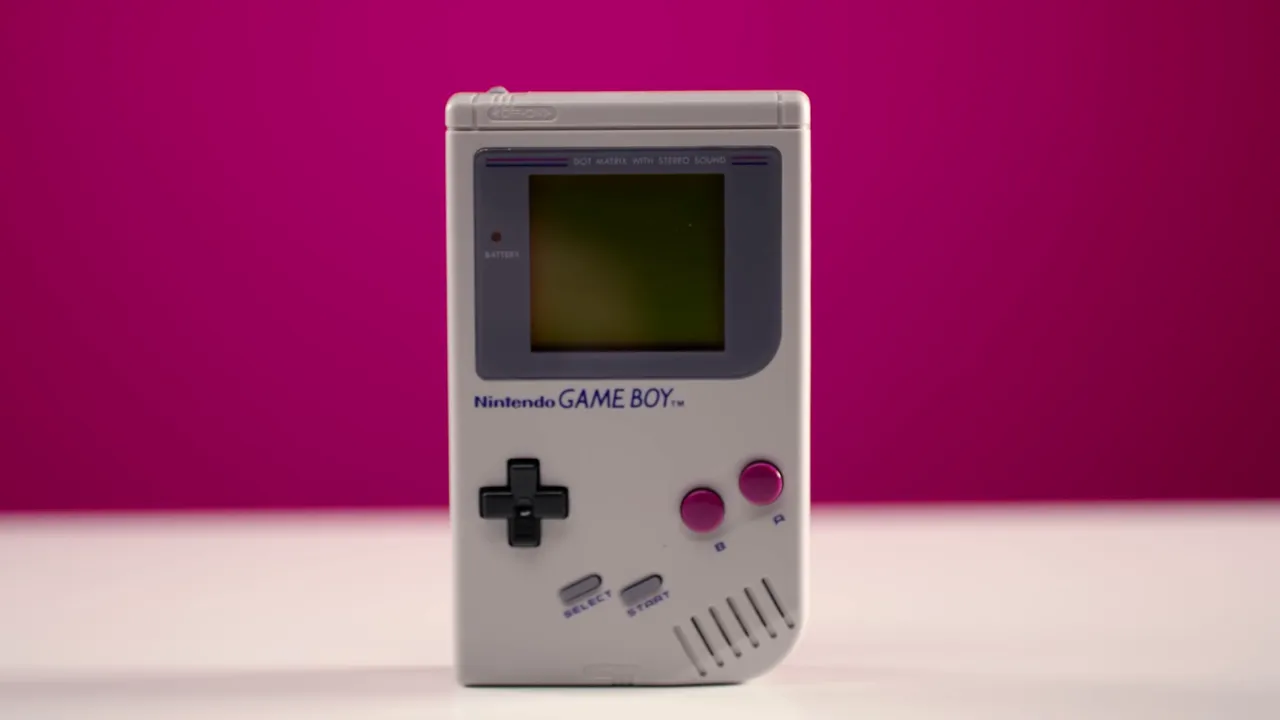
The front is incredibly straightforward: a screen, a D-pad, A and B buttons, Start and Select, and a speaker. A cartridge slides into the back. Switch it on, and you get that unmistakable chime.
Even without years of memories attached to it, I could see the appeal of that interaction. There’s almost nothing between deciding to play and playing.
But first impressions only explain so much. To understand the Game Boy, I needed to understand the world it arrived in.
How Nintendo Put Gaming in Your Hands
Before entertainment was always available
The 1980s were a major turning point for personal technology. Devices like the Walkman helped make entertainment something you could take with you instead of something tied to a room.
That’s easy to take for granted now. We have smartphones, tablets, and entertainment on demand. For a kid back then, the options during a long trip or an uneventful afternoon were much more limited.
Gaming was changing, too. Arcades were a big part of the experience, and home consoles brought games into the living room. Atari became a phenomenon, other companies chased the market, and Nintendo eventually emerged as a dominant force.
By the time the Game Boy arrived, Nintendo already had an incredible collection of recognizable games and characters. Duck Hunt, Solomon’s Key, Castlevania, Zelda, and Mario helped establish the expectation that Nintendo hardware meant games people wanted to play.
The Game Boy’s promise was simple: take the Nintendo experience out of the living room and bring it anywhere.
A calculator on a train
Nintendo’s history goes back much further than I expected. I would have guessed the company started in the 1970s. Its roots actually reach into the 1800s, when it made playing cards. The company behind Mario did not begin as a technology company.
One of the key people in its move toward portable gaming was Gunpei Yokoi. The famous inspiration story starts on a crowded train in Japan, where he noticed a businessman pressing buttons on a calculator to pass the time.
What if that person had a real game to play instead?
Nintendo’s willingness to experiment helped turn that idea into Game & Watch, an early step toward portable electronic entertainment. Yokoi later carried that thinking forward into the Game Boy.
It wasn’t just about shrinking a console. It was about recognizing a different place for games in everyday life: the commute, the trip, the time between other things.
And when one kid brought a Game Boy to school, it wasn’t necessarily a solitary experience. Everybody crowded around. A little screen with a game moving on it was enough to make its owner the center of attention.
Testing the Game Boy’s Ridiculous Durability
A device designed to go everywhere needs to survive being carried everywhere. The Game Boy built a reputation for being unusually tough, and one story takes that reputation to another level: a badly burned unit that survived a Gulf War bombing and could still run Tetris.
That raised an obvious question. Where, exactly, was the breaking point?
Casey Neistat joined me at a Brooklyn warehouse to find out. We had a Game Boy, a flamethrower, fire extinguishers, and assistance to manage the test safely. This was an extreme experiment, not a recommendation for testing your own electronics.
After repeated bursts of flame, the outside looked finished. The housing was melted and charred. The buttons were blackened. Heat had wrapped around the device, and the back had softened enough that getting a cartridge into the slot became its own challenge.
At that point, I was not expecting a successful boot.
Then it chimed.
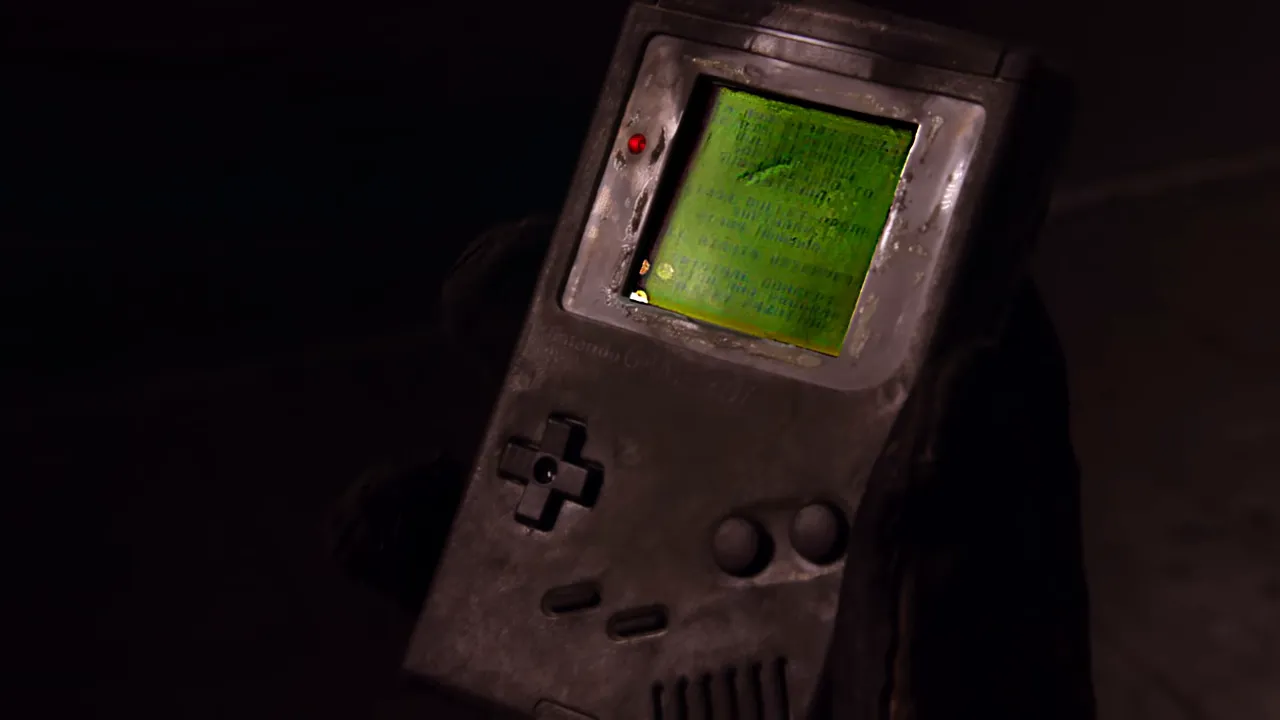
What initially looked like a destroyed screen turned out to be damage to the outer protective layer. Underneath, the display was still operating. We could run the game and use the controls.
It appeared to do everything it had done before being blasted with fire. It just smelled considerably worse.
One surviving unit doesn’t make every Game Boy indestructible. But as a hands-on demonstration of why this hardware earned its reputation? That was pretty convincing.
Tetris Was the Perfect Game for the Game Boy
Durable hardware is great. Without the right software, though, it’s just durable plastic.
A huge part of the Game Boy’s success was its pairing with Tetris. It’s easy to understand, easy to start, and difficult to master. You don’t need familiarity with a character, a story, or complicated controls. You just need to start arranging falling blocks.
That accessibility matters. Tetris could make somebody who didn’t think of themselves as a gamer reconsider. If this was gaming, maybe there were other games they would enjoy, too.
Its origin story was unusual in its own right. Computer scientist Alexey Pajitnov created Tetris in the Soviet Union. Its journey into a worldwide commercial phenomenon involved tangled licensing arrangements, legal disputes, and substantial money. The official history of Tetris provides more background on that journey.
For the Game Boy, the result was a game that fit the hardware and the use case beautifully. A small screen and simple controls weren’t obstacles to the experience. They were enough.
And portable did not have to mean playing alone. With two Game Boys, two copies of Tetris, and a link cable, you could compete directly. I tried that with Ronny Chieng. He got the better of me.
Tetris was also the beginning rather than the whole story. The Game Boy library brought experiences like these along for the ride:
- The Legend of Zelda: Link’s Awakening, bringing a Zelda adventure to a handheld.
- Super Mario Land, putting Mario in a portable format.
- Metroid II: Return of Samus, extending another major Nintendo series onto the system.
The Game Boy became part of everyday culture, not just gaming culture. Hillary Clinton was photographed playing one aboard an aircraft. Astronauts took Game Boys into space. This little console could be a companion in an extraordinary range of places.
Game Boy Accessories: Dope or Nope?
A big audience creates room for an accessory ecosystem. Most Game Boy add-ons never became essential, but the platform had enough fans to support some genuinely useful ideas and some very strange experiments.
I tracked down a few to see which ones still delivered.
Handy Boy: Dope
The original Game Boy’s relatively basic display helped make the system affordable and appealing. It also created an obvious problem: if you wanted to play at night, you needed light.
The Handy Boy by STD tried to address several limitations at once. It added lighting, a magnifying lens, and speakers, turning the handheld into a much bigger contraption.
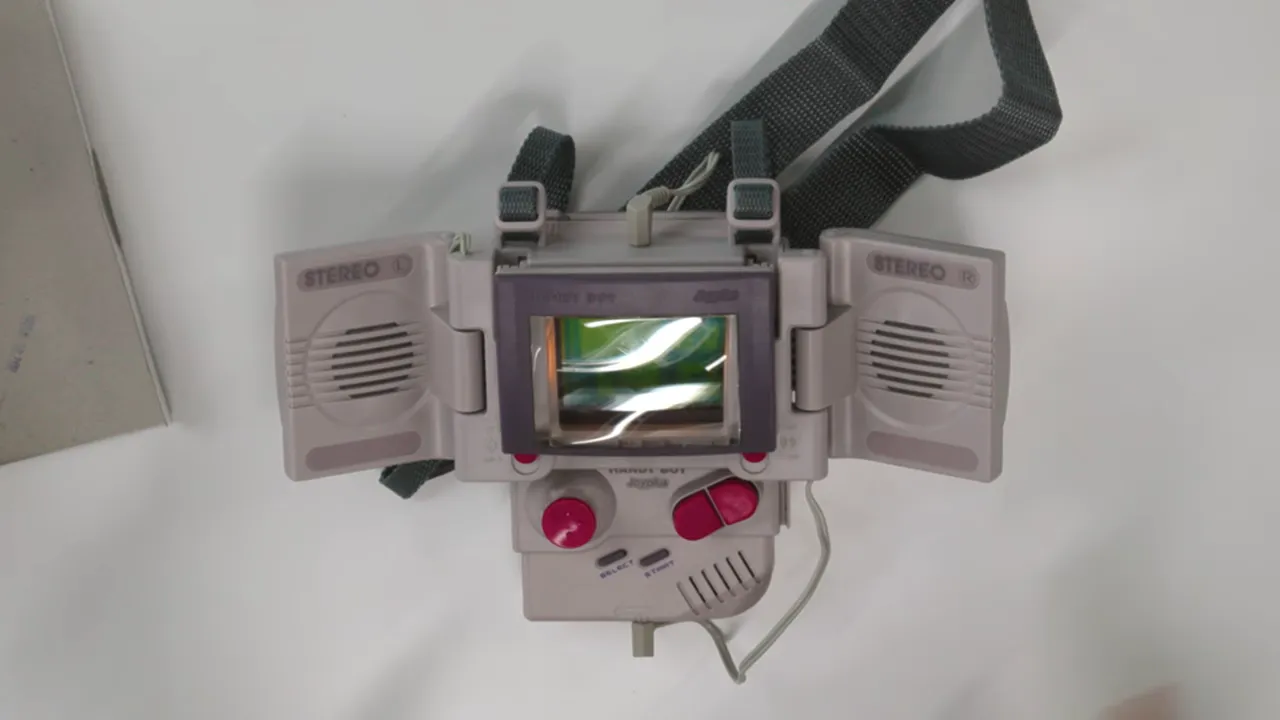
The light was useful. The magnifier could flip out of the way when I didn’t want it. And the speakers were surprisingly loud.
It absolutely compromised the clean, compact idea of the original device. But if the goal was one accessory that made the Game Boy experience better in multiple ways, I couldn’t really argue with it. Dope.
Pocket Sonar: Nope, at least in my test
The Pocket Sonar is exactly the kind of accessory that makes old tech fun to explore. It connected to the Game Boy and used a separate sonar sensor to help locate fish.
Yes, an actual fish-finding accessory for a Nintendo handheld.
My test setup was a small aquarium. The menus weren’t in English, so even getting started involved some guessing. More importantly, I appeared to need a deeper body of water to get a useful result.
That means this wasn’t a definitive assessment of how it would perform in its intended setting. But I didn’t successfully locate fish with it, and it wasn’t about to help me catch dinner. For my experience: nope.
Game Boy Camera: Dope
The Game Boy Camera once held a Guinness World Record for being the smallest digital camera. That alone is a pretty good reminder of how much camera technology has changed.
What surprised me more was how well the experience worked. The Game Boy screen became a usable viewfinder. Pressing A captured and saved a photo. The camera could point toward me for a selfie or away from me for something else.

No, it wasn’t remotely close to a modern phone camera. But taking photos on this hardware felt much more functional than I expected. Dope.
Game Boy Printer: Nope
The printer completed the idea: take a photo on the Game Boy, connect a cable, and send the image to a small physical printer.
The process worked. The result was roughly postage stamp sized and, in my test, barely recognizable.
I’m sure the experience could have been better when the equipment and paper were newer. Still, I have to judge the result I got. Cool concept, disappointing output. Nope.
Why Simpler Hardware Beat Flashier Competition
The Game Boy didn’t exist in a vacuum. Portable systems from Atari and Sega offered features that looked more advanced, especially color displays.
Put them side by side, and it’s easy to understand the temptation. Of course you want color. Of course a bigger, brighter display looks better.
But those features came with a cost in battery life. A portable system’s display is only useful while the system has enough power to run it. Lasting longer could matter more than looking better.
That tradeoff reflects a philosophy associated with Yokoi and Nintendo: lateral thinking with withered technology. In plain language, use mature technology that you understand well, then find a clever new application for it.
The interesting part isn’t that the components are old. It’s that the product does something valuable with them.
Nintendo didn’t need the flashiest screen or complicated controls to deliver the core experience. The D-pad, two main action buttons, simple audio, and interchangeable cartridges did the job.
That’s a useful way to evaluate tech even now. The strongest feature list doesn’t automatically produce the strongest product. The choices have to make sense together, especially for the way somebody will actually use the device.
Turning Game Boy Limitations Into Chiptune Music
Some of the Game Boy’s limitations became part of its identity. Its basic electronic sounds weren’t just something people tolerated while playing. They became sounds people actively wanted to create with.
Chiptune music uses the sound hardware of old gaming systems as an instrument. The Game Boy became a recognizable tool within that scene.
Chiptune artist Storm Blooper showed me how it worked. The system has four sound channels, which puts a hard limit on how much can happen at once. Instead of hiding that constraint, artists build compositions around it.
The music can also be tiny in file size. The example discussed was around eight kilobytes, hundreds of times smaller than a compressed MP3 song. That comparison gets at an important difference: instructions for generating chip sounds can take up far less space than a recording of an entire performance.
I started with basically no music-making experience. Change a note, hear the result, try another one. My goal was modest: put together something that flowed from beginning to end and didn’t sound terrible.
The second part took some work.
Eventually, with a kick drum added, I had something that resembled a track. Then Storm Blooper played his own material, and the gap between a quick beginner experiment and an experienced artist became very clear.
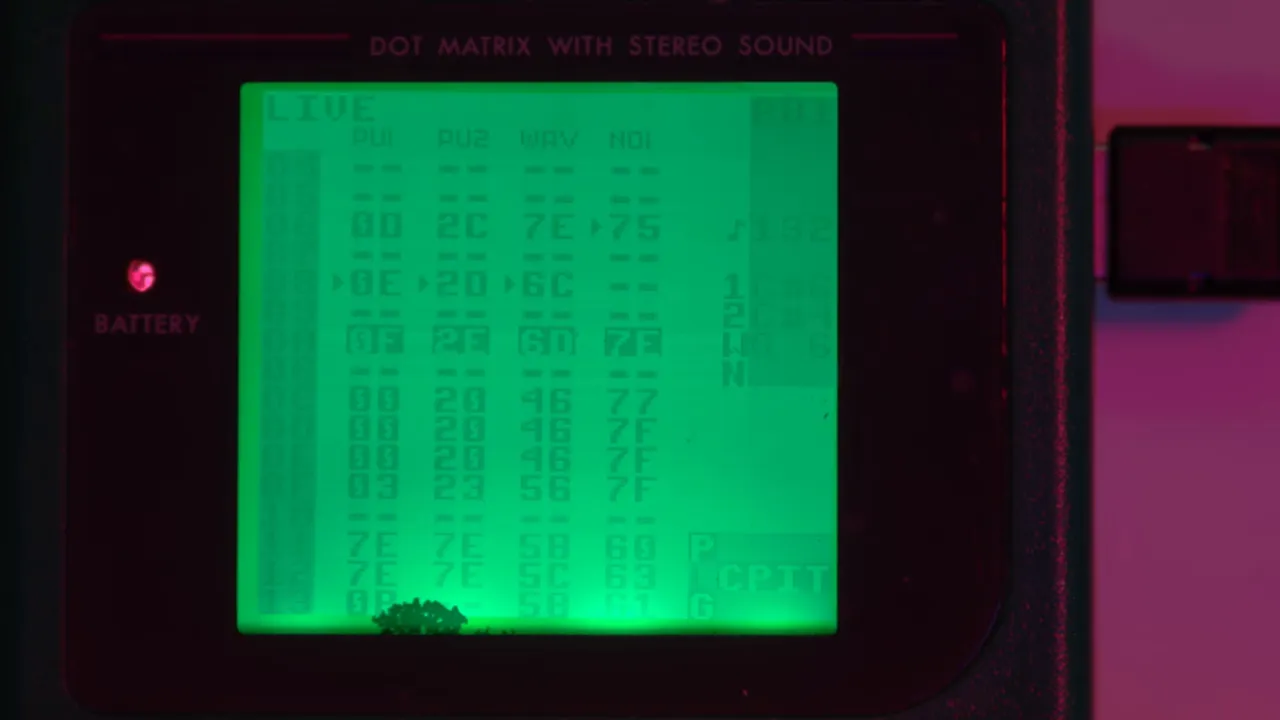
I did not expect music that fresh to come out of hardware that old. But that’s the point: a technical limit doesn’t necessarily end a creative possibility. Sometimes it gives the work a distinctive character.
The Game Boy’s Real Legacy
The biggest thing the Game Boy changed wasn’t display technology or processing power. It changed our expectations of free time.
Entertainment no longer had to stay at home or wait for a trip to the arcade. You could carry a device that was ready to fill the gaps in your day. A train ride, a long wait, or a quiet afternoon could become time for a game.
It would be too simple to say one console alone created the smartphone. But the cultural connection is clear. The habit of carrying interactive entertainment everywhere was well established before phones absorbed so much of that role.
The design connection is just as interesting. The Game Boy made a complicated achievement feel simple. Insert the cartridge. Switch on. Play. All the engineering work sits behind an interaction that barely needs explaining.
Minimalism works when it preserves what matters. Here, that meant approachable controls, useful battery life, durable hardware, and games worth carrying around.
I started out feeling disconnected from the Game Boy because I had no memories attached to it. After using it, playing against somebody else, trying the accessories, hearing it make music, and seeing a burned unit keep working, I get it.
This wasn’t just a successful handheld. It helped make portable entertainment feel normal. And decades later, that little gray brick still has something to teach the newest tech on the desk.


