The Nothing Phone 4A and 4A Pro are two of the most compelling new budget phones available right now. They also happen to be, I think, the two best-looking phones Nothing has ever made.
The Phone 4A starts at €349 and is coming to Europe and a few other markets. The Phone 4A Pro starts at $499 in the US. And notice what is missing: there is no Nothing Phone 4. Just a 4A and a 4A Pro.
I have a theory about that. But the short version is that Nothing seems to understand where its strengths are. These phones lean into distinctive design, genuinely enjoyable software, and hardware that feels quick without chasing the most expensive parts available. That makes a lot of sense. It also makes the regular 4A the more interesting deal.
Nothing provided both phones for review.
Quick Summary
- The Phone 4A delivers the stronger value, while the Pro adds nicer materials and US availability.
- Nothing OS combines responsive performance with distinctive home screen customization and relatively few AI features.
- The Pro’s headline display and zoom numbers offer limited benefits in everyday use.
- Both phones provide versatile triple-camera systems, but photo quality remains average.
Table of Contents
- The Phone 4A Gets the Basics Right
- Nothing OS Is Still a Real Reason to Buy One
- The Glyph Lights Are Different on Each Phone
- What the Phone 4A Pro Actually Upgrades
- Triple Cameras, Perfectly Average Results
- My Theory About the Missing Nothing Phone 4
- The Verdict: The 4A Is Where It’s At
The Phone 4A Gets the Basics Right
With the fairly underwhelming Pixel 10A arriving at $499 and the iPhone 17E costing another $100 on top of that, there is a pretty obvious opening for something different. Nothing is happy to be that alternative.
Especially in blue. This blue is so nice.
The Phone 4A has matte blue sides, a semi-transparent plastic back, Nothing’s familiar dotted lettering, and a collection of shapes and textures underneath. It is unmistakably a Nothing phone, but the whole design feels particularly well put together here.
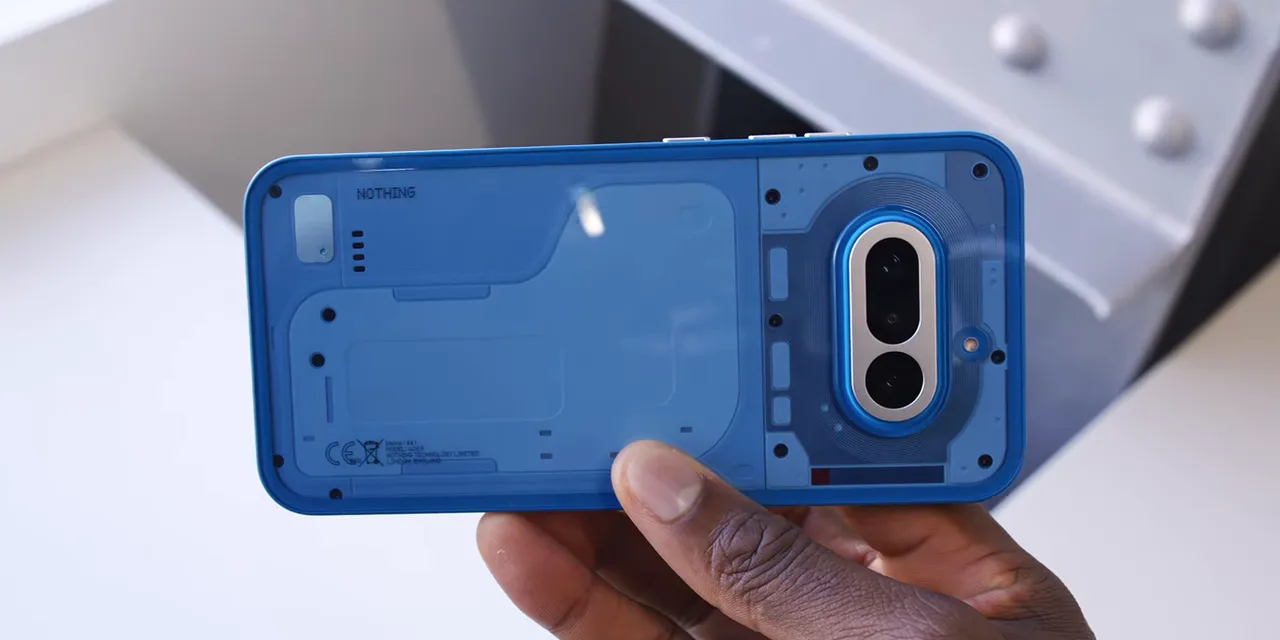
The hardware is not super premium, and at €349, it does not need to be. There is a mix of plastic and recycled materials, Gorilla Glass 7i on the front, and an IP64 rating. Starting storage is 128GB. That capacity is harder to accept on a much more expensive phone, but here, it makes sense.
The core specifications are solid:
- Processor: Snapdragon 7s Gen 4.
- Display: A 6.78-inch OLED with a 2720 × 1224 resolution and up to a 120Hz refresh rate.
- Battery: 5,080mAh.
- Rear cameras: An 8-megapixel ultrawide, a 50-megapixel main camera, and a 50-megapixel 3.5x telephoto.
- Memory and storage: Configurations shown include 8GB of RAM with 128GB of storage and 12GB with 256GB.
Triple cameras at this price certainly make a good first impression, particularly next to the iPhone 17E’s single rear camera and the Pixel 10A’s two. Camera count is not the same thing as camera quality, though. More on that in a bit.
Nothing OS Is Still a Real Reason to Buy One
Both phones run Nothing OS 4.1 on top of Android 16. And this is where Nothing continues to do a lot of good work.
The company has always been pretty good at smoothness and responsiveness. Even without a top-tier processor, its phones tend to feel nice to use. Now storage has been upgraded to UFS 3.1, helping apps open faster, and the animations throughout the operating system keep getting more refined.
The snappy factor is high.
That matters more than a chipset name for a lot of everyday use. On the Pro in particular, between its Snapdragon 7 Gen 4, quicker storage, and polished animations, I think most people would have a hard time distinguishing it from something much more expensive without running a benchmark or playing a demanding game.
A Home Screen With Actual Character
Nothing is also adding more customization rather than just polishing what was already there. There is more control over how folders appear on the home screen, including different styles and cover icons.
Then there is Playground, the community-driven web destination for custom widgets. This was my first time using it, and some of these widgets are pretty wild.
One is essentially an arcade game squeezed into a little square on your home screen. Another tracks progress through the day, week, month, and year. Useful? Potentially. Also a slightly alarming reminder of how much of 2026 has already disappeared? Absolutely.
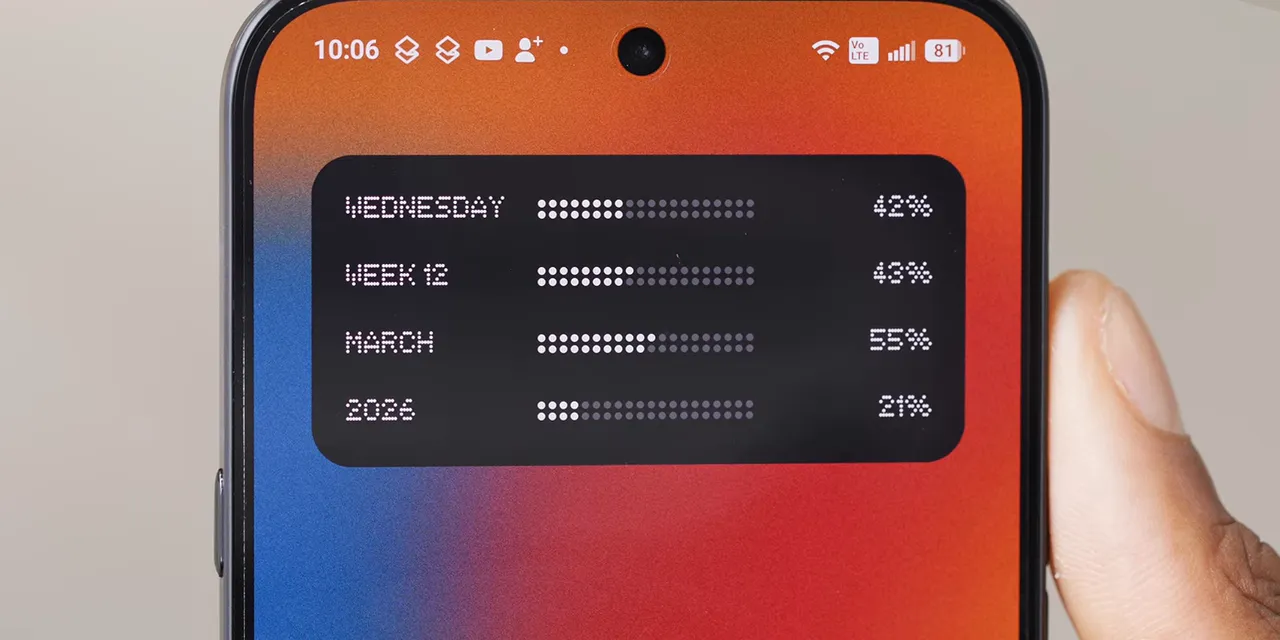
I like that Nothing OS has character without sacrificing responsiveness. Sometimes I will use a Nothing phone for a while, switch to another phone, and realize I miss a few very specific home screen features. Other phones have customization, obviously. They just do not have quite this combination of stuff.
Not a Lot of AI, Which Might Be a Selling Point
Neither phone is overloaded with AI features. Depending on how you feel about the current state of smartphones, that might be music to your ears.
Nothing groups its features into something called the Intelligence Toolkit. It is a fairly minimal collection: an AI wallpaper generator, custom ChatGPT widgets, and Essential Space, which remains accessible through the dedicated shortcut button on the side.
This is not the sprawling collection of photo-editing tricks and AI tools you get on something like the Galaxy S26 Ultra. The focus here is much more on the basic software experience.
The Glyph Lights Are Different on Each Phone
Of course, it would not be a Nothing phone without lights on the back. But these two take pretty different approaches.
Phone 4A: A Simple Seven-Dot Bar
The regular 4A has seven LED dots lined up along the right side of the back, with a red dot at the bottom.
That strip can act as a music volume indicator when you turn the phone over. It can also show progress for an upcoming Uber, signal a Google Calendar notification, or count down a Glyph Timer.
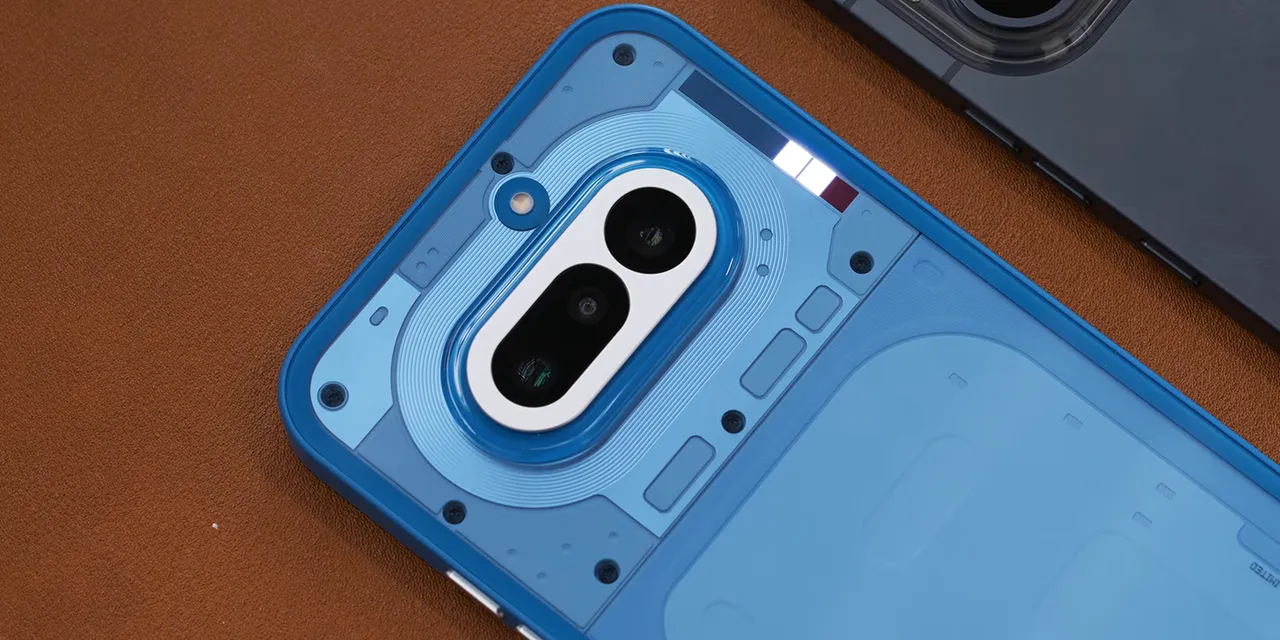
The red dot also blinks while recording video. Honestly, maybe more phones should have that. It is a small detail, but a good one.
Phone 4A Pro: A Customizable Glyph Matrix
The Pro replaces that bar with a circular, pixel-style Glyph Matrix next to the cameras. Think of it as a larger, lower-resolution, brighter version of the rear display on the Nothing Phone 3.
Because it is an array of dots rather than a simple strip, it can communicate more specific information. I can assign a particular icon to a missed Slack notification, for example. A message from a particular person can leave a heart on the back.
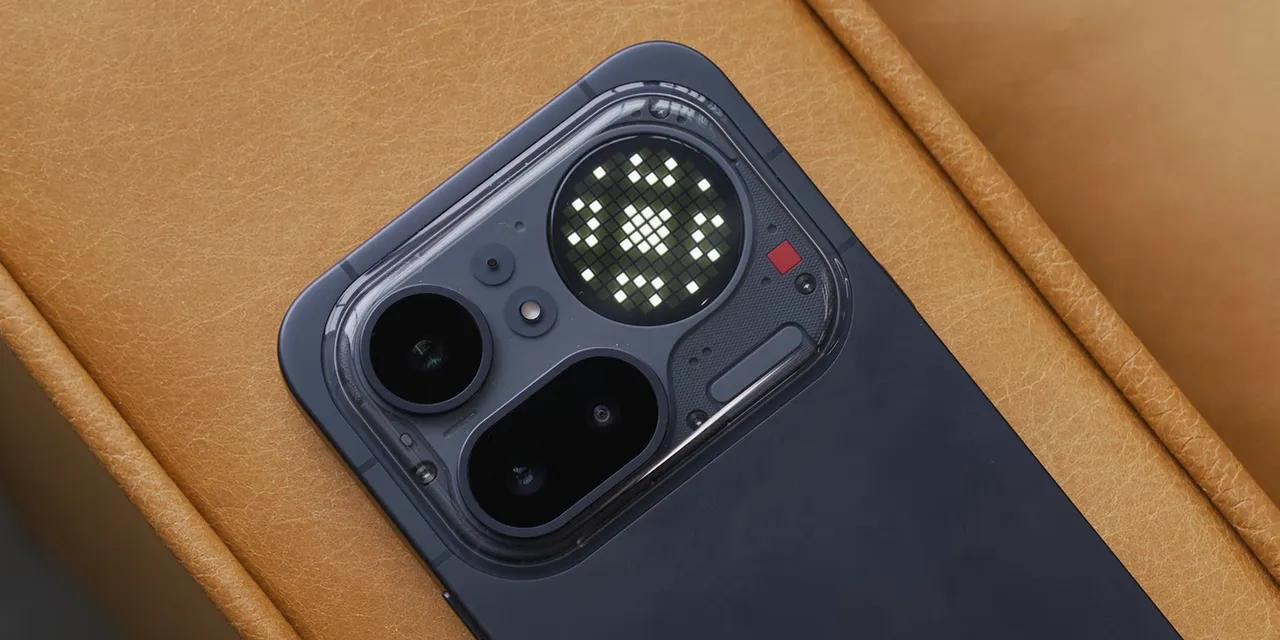
There is a whole collection of premade icons for contacts and notifications, plus the option to use a custom image. I do wish I could just draw directly onto the matrix and make something specific, though. That feels like an obvious software-update opportunity.
The timer animation is also impressively intricate. Unfortunately, it does not integrate with the built-in Clock app, which makes it much less likely that I will actually use it.
The part I genuinely appreciate is the notification filtering. Leave the phone face down, recognize the notification you care about, and decide whether it deserves picking up the phone. Most of the time, the phone can stay where it is.
Some of the other Glyph features are a little gimmicky. That bit of functionality is not.
What the Phone 4A Pro Actually Upgrades
The Pro feels nicer as soon as you hold it. It has a unibody aluminum construction, so you are holding cold metal rather than plastic. That is a meaningful difference in how premium a phone feels.
It is also extremely fingerprint-prone and, for some reason, annoyingly difficult to clean. So there is that.
Up top, the cameras and Glyph Matrix sit inside a clear section with a more substantial camera plateau. It gives the phone some of the visual presence of a big Ultra flagship without actually being one. And it keeps the red recording indicator. Love that.
The bezels are thinner, too. Despite a slightly smaller footprint, the Pro fits a slightly larger 6.83-inch screen, with a 2800 × 1260 resolution. Its Snapdragon 7 Gen 4 is a step above the 4A’s Snapdragon 7s Gen 4, and its camera hardware includes larger sensors. Battery capacity remains 5,080mAh.
Those are real changes. But some of the other upgrades are much easier to appreciate on a specification sheet than in your hand.
Brightness: Bigger Number, Similar Experience
The 4A Pro advertises 5,000 nits of peak brightness versus 4,500 nits on the regular 4A. Nice numbers. Holding the two side by side, though, I do not see much of a difference.
That does not make the specification meaningless. It just does not give me a compelling reason to choose the Pro.
Water Resistance: Neither Is Built for a Swim
The Pro moves from IP64 to IP65, which means a higher level of protection against water jets. Both can handle splashes, but neither rating is an immersion rating. The IEC’s explanation of IP ratings is useful for understanding what those numbers actually describe.
Again, an improvement. Not a transformative one.
Wireless Charging: Missing on Both
The regular Phone 4A does not have wireless charging. Neither does the Pro.
The Pro’s new metal unibody feels great, but unlike the iPhone 17 Pro, Nothing has not added a rear cutout to accommodate wireless charging. So paying more does not get you that feature.
144Hz: Mostly a Supported-Games Feature
Both phones use LTPS displays, with refresh rates that can step down to 30Hz. In normal use, they run up to 120Hz.
But the Pro’s specification sheet, and even its settings, list a maximum of 144Hz. That sounds a little more flagship.
Turn on the frame-rate indicator, though, and it basically never reaches 144Hz in ordinary use. Even forcing peak refresh rate leaves it at 120Hz. The higher mode is reserved for a small selection of supported games, similar to what we have seen on some Asus phones in the past.
Do not buy the Pro expecting the entire interface to run at 144Hz. Outside those games, you may never encounter it.
Triple Cameras, Perfectly Average Results
It is nice to have three useful focal lengths at these prices. But nobody should buy either of these phones expecting standout photography.
The photos I am getting are serviceable. Sometimes they look a little too heavily HDR-processed, and often they are noisier than I expected. The Pro’s upgraded hardware does not change the overall impression enough to make its cameras a major selling point.

Both phones offer essentially the same focal-length lineup:
- Ultrawide: 8 megapixels.
- Main: 50 megapixels.
- Telephoto: 50 megapixels with 3.5x optical reach.
Neither can record 4K video through the ultrawide camera. Those 8-megapixel sensors do not provide enough pixels for native 4K capture.
The extra camera functionality I could find on the Pro was its much larger maximum zoom number. The regular 4A stops at 70x; the Pro advertises a world-first 140x Ultra Zoom.
Okay. But why stop there? Why not 150x? Or 200x?
At that point, we are talking about digital cropping, not twice the optical reach. The bigger number does not make a huge practical difference. The 3.5x telephoto is the meaningful part of the setup, not the extreme end of the zoom slider.
My Theory About the Missing Nothing Phone 4
Here is what I think is happening: Nothing does not want to make a competitive high-end flagship right now because doing so at a competitive price is extremely difficult for the company.
The last major attempt was the Nothing Phone 3, which launched at $800. It was an interesting phone, but it was not especially competitive for the money, and fans did not love the price.
Nothing has since said it is not releasing a new flagship every year simply because that is what everyone else does. The company wants each upgrade to feel meaningful, so it is willing to wait until it has something worth introducing.
That is a totally valid approach. But I think there is an economic reality behind it, too.
Being Small Makes Expensive Hardware Harder to Compete On
Nothing is relatively small in the smartphone business. Its component orders are smaller than those placed by Apple, Samsung, or Xiaomi. Smaller orders generally mean paying more for the same parts.
Combine that with sharply rising RAM prices, and the challenge gets bigger. Large manufacturers are not immune to increasing costs, but bigger orders and longer purchasing lead times can leave them locked into older prices for longer. That can help them delay price increases.
A phone with a Snapdragon 8 Elite Gen 5, 16GB of RAM, and a 7,000mAh silicon-carbon battery would require a lot of expensive hardware. Nothing also seems to understand that the absolute highest-end specifications are not the main reason people buy its phones.
At the same time, its most informed fans would notice if it launched an expensive flagship without a genuinely flagship processor. Calling something high-end does not make the trade-offs disappear.
So instead, Nothing is making a midrange phone and an upper-midrange phone. No Phone 4 with the most expensive chip. Just the 4A and 4A Pro, positioned where the company can deliver more of what makes its phones appealing.
That is my interpretation, not a confirmed explanation of Nothing’s internal decisions. But these two phones make a lot of sense through that lens.
The Verdict: The 4A Is Where It’s At
The Nothing Phone 4A Pro is a good phone. It feels better in the hand, has a stronger processor, thinner bezels, and a more expressive Glyph Matrix. For US buyers, it is also the available option out of these two.
But it feels less like a dramatically more capable Pro phone and more like a slightly upgraded version of the same idea. Several of its headline numbers do not translate into big everyday differences. The cameras remain average. Wireless charging is still absent. The 144Hz display mostly behaves like a 120Hz display.
The regular Phone 4A is the more competitively priced package. It has the design, the smooth software, the useful camera focal lengths, and enough hardware to make everyday use feel good, without asking you to pay extra for improvements you might barely notice.
If it is available where you live, the Phone 4A is the one I would focus on. The Pro is still fine. But the blue 4A? That is where it’s at.


