At $400, headphones do not get much room for major flaws. This is the territory of Sony’s XM6s, Bose’s QuietComfort Ultras, and AirPods Max. If you want to compete here, a cool design is not enough. You have to get tested like the big dogs.
The Nothing Headphone 1 Pro gets a surprising amount right. I love the design. The physical controls are still some of the best anywhere. And there is a genuinely interesting new feature that gives the word “Pro” an actual purpose.
But Nothing also copied exactly the wrong thing from the competition. And somehow made it worse.
Nothing provided these headphones for review.
Quick Summary
- The Flat switch makes one pair useful for both everyday entertainment and more critical listening.
- Premium materials and excellent physical controls stand out, but default sound quality trails key competitors.
- Strong cushion isolation, good ANC, multipoint, and long battery life make daily use appealing.
- The plastic case undermines the package with an exposed headband and no closed-case charging access.
Table of Contents
- A Familiar Nothing Design, Refined
- The Rocker and Roller Are Still Excellent
- What the Flat Switch Is Trying to Solve
- Three Drivers Do Not Automatically Mean Better Sound
- Noise Cancellation Is a Pleasant Surprise
- Battery Life, Multipoint, and the Everyday Details
- The Case Is a Bizarre Step Backward
- Are the Nothing Headphone 1 Pro Worth $400?
A Familiar Nothing Design, Refined
These keep the squared-off, cassette-tape shape and transparent aesthetic that have become Nothing trademarks, but the execution feels more refined. There are textures, little bits of text, and details that make them interesting without turning them into a completely different product.
The materials feel premium pretty much everywhere you touch. You get aluminum frames, titanium arms, and 9H Panda Glass on the outside. The ear cushions and headband padding are both incredibly soft.
One clarification: those circular shapes visible through the glass are not the actual speaker drivers. They resemble drivers, and I think they look cool, but that is not what you are seeing.
The glass does have one very predictable downside: it collects fingerprints extremely easily. That annoys me every time I pick these up.
Weight is the other compromise. These are heavier than the mostly plastic competition, but lighter than AirPods Max. Granted, being lighter than AirPods Max is not exactly an incredible achievement. I would still prefer something a little lighter, but Nothing’s material choices make the trade-off pretty clear.
There is also still a little red square on the right ear cup. Red, right. Simple, useful, clever.
The Rocker and Roller Are Still Excellent
Headphone controls should be designed around one obvious fact: you cannot see them while you are using them. You should be able to find the right control immediately, by feel, without thinking about it.
Nothing gets this nearly perfect with the roller and paddle on the back of the right ear cup.
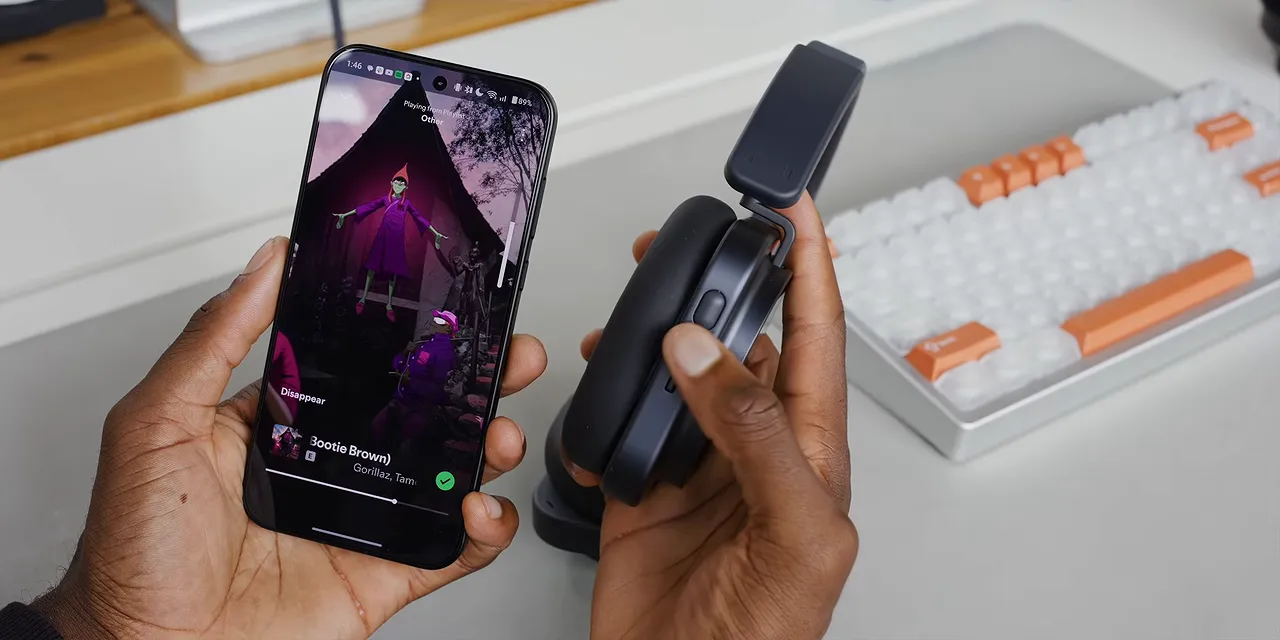
- Roll the top control forward or backward to raise or lower the volume.
- Press the roller once to play or pause.
- Hold the roller to turn active noise cancellation on or off.
- Push the paddle to skip forward or backward between tracks.
- Hold the paddle to scrub through media in supported apps.
The roller is easy to locate with your thumb, and the paddle has a completely different shape, so there is very little ambiguity. These are still among my favorite physical controls on any headphones.
A separate button on the outside of the right ear cup triggers your voice assistant by default. The Bluetooth pairing button is tucked inside the right cup, which makes sense for something you probably will not need very often.
Then, inside the upper part of the left cup, there is a new switch labeled “Flat.” That is the most interesting part of these headphones.
What the Flat Switch Is Trying to Solve
You have to consider the intended audience when evaluating sound quality.
With something like a Sennheiser HD 600, I care about neutrality: can I hear a mix clearly, without the headphones adding a bunch of their own character? With consumer noise-canceling headphones, the priorities are different. I want music and films to sound enjoyable, and I want the airplane around me to disappear.
Those are two different jobs. Nothing is trying to handle both with one pair.
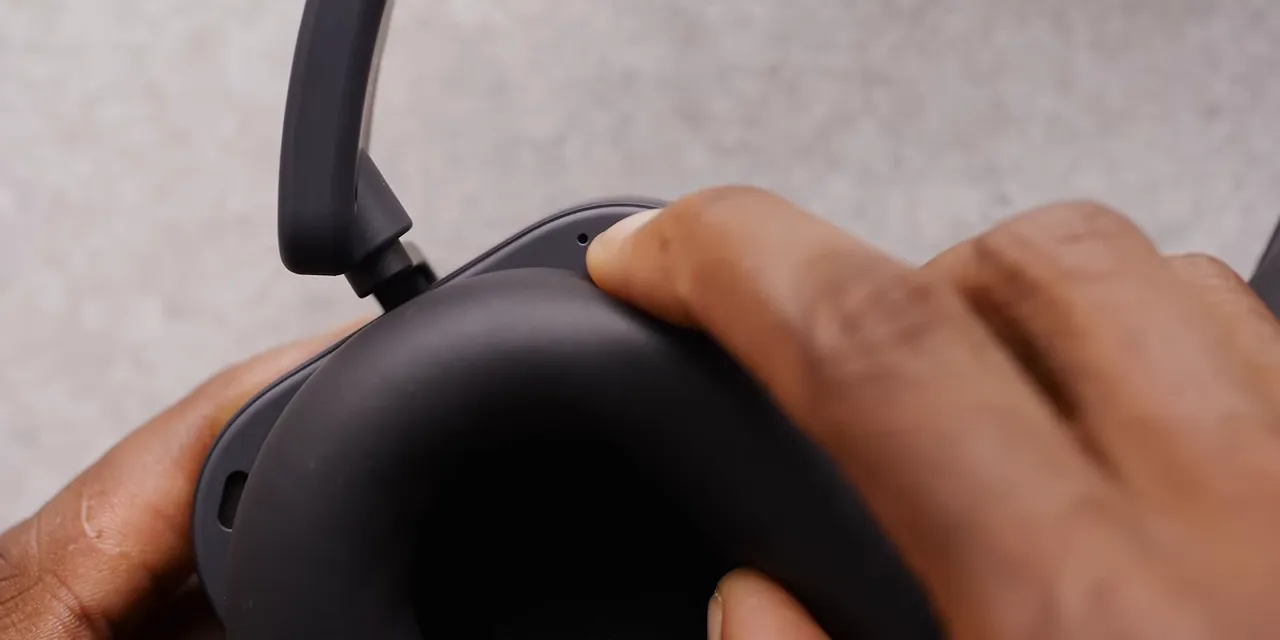
Out of the box, these have a deliberately colorful sound signature, which you can customize in the app. Flip the Flat switch, and Nothing says it bypasses the audio processing and coloration so you can hear the original track without those enhancements.
That idea applies pretty directly to how I work. I might get on a plane or train, travel to an event, and then edit a video. The headphones I would choose for enjoying music during the trip are not necessarily the headphones I would choose for evaluating audio while editing.
One pair that can switch between those roles is a compelling idea. The question is how good it is at each one.
Three Drivers Do Not Automatically Mean Better Sound
Nothing has moved away from the KEF Audio partnership used for its previous headphones and switched to a triple-driver setup. There are now three drivers in each ear cup instead of one.
That sounds like an automatic upgrade. It is not.
Driver count is a little like megapixel count in cameras. A 200-megapixel camera is not guaranteed to beat a 48-megapixel camera. The number tells you something about the hardware, but not everything about the result.
I remember first getting into in-ear monitors and discovering 64 Audio models with 18 drivers per ear. That sounded ridiculous. But even there, having the most drivers does not necessarily make a model the best.
The idea is to let individual drivers specialize in different parts of the frequency range. Nothing describes this setup as:
- A large bass driver: 10 Hz to 10 kHz.
- A midsize precision driver: 5 kHz to 15 kHz.
- A treble driver: 10 kHz to 40 kHz.
Those are the stated ranges. What matters more is what the combination actually sounds like.
The Default Sound Is Fun, but Not Class-Leading
The stock tuning is very V-shaped, with plenty of bass and bright highs. Overall, it is a colorful, fun presentation.
My two biggest issues are bass precision and instrument separation.
There is no shortage of bass. It just does not have the responsiveness or impact I hoped for. The attack feels a little softened, so a drum hit has less punch than it should.
Instrument separation is the bigger weakness. I did a lot of back-to-back listening with the Sony XM6s and AirPods Max, and the Nothing headphones blended the different sounds together the most.
This is subtle. It is not as if instruments disappear. But when you are paying $400, being able to pick individual instruments and layers out of a mix is part of what you are paying for. These were the weakest of that group at doing it.
If the strongest competition is around a nine for overall sound quality, these are closer to a seven. That is my rough listening impression, not a lab score, but it captures the gap.
Flat Mode Changes the Character Completely
Flip the switch, and the EQ becomes unavailable. The sound moves away from that V-shaped presentation toward something respectably neutral, with much less bass emphasis and less contrast between different parts of the mix.
There are two important practical details:
- Active noise cancellation can stay on in Flat mode.
- Transparency mode is unavailable in Flat mode.
You can switch modes in the middle of a song, and the contrast is fascinating.
The closest video-editing analogy is switching between a finished Rec. 709 look and a flatter Log image. One feels punchy and finished. The other feels more even, making different details easier to notice. That is an analogy for the change in presentation, not a claim that the switch magically creates information.
I actually preferred some music in Flat mode. Part of that might be familiarity: I spend a lot of time with HD 600s, so a neutral signature is comfortable for me. But I appreciated the evenness. Without the strong V shape, I felt like I could hear more of what was happening.
The App Gives Audio Enthusiasts More Control
Even without using the Flat switch, the updated EQ is significantly more powerful.
It still supports up to eight bands, but now you can choose the exact frequency of each point, adjust how wide each band is, and control how much you boost or reduce it. That gives you much finer control over the sound than a basic set of fixed sliders.
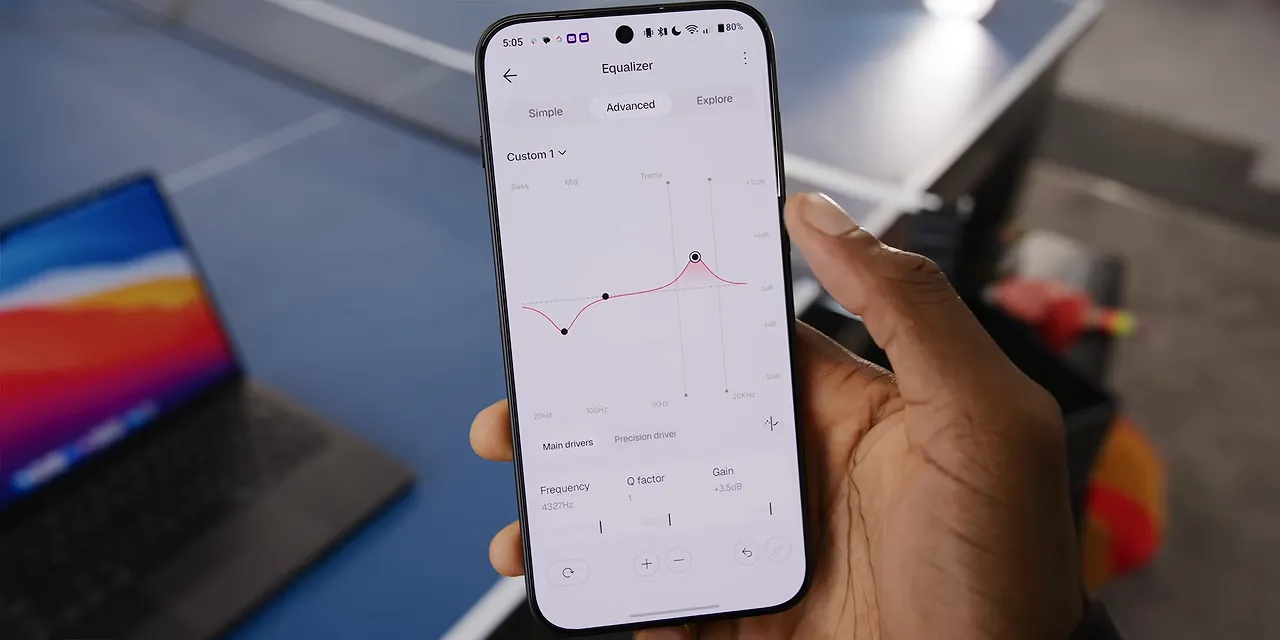
There are also more custom presets for different genres and listening experiences. If you enjoy dialing in headphones rather than accepting their default tuning, there is a lot here to explore.
Noise Cancellation Is a Pleasant Surprise
The noise reduction might be my favorite part of using these.
They do a particularly good job with office sounds: keyboards, voices, chairs, and furniture moving around. In those situations, they blocked some sounds more effectively than AirPods Max or the Sonys, without feeling harsh or uncomfortable.
The important distinction is that a lot of that benefit comes from the ear cushions and their seal, not just the active noise-canceling software. The cushions do an excellent job of passively blocking those quicker, more abrupt sounds.
Are they better than Sony overall? No. If Sony is a nine for ANC, these are closer to an eight. Still, that is better than I expected, and the combination of isolation and ANC works really well.
Transparency mode has also improved substantially over the previous generation. It sounds less muffled and less enclosed, so conversations feel more natural. I no longer feel as much need to remove the headphones every time someone starts talking to me. That is a useful threshold to cross.
Microphone quality is less exciting. There are around ten microphones distributed around the headphones for ANC, but calls still sound perfectly average to me. Nothing terrible, nothing special.
Battery Life, Multipoint, and the Everyday Details
Nothing also gets a lot of the smaller practical features right:
- Bluetooth 6.1 with fast pairing.
- Multipoint connectivity for two connected devices at once.
- Well over 30 hours of listening with ANC, despite a slightly lower battery rating than the previous model.
- An IP52 rating for some dust and water resistance.
Multipoint worked without trouble for my Android phone and MacBook combination. For the other people out there mixing those ecosystems, that is good news.
The battery life is more than enough for me. I am not going to wear these continuously for anything close to 30 hours, and that endurance makes them well suited to travel.
You could also exercise and sweat in them if you really wanted to. Personally, I would not choose them for that. But I have seen people run in AirPods Max, so clearly headphone size is not stopping everyone.
The Case Is a Bizarre Step Backward
And then there is the case.
I really struggle to find anything nice to say about it. For a product that gets so much else right, this feels like Nothing looked at the AirPods Max case and decided to borrow its worst idea.
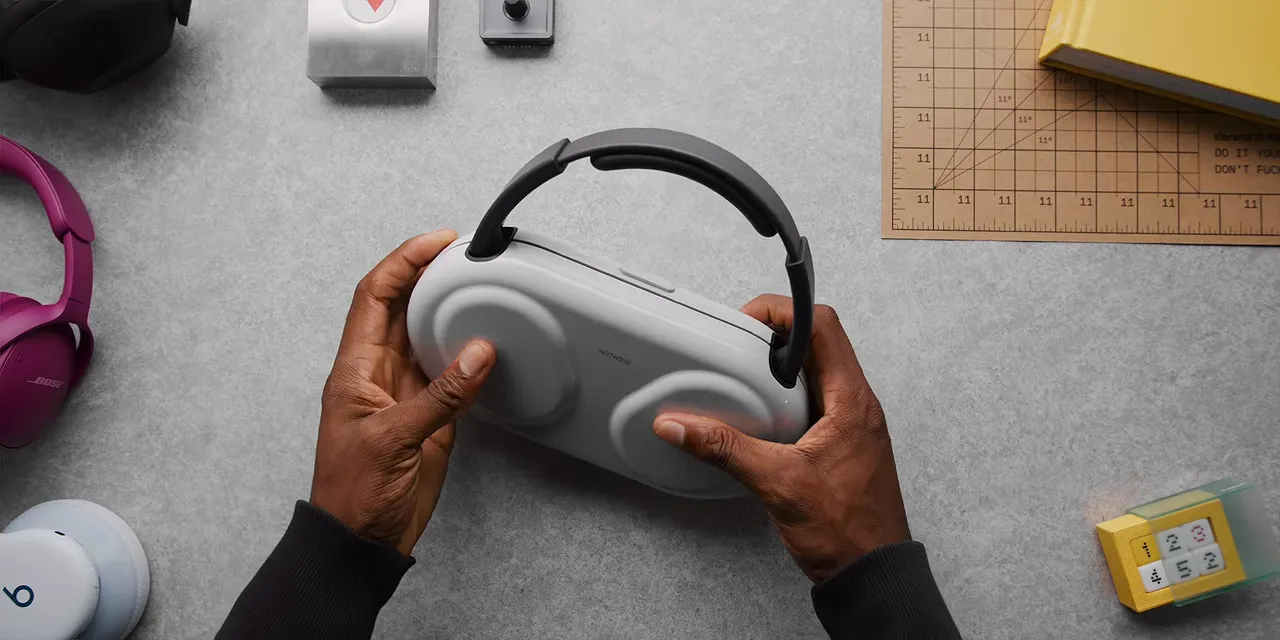
The headphones still do not fold. To put them away, you rotate the ear cups and close this hard plastic shell around them. It feels cheap, picks up fingerprints, and clamps shut in a way that does not match the premium headphones inside.
After only about a week of use, I was already noticing some play in the plastic hinge. That does not inspire much confidence in its durability.
There is also no opening for charging while the case is closed. You have to open it to plug the headphones in. At least Apple left access to the charging port on its case.
The previous Nothing case fully enclosed the headphones. This one deliberately leaves the headband exposed, where it can catch on other things as you slide it into a bag.
You can attach a lanyard or keychain to the side. There. That is about as close as I can get to a positive.
It almost ruins the headphones for me. It is the same category of frustration as the Magic Mouse charging arrangement: the design is obviously inconvenient, and the question becomes whether you can tolerate it enough to enjoy everything else.
Are the Nothing Headphone 1 Pro Worth $400?
The strongest argument for these is not that they are the best music headphones or the best reference headphones. It is that they offer a decent version of both, with a physical switch between them.
You get enjoyable everyday tuning, extensive EQ customization, good noise reduction, a distinctive premium design, and excellent controls. Then you can flip into a more neutral presentation for editing or critical listening.
That is a real use for “Pro.” It is not something most people need, but the people who do need it might appreciate it.
Still, one of my golden rules in tech applies: two-in-one devices are rarely the best at both jobs. A convertible laptop is often a slightly worse laptop than a dedicated laptop and a slightly worse tablet than a dedicated tablet. Combining the roles introduces compromises.
If you only want great-sounding noise-canceling headphones, there are better options for this money. At the time of my review, I was seeing Sony WH-1000XM4 headphones around $300. I would take those for better sound, better ANC, and a design that folds.
If you only need neutral reference headphones, there are plenty of options below $400, too.
Nothing’s advantage is the combination. If traveling with one pair for both entertainment and editing sounds useful, these make sense in a way that a standard premium ANC headphone might not.
They are not perfect, but I respect the design, the controls, and the attempt to make that dual-purpose idea work. These are pretty cool headphones, and a genuinely good use of the word “Pro.”
The case? I do not respect the case at all.


