Apple is one of the most interesting companies in tech right now. Not because of a new product, but because of what’s happening behind the scenes. And those changes could have a pretty big effect on the products we get next.
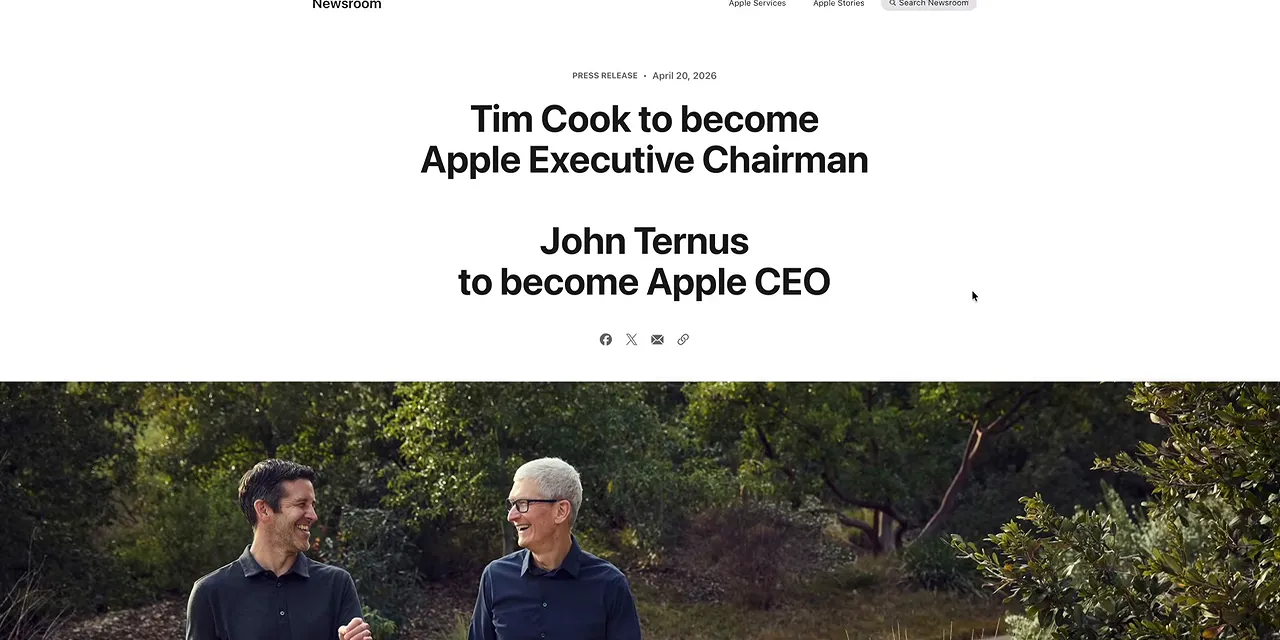
Tim Cook is stepping down as Apple’s CEO this year, with John Ternus taking over in September. I don’t normally spend much time covering CEO changes. At a company this big, swapping one executive for another usually doesn’t transform everything.
But this feels different. It’s not just one person changing jobs. It’s a broader leadership handoff, and the person moving into the top spot has spent years deep in Apple’s hardware.
My hope is that we’re heading toward an Apple that takes more interesting, thoughtful hardware swings. There are reasons to be optimistic. There’s also one big part of Apple’s personality that makes me nervous.
Key Takeaways
- Apple’s broader leadership handoff could matter more than the CEO change alone.
- John Ternus brings detailed hardware experience and an encouraging recent product track record.
- Apple’s aversion to public failure may still limit experimentation under new leadership.
- More ambitious hardware needs stronger software to deliver a genuinely better Apple experience.
What’s Actually Changing at Apple?
The leadership shuffle has three important pieces:
- John Ternus becomes CEO in September. He moves up from senior vice president of Hardware Engineering.
- Johny Srouji takes over as the hardware chief. He has been senior vice president of Hardware Technologies, leading Apple’s silicon efforts. He’s the familiar face from the chip lab segments in Apple’s presentations.
- Tim Cook becomes executive chairman. He’s stepping away from the CEO role, not leaving Apple altogether.
First, though, Cook deserves his credit.
Following Steve Jobs was arguably the hardest job in tech. Cook wasn’t Jobs, and he didn’t try to run Apple in exactly the same way. He brought supply chain expertise, operational discipline, and a very particular understanding of how to grow the business.
Over roughly 15 years, across wildly different economies and political climates, Apple became a trillion-dollar company, then a two-trillion-dollar company, then three, then four. That is a ridiculous run. Investors love him for a reason.
So this isn’t an argument that Apple needed rescuing from an unsuccessful CEO. It’s a question of what a different kind of successful CEO might prioritize next.
Why This Is Bigger Than One New CEO
A company like Apple is a massive boat with thousands of people holding paddles. One person can influence its direction, but they don’t just turn the entire thing around overnight.
That’s why the rest of the leadership turnover matters.
Over the past several months, a number of senior executives and important leaders have stepped down, left, or mostly retired. A couple of departures may have been surprising, but much of it looks like a fairly predictable generational handoff: long-tenured executives reaching retirement age and passing responsibility to younger leaders already inside Apple.
Cook, at 65, looks like the last major domino in what seems to be a coordinated transition. That coordination is my interpretation, not proof of some dramatic secret plan. But it changes how I read the news.
One paddle moving differently might not do much. A bunch of paddles changing direction together? Now the boat might actually turn.
For more background on that broader transition, Quinn’s analysis of Apple’s leadership changes connects a lot of those dots. It predates this CEO announcement, and it has aged remarkably well.
Apple Has a Product Guy at the Top Again
The simplest way I think about this is the difference between a business-focused leader and a product-focused leader.
Steve Jobs was a product guy. Obviously, he also dealt with marketing, strategy, and everything else that comes with being CEO. But he cared intensely about the details of the products: what they could do, how they worked, and what made them great.
Cook’s strengths are different. That’s fine. You can be an incredibly effective CEO without spending your time in the weeds of every device your company makes.
But the difference becomes pretty clear when you talk to him about products.
When I interviewed Cook a couple of years ago, I tried to get into a lot of product details. That led to the now-familiar Magic Mouse moment, where I brought it up and he seemed to have to assemble an answer about its ergonomics on the spot. My impression was that this was not a product he had spent much time thinking about recently.
Ternus is a different conversation.
I also interviewed him around that time, and we got into iPhone materials and Apple’s approach to repairability versus durability. His explanation was nuanced. Whether I agree with every part of Apple’s position is a separate question, but he clearly understood the tradeoffs in detail.
There’s a difference between agreeing with someone’s product decisions and recognizing that they know exactly why those decisions were made.
Ternus has also been appearing in more interviews and presentations over the past year or so. In hindsight, that looks a lot like preparation for the CEO spotlight. Now the person who has been immersed in hardware engineering gets a much more elevated position inside the company.
The Hardware Track Record Is Encouraging
If we want clues about what this could mean, Apple’s recent hardware is a pretty good place to start.
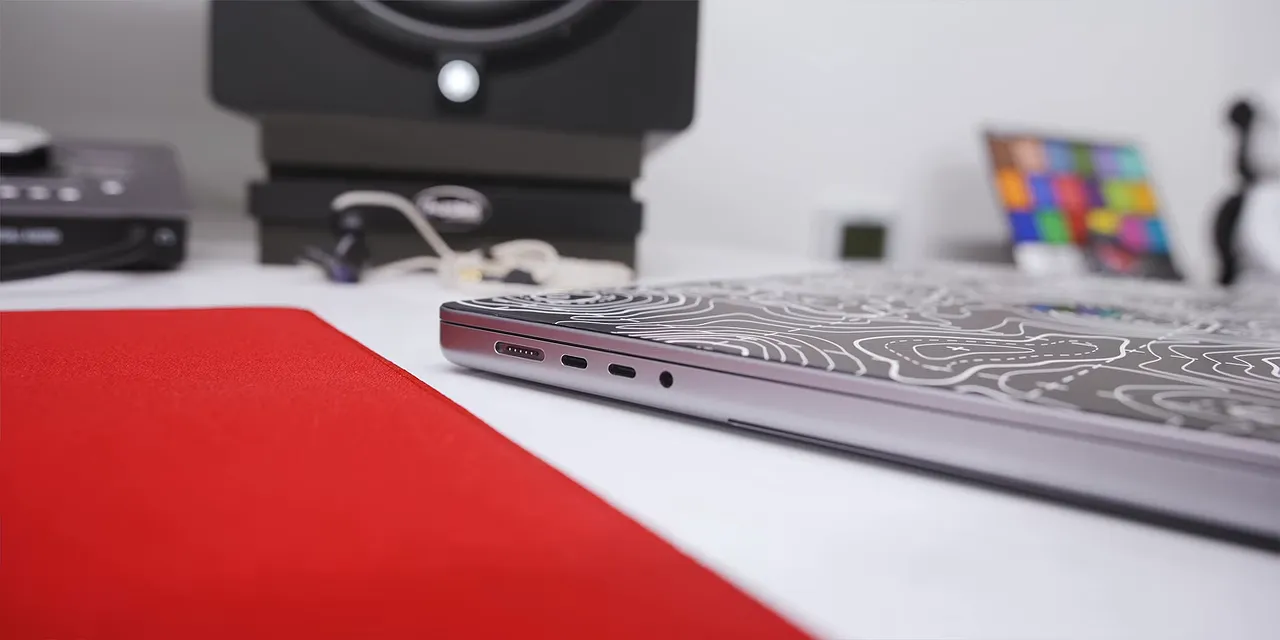
Think about the MacBook Pro. The last of the Jony Ive-era designs prioritized thinness to a fault, with keyboard problems and thermal issues. The Apple silicon machines moved in a noticeably different direction.
They got thicker. They got more battery. They got more ports.
Those aren’t necessarily the choices that make a product look most futuristic in a silhouette. They are choices that make a computer better to use.
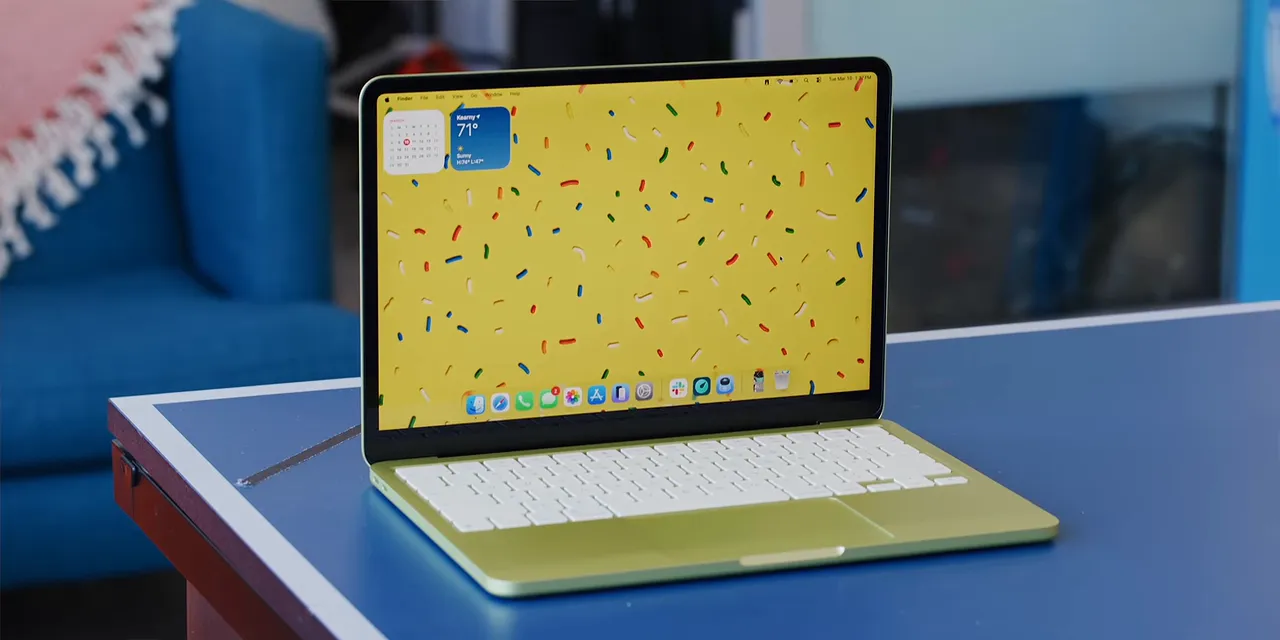
Then there’s the $599 Mac mini, which quietly became one of the best deals in tech. And the latest, more disruptive example is the roughly $600 MacBook Neo, a product that puts the Windows laptop industry on notice.
That combination is interesting to me: not just ambitious hardware at the expensive end, but thoughtful hardware at prices that force the rest of the market to respond.
There’s also a little inside-baseball detail from the Neo launch that stood out.
The Live Introduction Before the Polished Presentation
Since COVID, Apple’s big events have become prerecorded productions rather than traditional live stage presentations. They’re incredibly polished, and I actually like that format a lot.
When Apple invites people to Apple Park for one of those events, the main presentation is essentially a screening of the same production being streamed online.
But there’s usually a small live introduction beforehand. If the presentation starts at 10 a.m., Cook might walk onto the stage at about 9:57, deliver his signature morning greeting, thank everyone for coming, and offer a few minutes of CEO-level enthusiasm before the production starts.
At the MacBook Neo event, that person was John Ternus.
This was before he had been announced as the next CEO. I didn’t see Cook there at all. So, yes, it looked like practice for a bigger public-facing role. But it also felt symbolic: Ternus had helped lead this product, and now he was the person introducing it to the world.
There were already reports that he would take a larger hosting role at the September iPhone event. With the CEO transition happening then, that seems even more likely.
That’s also the event where we’re expecting a folding iPhone, another project he appears to have been spearheading. An iPhone Fold is still an expectation here, not something to treat as an already-delivered product.
Still, the pattern is what makes me hopeful. The person associated with the recent MacBook Pros, the MacBook Neo, and potentially a folding iPhone is moving into a position where he could support more of those kinds of decisions.
I Want More Interesting Products, Not Just More Services
To be clear, plenty of important hardware arrived under Cook.
Apple Watch. AirTags. Vision Pro, which was absolutely a big swing. And AirPods are probably the strongest example of all: an enormously successful product that became the most popular headphones in the world.
So the argument isn’t that Apple stopped making hardware. It’s that the company’s focus has increasingly seemed to shift toward services.
There’s iCloud, Apple TV, Apple Music, Apple Fitness, and the broader effort to turn Apple’s enormous iPhone installed base into recurring revenue. From a business perspective, the appeal is obvious. Investors love that dependable stream of subscription money.
But as someone who cares about technology products, that isn’t the part that gets me most excited.
I want more interesting things to use, not just more services attached to the things I already own. A hardware-focused CEO doesn’t guarantee that shift, but it gives me a reason to hope for it.
The Biggest Obstacle Might Be Apple’s Fear of Failure
Here’s the part that makes me nervous: Apple seems unusually determined to avoid the possibility of failure. And the harder you try never to fail, the fewer things you’re willing to try.
There’s a long list of products I would love to see Apple take a shot at:
- A dedicated camera.
- A smart home speaker with a display, rather than just a HomePod.
- Smart glasses.
- More unusual phone designs, including foldables.
- A printer that doesn’t suck. Surely a company with billions of dollars could have a go at that one.
That’s a wish list, not a roadmap. The point is that Apple has the resources to explore a lot of interesting ideas, yet every new category seems to carry the expectation that it must be a massive, revolutionary moment.
That’s a lot of pressure to put on every experiment.
Think of Apple as a creator who publishes once every six months. Every release has to be a huge event. Samsung and Google are closer to daily uploaders: trying things, finding out what works, taking a loss, and moving on to the next idea.
That approach has its own problems. Google has discontinued enough products to fill an actual catalog of abandoned projects. Plenty of those ideas didn’t work, and plenty never became widely known.
But when Apple misses, the miss echoes.
Vision Pro’s struggles get discussed endlessly. So do Apple Intelligence and the canceled AirPower charging mat. The iPhone 16e belongs in that conversation to an extent, too. These aren’t all the same kind of disappointment, but they illustrate the same pressure: an Apple misstep tends to become a lasting story.
I think that has helped push Apple toward playing things extremely safe under Cook. Eventually, safe starts to feel formulaic.
Reusing Parts Can Be Smart. It Can Also Get Stale.
A lot of recent Apple products can feel like variations on other Apple products: familiar components rearranged into another configuration.
That isn’t automatically bad. The MacBook Neo is a positive example of the same general approach. A product assembled from existing pieces can still be thoughtful, disruptive, and a great deal.
But if most releases feel like another variation on something familiar, the lineup starts to feel stale.
I don’t expect Apple to abandon that approach completely, and I’m not convinced a new CEO will erase its caution. The real question is whether the new leadership can make room for more ambitious ideas alongside the predictable ones.
The New Apple Still Needs Better Software
My overall take is cautiously optimistic.
This looks like more than a new name at the top of an organizational chart. There’s a broader generational transition happening, and a leader with deep hardware experience is becoming CEO at a moment when several of Apple’s hardware decisions have been really good.
That could lead to a more interesting run of products. Not necessarily a reckless Apple that launches everything, but one willing to take more thoughtful chances.
Then there’s the other half of the equation: software.
Between macOS Tahoe, Liquid Glass, Apple Intelligence, and Siri, there is a lot of work to do. Better hardware alone won’t close that gap, and putting a hardware engineer in charge doesn’t magically solve it.
If Apple can pair genuinely exciting hardware with software that matches it, that could be special.
That’s the version of the new Apple I’m hoping for. Give it five to ten years, and we’ll have a much better idea whether this was the start of something interesting or whether I was being way too optimistic.


