The most interesting thing about the iPhone Duo might not be the hinge. It might be what happens to the rest of Apple’s lineup now that the hinge exists.
Apple has unveiled a phone that, at its simplest, is an iPhone when it’s closed and something like a small iPad when it’s open. That’s a pretty easy value proposition to explain. It’s also an unusually complicated one for Apple, a company that has spent years giving you reasons to own an iPhone, an iPad, and a Mac separately.
After my initial iPhone Duo hands-on, I’ve been thinking about that overlap, who this $2,000 phone actually makes sense for, and a few software details that deserve a closer look. A conversation with Craig Federighi helped clarify some of it. But not all of it.
Key Takeaways
- The Duo can fill an iPad mini’s role for some people, creating real overlap within Apple’s lineup.
- The clearest audience is foldable-curious iPhone users with enough disposable income to experiment.
- International pricing makes the Duo considerably more expensive in several markets than its U.S. starting price.
- The unfolded software mixes familiar iPad layouts with interfaces designed specifically for the Duo.
Apple’s New Phone Blurs a Carefully Maintained Line
Apple’s ecosystem works because its products work well together. The iPhone is basically the hub, and features like Continuity make moving between devices feel natural. Apple would also, obviously, love to sell you as many of those devices as possible.
I remember moving to mostly using Macs around 2015 because Final Cut Pro pulled me in. That’s how this works: one particular tool gives you a reason to buy one product, and the connections between products make the others more appealing.
The iPad has always occupied a carefully defined middle ground:
- It has a much bigger screen than an iPhone, with more room for media, work, and stylus input.
- It remains distinct enough from a Mac that there’s still a reason to own a desktop-class computer.
That distinction has gotten more interesting at the high end. The iPad Pro has an M-series chip, increasingly desktop-like features, and interface ideas that feel familiar from macOS. Naturally, people started asking whether an iPad could replace their Mac, or whether Apple would eventually merge its operating systems.
Apple’s answer to the merger question was famously emphatic: no.
Fine. Separate products, separate jobs. But now the Duo comes along, opens to something very close to an iPad mini in size, and is slated to get full Apple Pencil support later in the year. Apple even posted a TikTok presenting an iPhone and an iPad mini as the ingredients behind the Duo.
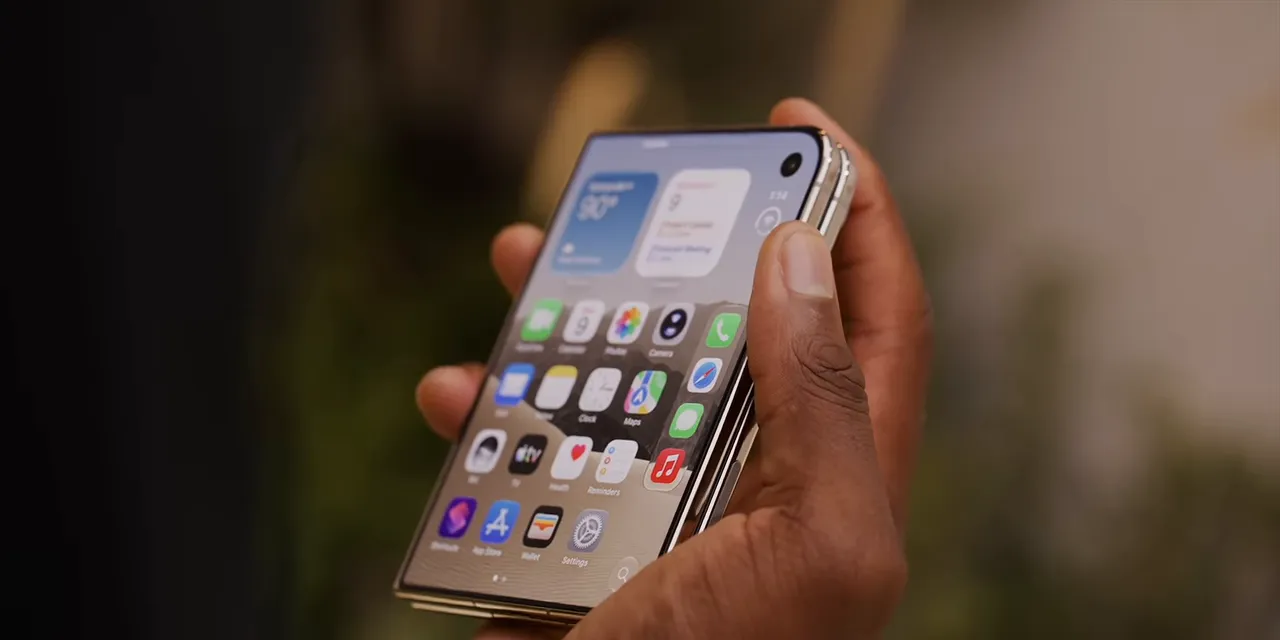
So the question is pretty straightforward: is Apple finally willing to let one of its products replace another? Or does it still need to explain why these are different enough to coexist?
Can the iPhone Duo Replace an iPad Mini?
I put that question to Craig Federighi, Apple’s software chief. My basic description was that this is an iPhone closed and a small iPad open. How does Apple expect someone to use that combination compared with owning two separate devices?
His answer was that people tend to develop natural patterns around their tools. The same way an iPad and a Mac can coexist, people will work out when the Duo’s smaller display is enough and when opening it makes sense.
His own example was starting with something on the phone, sitting down, and deciding to spend more time reading it. Opening the device, often in portrait orientation, gives that content more room without requiring a switch to another product.
Also, casually mentioning that you’ve been using an unreleased folding iPhone for months? Nice flex.
But the important part came afterward: he acknowledged that, for someone who might otherwise use an iPad mini, the Duo could fill that space.
That’s a real admission of overlap. Not that every iPad becomes unnecessary, or that the entire tablet lineup suddenly stops making sense. But this particular phone can take over a role previously filled by a particular iPad.
The Bigger Screen Is Something You Choose to Use
What Federighi described also sounds pretty normal to me as someone who uses foldables.
I probably use a folding phone closed about 70% of the time. For most quick interactions, it’s just a regular smartphone. Then I want to write emails, read something for a while, or actually get some work done, and I open it.
Opening it feels like a small event. There’s an intentional shift from doing a quick thing on a phone to spending time with a larger workspace.
That’s the useful distinction. The benefit isn’t necessarily that you need a tablet-sized screen all day. It’s that the bigger screen is already with you when you decide you want it.
Who Should Actually Buy the iPhone Duo?
The question I’ve been getting most often is whether someone should buy the Duo instead of their current phone. And this is harder to answer than it is with a typical new iPhone.
We’re talking about a roughly $2,000 phone in a category that accounts for about 1% of smartphone sales. Apple appears to have entered that category with something thoughtful, polished, and genuinely fun to use. There are clever animations and interesting features.
But making a folding phone look appealing is not the same as explaining why you need one.
Here’s how I’m thinking about the audience right now:
- You already own an iPhone and an iPad mini, and you like both: I wouldn’t automatically recommend replacing that setup with the Duo. If those two devices already fit your habits, the overlap alone isn’t a compelling reason to switch.
- You want the best iPhone camera hardware: This probably isn’t the one for you either. If photography and video are your main priorities, the folding form factor isn’t the deciding advantage.
- You’ve wanted a foldable but haven’t wanted to leave the iPhone ecosystem: This is the clearest fit. If you’ve been curious about folding phones for years, have plenty of disposable income, and want to try the format without switching ecosystems, the Duo makes sense.
That last group is a specific audience. And that’s okay. A new iPhone doesn’t have to be the right iPhone for everyone.
International Pricing Changes the Conversation
One thing that deserved more attention after the announcement was international pricing.
In the context of this category, the roughly $2,000 U.S. starting price felt fairly reasonable to me. Expensive, obviously, but not surprising for what it is. The overseas prices make that calculation tougher.
These were the listed prices and approximate U.S. dollar conversions I was looking at after the reveal:
- United States: $1,999, or roughly $2,000.
- Canada: C$2,999, approximately US$2,160.
- Taiwan: NT$74,900, approximately US$2,370.
- United Kingdom: £1,999, approximately US$2,700.
Those are not all the same premium over the U.S. price. The UK figure, in particular, is a pretty substantial jump.
And this wasn’t just a Duo observation. The pricing concern extended to the new Pro models and some older phones Apple was continuing to sell.
It also makes the timing of Apple’s recently announced financing program feel notable. A monthly payment lands very differently from a large upfront price. That doesn’t make the phone less expensive overall, but it does change how the purchase feels.
The Software Isn’t Simply an iPad Interface
The other thing I asked Federighi was what he thought people might have missed in their initial reaction.
His answer focused on how much Apple had adapted the software to the form factor. Apple’s argument is that it can design the whole product together, from silicon and enclosure to interface, rather than fitting an existing experience into a different shape.
That is a very Apple answer. It’s also the classic Apple strategy when entering a category late: study what already exists, then try to bring the pieces together with unusually tight integration.
But there was a specific point worth checking. Federighi pushed back on the idea that opening the Duo simply gives you an iPad. It resembles one, but the interface has to continue from the layout you were using on the outside display.
So I went back through the apps I’d tried. And, yeah, he’s right. They aren’t all identical to their iPad counterparts.
Some Apps Look Familiar. Others Take a Different Approach.
The software is a mix, rather than one universal rule:
- Settings: The unfolded app has a familiar two-column layout that looks a lot like Settings on an iPad.
- Photos: This also looked very similar to the iPad app to me.
- Home screen: The layout is noticeably different, preserving the relationship between pages when moving from closed to open.
- Camera: The interface is also distinctly different, rather than simply borrowing the iPad arrangement.
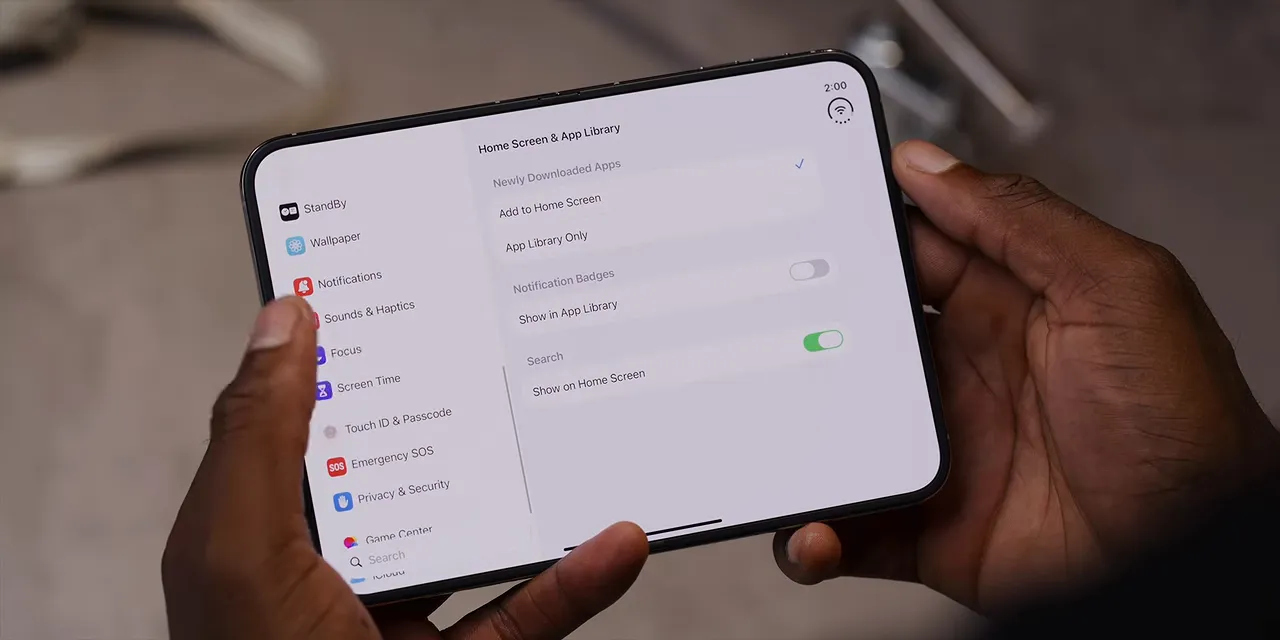
The home screen is particularly interesting because continuity here means more than keeping the same app open. It also means keeping your sense of where things are as the available screen space changes.
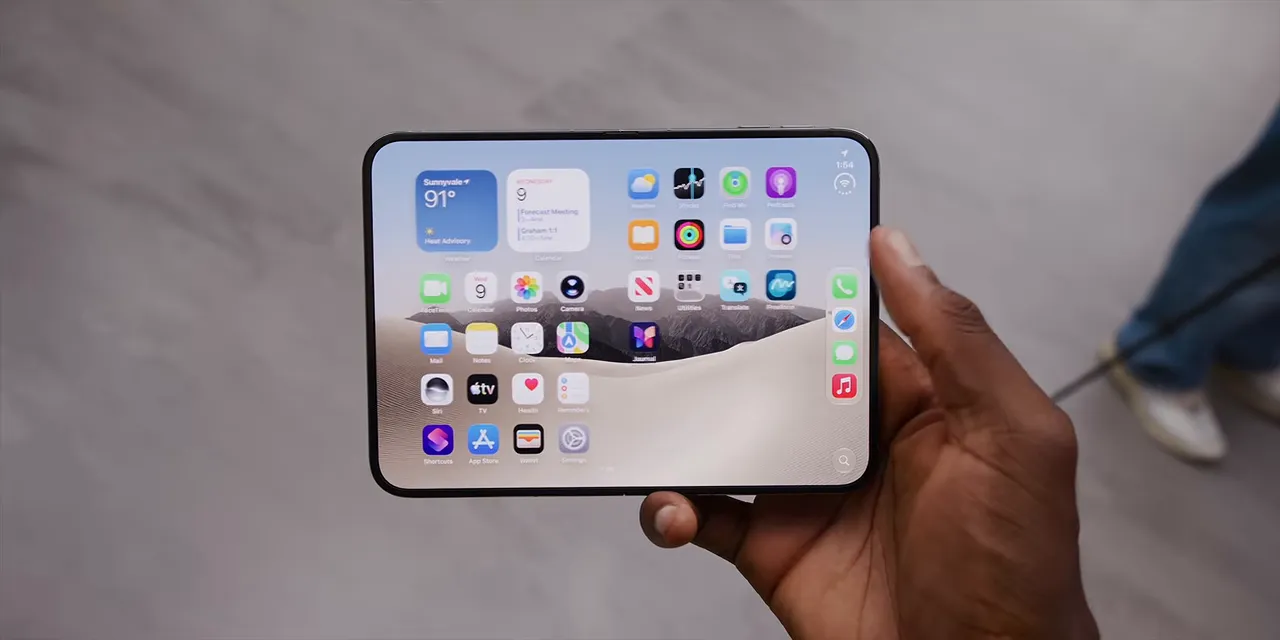
That leaves developers with an opportunity to create something specifically suited to the Duo. An app doesn’t necessarily have to be just the iPhone version made bigger or the iPad version made smaller. It can have its own approach to this device.
I’d expect straightforward ways to reuse one of those existing experiences, too. The interesting part will be how many developers go beyond that and make the folding transition genuinely useful.
A Good Foldable Still Isn’t an Automatic Recommendation
My early takeaway is that Apple has made the Duo interesting in two different ways. It offers a folding phone to people who want to stay in the iPhone ecosystem, and it tests how much overlap Apple is willing to allow between its own products.
The software details matter because they suggest this is more than an iPhone with an iPad interface attached. The iPad mini overlap matters because Apple is acknowledging that one device really can fill both roles for some people.
But neither point turns it into a universal recommendation. Price, camera priorities, existing devices, and the way you actually use a larger screen still decide whether it makes sense.
With the first units expected in October, there’s more to learn through longer-term use. For now, the simplest conclusion is also the most useful: the iPhone Duo looks like a compelling option for a particular kind of buyer, not the obvious next iPhone for everybody.


