If this were 2011, we would call the iPhone 18 Pro an S update. It is basically an iPhone 17 Pro with a new chip, a camera upgrade, better battery life, and some new colors so everyone knows you bought the new one.
And after using it for a week, I think it is underrated.
Not underpriced. Underrated. There is a difference, especially when we are talking about a $1,200 phone.
For two years now, the Pro iPhone has lived in the shadow of Apple trying riskier ideas elsewhere. Last year, the iPhone Air got the attention. This year, it is the first folding iPhone, the Duo. Meanwhile, the Pro keeps doing its thing: quietly becoming the best iPhone Apple makes.
The 18 Pro does not change that formula. But one part of this otherwise predictable update is doing a surprising amount of work.
Apple provided the phone for this review.
Quick Summary
- The A20 Pro delivers meaningfully better performance and battery life without a larger phone.
- The smaller iPhone 18 Pro matched last year’s Pro Max endurance in my testing.
- Variable aperture adds subtle creative control, while the redesigned camera controls improve everyday usability.
- A smaller Dynamic Island and faster wired charging round out a predictable but worthwhile refinement.
Table of Contents
- The Camera: More Control, Not a Dramatic New Look
- The A20 Pro Is the Real Upgrade
- Battery Life: Pro Max Endurance in the Smaller Pro
- The Little Things: Colors and a Smaller Dynamic Island
- The Verdict: A Very Good S Update
- Sponsor: dbrand’s iPhone 18 Cases
The Camera: More Control, Not a Dramatic New Look
The rear camera lineup is familiar:
- Main camera: 48 megapixels.
- Ultrawide: 48 megapixels.
- Telephoto: 48 megapixels with 4x optical zoom.
The big hardware change is the main camera’s variable aperture. Instead of having one fixed lens opening, it can now open up to f/1.48 or stop down through smaller openings, including f/1.8, f/2.8, and f/4. Third-party apps are also expected to support smooth adjustments throughout that range.
What Variable Aperture Actually Changes
The short version: a lower f-number means a larger relative opening, which lets more light reach the sensor. That is usually what you want. More light gives the camera room to use a faster shutter speed or a lower ISO.
But a wider aperture also gives you a shallower depth of field. Your subject can be sharp while the background falls further out of focus. Stop the lens down, and you let in less light, but more of the scene can be in focus. If the relationship between those settings is new to you, Adobe’s guide to aperture provides some useful background.
So how much difference does it make here?
Honestly, not a huge amount. After taking a bunch of photos in different situations, the changes are pretty subtle. At f/4, you can see more background detail and a deeper area of focus than at f/1.48. But this is not a completely different-looking camera.
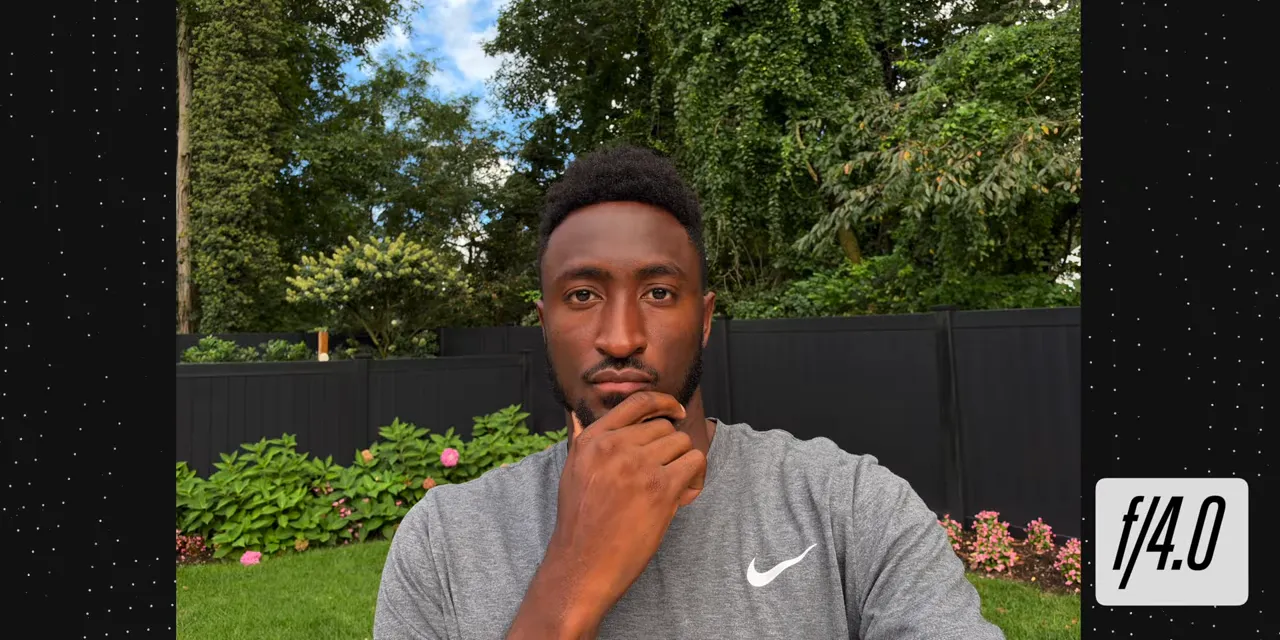
Most people probably will not immediately spot that difference. But most people also will not immediately identify a white balance change from 4,800 Kelvin to 5,400 Kelvin, or a shutter speed change from 1/60 to 1/48 of a second.
That does not make those controls pointless. Pro tools are about making the image you intended to make, with fewer compromises. Variable aperture gives you another thing to adjust, whether you want a little more background detail, more of a subject in focus, or a particular effect around point lights.
That last one is fun. The six aperture blades do not form a perfect circle when stopped down, so bright lights can produce starburst shapes. It is a small creative option, but small creative options are kind of the point.
In automatic mode, the camera mostly selected f/1.48 or f/1.8 during my testing. I never saw it automatically close further than that. That makes sense: it is generally prioritizing light.
And the new maximum aperture deserves some credit on its own. Even if you never touch the manual control, f/1.48 gives the camera more flexibility to freeze motion with faster shutter speeds or reduce low-light noise with lower ISOs.
The Bigger Opportunity Is Still Ahead
Variable aperture becomes more useful as camera sensors get larger.
I have used phones with huge 1-inch-type sensors that produce impressively shallow natural depth of field. Sometimes, though, it is too shallow. A close-up subject might not be entirely in focus. Autofocus can also hunt when the acceptable plane of focus is so thin.
Being able to stop down would be great in those situations. So while this feature is not transformative on the 18 Pro, it could become much more important if Apple keeps it around as the sensors grow.
That is the potential win: introduce it now, refine the experience, and have it ready when the hardware makes it more valuable. And hey, maybe more camera phones bring it back, too. Shout-out to the Galaxy S9.
The Camera App Is the More Meaningful Upgrade
For my actual experience using the camera, the new software controls make a bigger difference than the new lens.
For years, Apple gave every iPhone essentially the same simple camera app. Nice for consistency, but it left the Pro phones feeling a little held back. Getting the most out of the hardware usually meant installing a third-party app.
Now, the stock app is genuinely good. Hold down the control bar, and you can customize which tools appear and arrange them in your preferred order. You get shutter speed, format controls, manual focus, and finally, manual white balance.
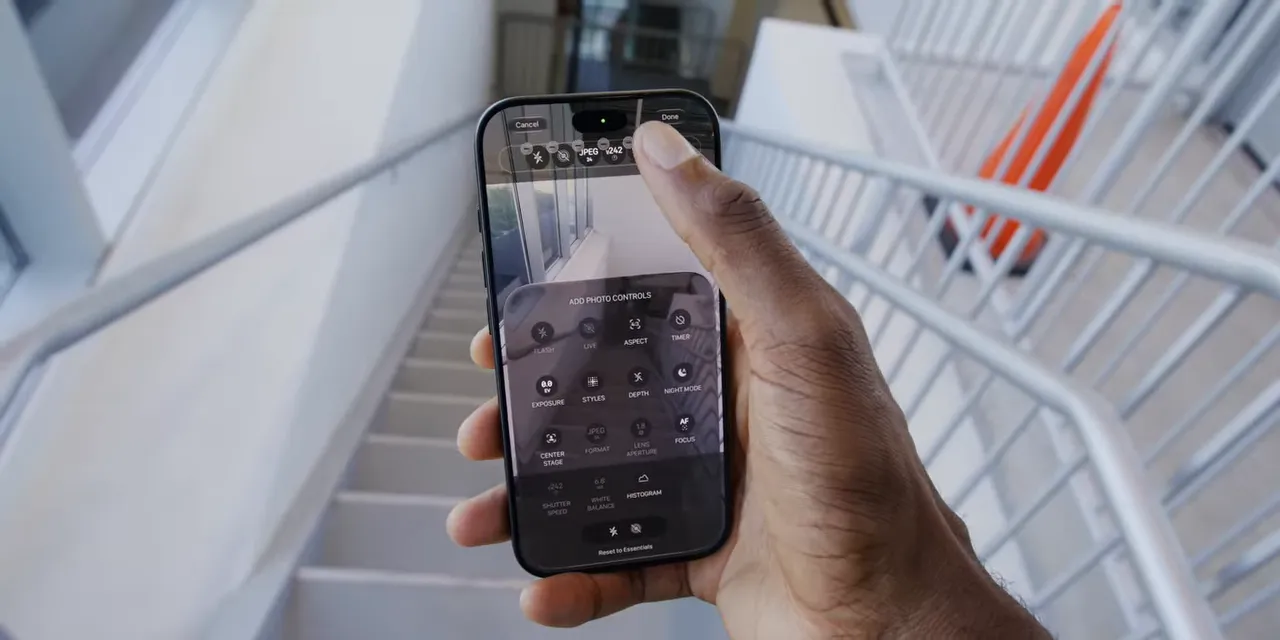
That is the kind of change that makes a Pro phone feel more pro.
While Apple is in that mood, I have two requests:
- A Rec. 709 preview while recording log video. Let me judge exposure using a more normal-looking preview instead of only the flat log image.
- 8K video recording, even at 30 fps. With a 48-megapixel sensor, this feels like the obvious next request, though actually delivering it is still Apple’s job.
iOS 27 even adds a setting to limit how much storage ProRes footage can consume. More control over big video files feels like a pretty good setup for that next step.
The A20 Pro Is the Real Upgrade
The iPhone 18 Pro and 18 Pro Max both get the A20 Pro, a new 2-nanometer chip announced alongside the M6.
Side note: are we ever going to line up the chip names with the phone names? The iPhone 18 has the A20, then presumably the 19 has the 21. Maybe I am the only one bothered by this.
Anyway. This chip is impressive, but not because opening an app suddenly looks revolutionary. Every new iPhone is fast at opening apps. Flying around iOS and switching between things stopped being an interesting demonstration a while ago.
Benchmarks show the performance improvement. They just do not tell the whole story.
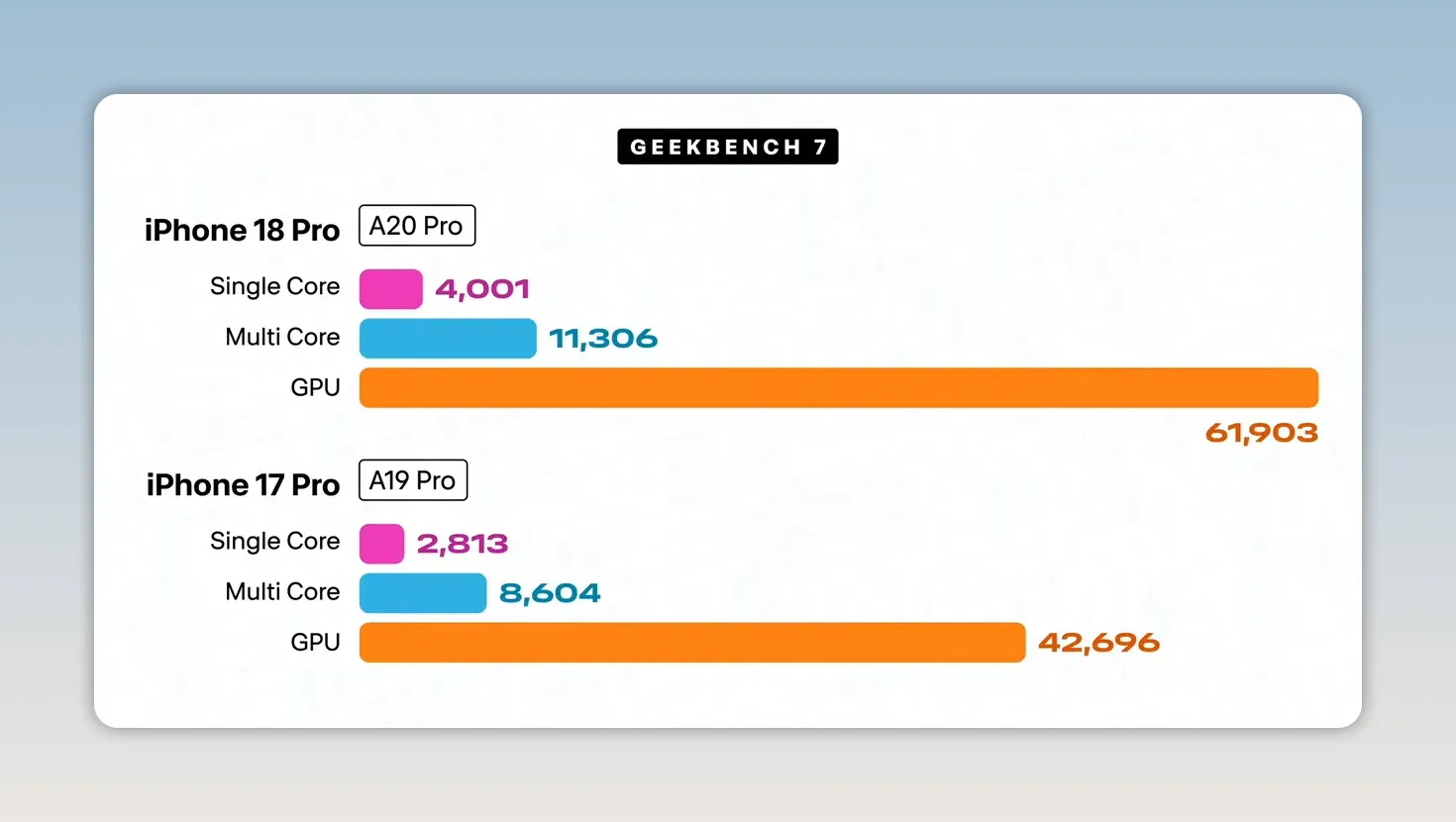
The meaningful change is getting more performance and substantially better battery life in the same size phone.
A chip update can give you more power without improving endurance. Or it can lean into efficiency without moving performance much. Seeing both improve meaningfully at once is what makes this generation stand out.
Better Cooling for the Work That Actually Pushes It
Apple also changed the internal arrangement. The DRAM, previously stacked over the processor, now sits beside it. It is still nearby, but that frees up space for a vapor chamber with three times the surface area to sit directly over the processor.
Combined with the connected midframe, that gives the phone a better way to move heat away from the chip.
Does approaching M1 and M2 territory in some performance discussions matter to the average person checking messages? Absolutely not.
But there are people playing demanding games for long sessions. And there are people like me recording a ton of 4K footage outdoors in the summer. I have gotten iPhones very hot shooting car videos in New Jersey. Better sustained cooling matters there.
That is what the Pro is for.
Short bursts of work are still quick, obviously, but video exports and image processing are also noticeably faster. These are much more useful improvements than shaving another tiny bit off an app launch.
Even Siri Benefits
The doubled Neural Engine also helps with on-device AI work. I did not expect Siri to be one of the more noticeable examples, but here we are.
Siri has felt slow on some relatively recent phones, including the iPhone 16, which was pitched around being built for AI. On the 18 Pro, the work Siri handles on-device runs much faster.
This chip also gets me excited about a future MacBook Neo. The current Neo uses a binned A18 Pro with 8GB of RAM. An A20 Pro with 12GB of RAM would be a very interesting upgrade for that machine. That is a possibility I am excited about, not an announced configuration.
The move from the previous 3-nanometer architecture to this 2-nanometer generation is a reminder that chip progress still matters. My exploration of transistor scale puts the previous generation’s manufacturing complexity into perspective. These things are ridiculous.
Battery Life: Pro Max Endurance in the Smaller Pro
Apple’s battery presentations usually come with a pile of playback and usage estimates. Thirty-six hours of this, thirty hours of that. Those numbers have never meant much to me.
The claim that did stick was much simpler: the iPhone 18 Pro should last as long as the iPhone 17 Pro Max.
And in my experience, it does.
I spent most of the week testing the smaller 18 Pro. It was comfortably a day-and-a-half phone without charging overnight, and a lighter day could stretch it toward two days.
That is with my usual high-brightness use, lots of photos, and around two hours of CarPlay each day. Pretty sick.
Mostly Efficiency, Not a Giant New Battery
This is especially interesting because last year was already a big battery year. The iPhone Air gave Apple room to make the 17 Pro thicker and heavier, with larger batteries, instead of trying to make the Pro do everything at once.
That decision was widely appreciated. Now the 18 Pro makes another meaningful jump without another major increase in battery size.
The smaller Pro’s battery appears only marginally larger. This is not a massive capacity increase or a switch to a dramatically denser battery doing the work. The A20 Pro’s efficiency is the main story, with the new C2 modem also expected to contribute.
Silicon chops instead of silicon-carbon. Imagine getting both.
The Pro Max is a slightly different story: its battery capacity appears to be up by about 10 percent.
There is also the usual regional wrinkle:
- European SIM-tray iPhone 18 Pro: 4,056mAh, disclosed through energy-label requirements.
- European SIM-tray iPhone 18 Pro Max: 5,391mAh.
- US eSIM-only models: expected to have a few percent more capacity, with the Pro Max estimated around 5,500mAh pending confirmation.
I still think it is funny that we have to wait for regulatory information or someone taking a phone apart to get these numbers. Apple, you are a technology company selling a smartphone. Just tell us.
Charging Is Meaningfully Faster, Too
After finally running the phone flat, I connected it to a 67-watt charger. It pulled around 45 watts for quite a while, which is a real improvement.
Apple’s claim of seven hours of video playback from five minutes of wired charging seems plausible based on that experience. It is still a specific playback claim, not seven hours of whatever you happen to do with your phone, but the faster top-up is welcome.
The Little Things: Colors and a Smaller Dynamic Island
The new colors are doing their usual job of making the latest model recognizable.
Burgundy is the attention-grabber. I am not going to lie: I think it is ugly. Glacier Blue, a light sky blue, looks nice. But the new matte black is the one I have been using, and it is absolutely my pick.
It shows more fingerprints than I hoped. I do not care. I love it.
The Dynamic Island also gets smaller for the first time. Apple moved the infrared Face ID sensor from the central area to the top-left corner, behind the display.
That is a sensible component to move. Unlike a selfie camera, it does not need to capture a high-resolution image. A lower-density patch of display pixels lets the infrared system work through that area.
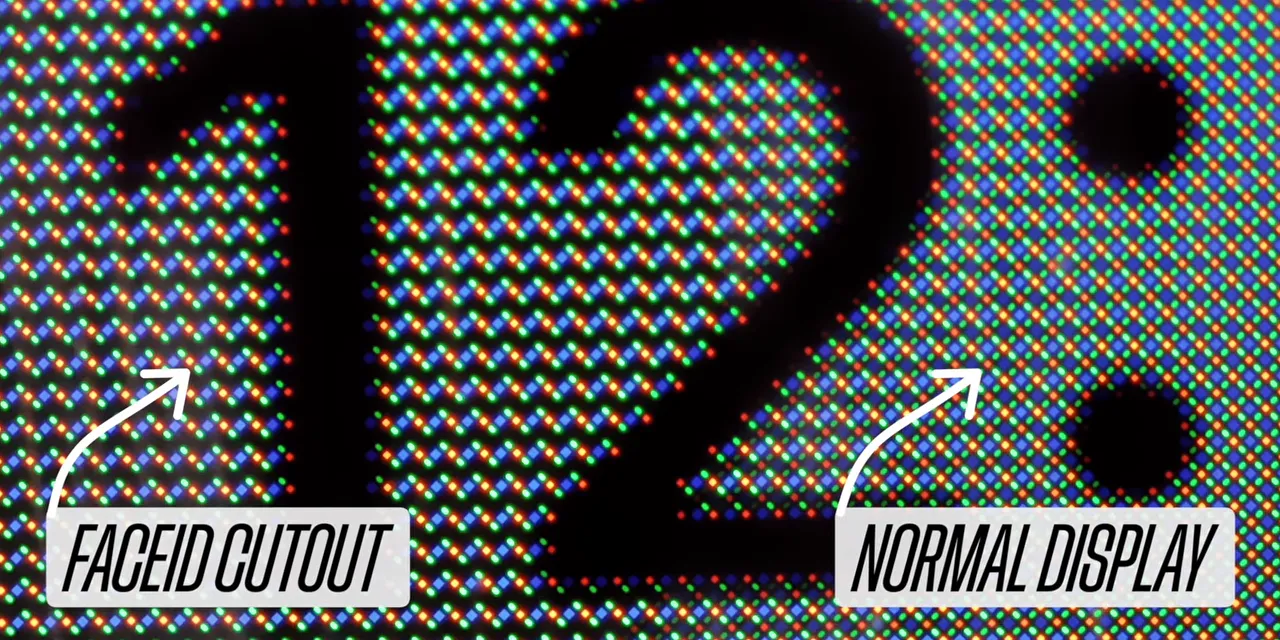
In daily use, I noticed a faint circle in direct sunlight maybe once. Needing magnification to clearly inspect the difference is a pretty good sign that the implementation works.
The smaller Island also makes room for three Live Activities at the top instead of two. A game-changer for somebody.
The Verdict: A Very Good S Update
The iPhone 18 Pro is not surprising. Of course it is not. The Pro iPhone has become Apple’s place for steady refinement rather than big risks.
Last year was the more substantial physical update: the new metal design, thicker chassis, bigger batteries, camera plateau, and display improvements including 3,000-nit maximum brightness, PWM dimming changes, and an anti-reflective coating.
If that was the big tick in a tick-tock update cycle, this is a pretty good tock.
The A20 Pro is doing most of the heavy lifting. Better performance, improved sustained cooling, and noticeably longer battery life make a stronger case than another demonstration of fast app switching ever could.
The variable-aperture camera is subtler. Its immediate value is extra creative control, while its bigger potential depends on how iPhone cameras evolve. The more capable stock camera app is already a meaningful improvement.
Is the iPhone 18 Pro perfect? No. Is it expensive? Hell yeah. Is it exactly what we expected? Pretty much.
There is value in that, too. Sometimes the interesting upgrade is not a new shape. It is the familiar phone getting meaningfully better at the things you use every day.
Sponsor: dbrand’s iPhone 18 Cases
Channel sponsor dbrand seems to have a pattern: a new iPhone generation, a new case category.
The Ghost Case returns, including a burgundy-matched option, and the rugged Tank Case is back as well. This year’s new addition is Minimal, a clean case available in four colors with a sandstone-like texture that reminds me of old-school OnePlus phones.
You can bundle a Minimal case with a Prism screen protector to save $10. Prism is easy to install and is my recommendation if you are looking for a screen protector. The lineup is also available to check out in person at Best Buy in the US.
|


