I made a bet with Tesla. Well, technically, I made a bet about a promise Tesla made onstage. If the company delivers its $30,000 Cybercab to regular customers before 2027, I’ll shave my head on camera.
That prediction has since become a meme. Every Cybercab sighting, every production update, every little bit of progress seems to generate another AI image of me bald or getting a haircut.
So, after Tesla’s September 3, 2026 Cybercab event in Austin, Texas, where do things stand?
My hair is safe. For now.
More importantly, the event highlighted a distinction that keeps getting lost: putting a robotaxi into a limited service area is not the same thing as selling a fully autonomous vehicle to ordinary people for $30,000.
What the Bet Actually Is
At the original unveiling, Tesla showed a small, golden, two-seat vehicle with butterfly doors. No steering wheel. No pedals. No charge port. The idea was that this Cybercab could join a robotaxi fleet, drive itself around, give people rides all day, and make its owner money.
Honestly, that sounds pretty great, if the technology is good enough. That is doing a lot of work in that sentence.
I like the idea of getting into a car with no driver and having it take me somewhere. I’ve taken Waymo rides, and those have been great. This isn’t a bet against autonomous transportation being useful, or against the Cybercab being an interesting idea.
I’m betting against the timeline.
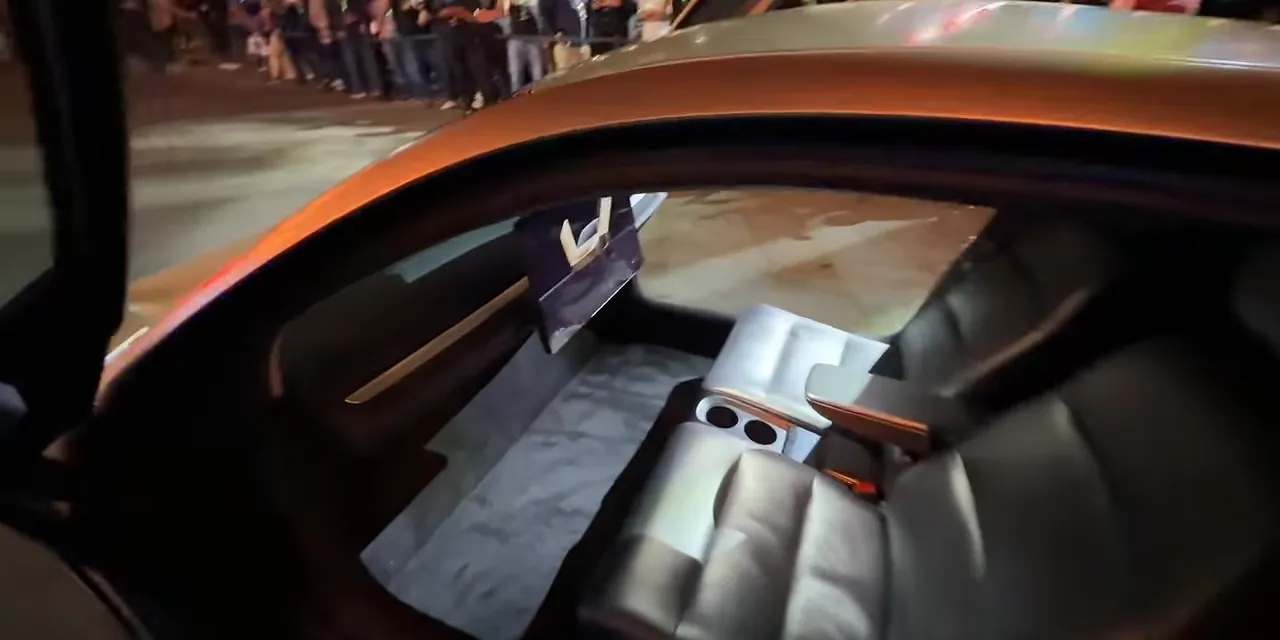
The terms are specific. Before the end of 2026, Tesla has to ship that golden, two-seat robotaxi to regular customers for $30,000 or less, without a driver, steering wheel, or pedals.
A prototype on a street doesn’t meet that promise. A bigger fleet doesn’t meet it. Neither does an announcement that the vehicle is joining a ride-hailing service.
The original Cybercab impressions give the background, but that is the essential distinction. Tesla has a history of announcing ambitious things and then missing the announced schedule. I was confident enough in that pattern, and in the difficulty of this particular promise, to put my hair on the line.
What Changed at the Austin Cybercab Event?
I’ll admit it: the announcement of a new robotaxi event made me slightly nervous. An event in September still leaves a few months before the deadline. Maybe there was something substantial coming.
The invitation situation was a little strange, though. I wasn’t invited, and the list appeared to be extremely limited: Tesla content creators rather than journalists. Guests could bring a plus-one, but that person couldn’t be another content creator. That kind of tightly controlled access is a red flag for me.
Then, in the lead-up to the event, Cybercabs started appearing all over Austin, at least within the geofenced area where they were allowed to operate. There seemed to be a lot more of them than before. That is real, visible progress.
A clever pickup detail, and one very wide door
There were also some small design changes. A colored LED at the front helps identify which Cybercab is yours, and the interior display matches that color.
That’s clever. When several identical golden cars show up, a matching color is a straightforward way to find the right one.
One thing that hasn’t changed, and still looks odd to me, is how far the butterfly doors extend outward. Some cars use more complicated hinge mechanisms to lift their doors while limiting the space they occupy beside the vehicle. These seem to go straight up and way out.
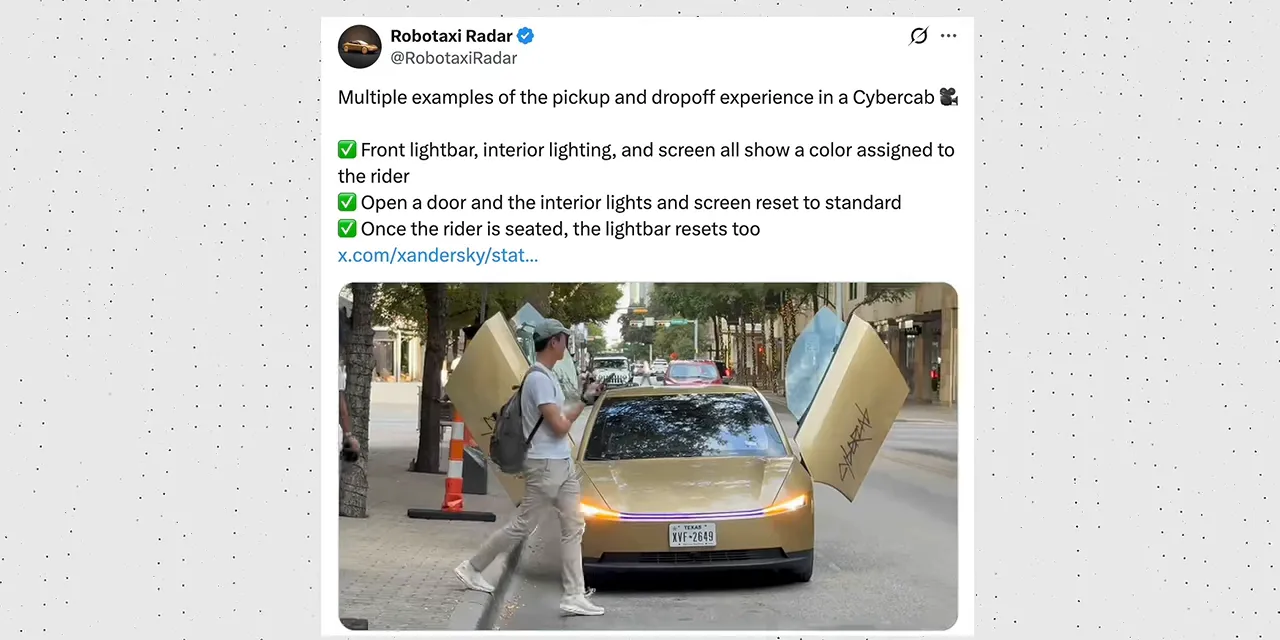
In the street footage, passing traffic sometimes looks as though it has to stop while a door is open. I don’t know how comfortably that would work in a place like New York City. It’s one of those practical details that becomes much more interesting when a futuristic design has to function at a normal curb.
A service launch is not a consumer delivery
I expected to follow a livestream, although the event ultimately wasn’t livestreamed. The concrete development was essentially this: the Cybercab was joining Tesla’s robotaxi service within the geofenced areas where that service operates.
That was pretty much it.
It’s a milestone. It just isn’t the milestone in the bet. There was no delivery of a $30,000 Cybercab to an ordinary buyer.
The memes will probably continue through the end of the year. But this announcement didn’t change my confidence very much, because getting from a limited robotaxi service to the promised consumer product requires several extremely difficult things to happen.
Three Problems Tesla Still Has to Solve
The challenge isn’t just building more golden cars. There are at least three separate hurdles here, and clearing one doesn’t automatically clear the others.
1. The autonomous driving has to be good enough
The biggest problem is the obvious one: the car has to drive itself.
Even defining what it means to have “solved” full self-driving gets complicated. What failure rate is acceptable? What conditions does it need to handle? Does it work only inside a specific service area, or can it operate across a much broader range of roads and situations?
A geofence matters. It establishes a geographic boundary around where the service operates. Demonstrating autonomous driving inside that boundary is not the same claim as demonstrating that a privately owned vehicle can take care of the driving wherever its owner needs to go.
A lot of very smart people have spent many years working on this. There has been a ton of progress. But progress and a solved problem are different things.
And even if we generously assume that the technology became perfectly capable on September 3, that would only get us to the next hurdle.
2. The vehicle has to be legal to sell and operate
Tesla also needs a legal and regulatory path to sell a car without a steering wheel or pedals to someone like you or me.
That could be just as difficult as the technology problem. Vehicle safety rules are extensive, and changing them is not famously a quick process. The U.S. vehicle safety standards and regulations provide some context for how much sits between a concept and a road-ready product.
Side-view mirrors are a useful illustration. Think about how often a futuristic concept car appears without them. The design looks clean, the announcement looks exciting, and then the production version arrives in the United States with mirrors attached.
Some markets in Europe and Asia allow alternatives, so this isn’t a universal rule. But the broader point stands: even replacing a familiar component like a mirror creates regulatory challenges.
Now imagine removing the controls people use to steer and stop the car.
My expectation is that selling a vehicle like that to ordinary U.S. customers will take years, not just a few months. That’s a prediction, but it is a big part of why I made the bet so confidently.
3. It still has to cost $30,000 or less
Let’s say both of those problems disappear tonight. The driving technology is ready, and the regulatory path is clear.
Tesla still has to deliver the vehicle at the promised price.
Of the three challenges, this might actually be the easiest. At roughly $35,000 for the cheapest Model 3 around the time of the event, getting a smaller, simpler Tesla down to $30,000 doesn’t seem completely unreasonable.
The Cybercab has fewer parts, less glass, a smaller body, and a much smaller battery. There are plausible reasons it could cost less.
So I’m not saying the price is impossible whenever the vehicle eventually goes on sale. I’m saying that the technology, the permission to sell it, and the price all have to come together before the deadline. That combination is the bet.
Why This Reminds Me of Google Glass
The more interesting part of this whole thing isn’t really the haircut. It’s a pattern that reminds me a lot of Google.
Tesla and Google share a tendency to announce things that are way ahead of their time. That can be exciting. But announcing a distant possibility as a real product can also make it harder to appreciate.
Google Glass is a pretty good example.
When it first appeared, a computer on your face felt unusual and futuristic. Most people weren’t ready for it. A smaller group, though, was extremely excited. They wore Glass everywhere and became unofficial ambassadors for the idea.
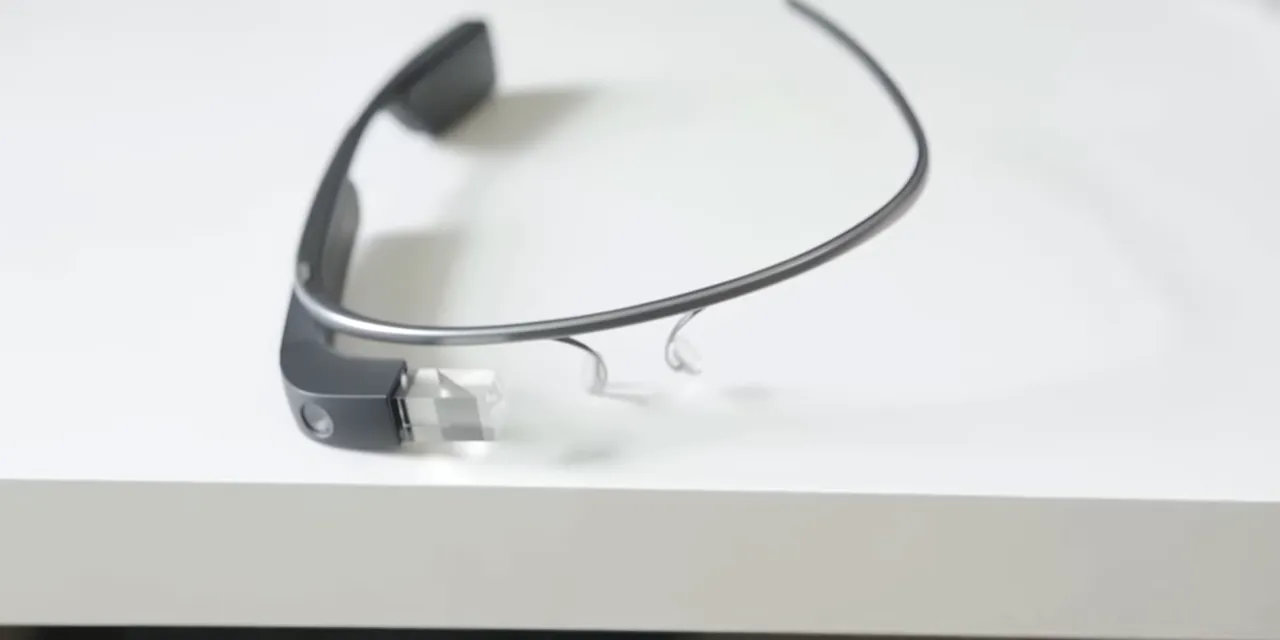
Some of that enthusiasm ran straight into social resistance. The camera made people uncomfortable. The face-mounted computer made people uncomfortable. Glass was banned from certain bars and restrooms, and its most committed users picked up the nickname “Glassholes.”
The product had a reputation problem, but that doesn’t mean the underlying idea had no value.
By 2026, smart glasses are again a major area of interest across the tech industry, with companies either making them or preparing to, including Google again. Looking back roughly a decade, it’s easier to see that Glass was pointing toward something real.
It was simply too early. The available technology wasn’t good enough to deliver the ideal version of the product.
That’s the parallel I see with the Cybercab: an idea can make sense in the long term while still being announced far too early as a near-term product.
The Robovan Makes the Same Point
Remember the Robovan? Alongside the Cybercab, Tesla also introduced a 20-seat autonomous transportation pod. No driver, no steering wheel, no pedals. It looks a little like a movie prop, except the proposal is for it to travel on public streets.
At the time of the September event, Tesla’s website still described it as arriving soon.
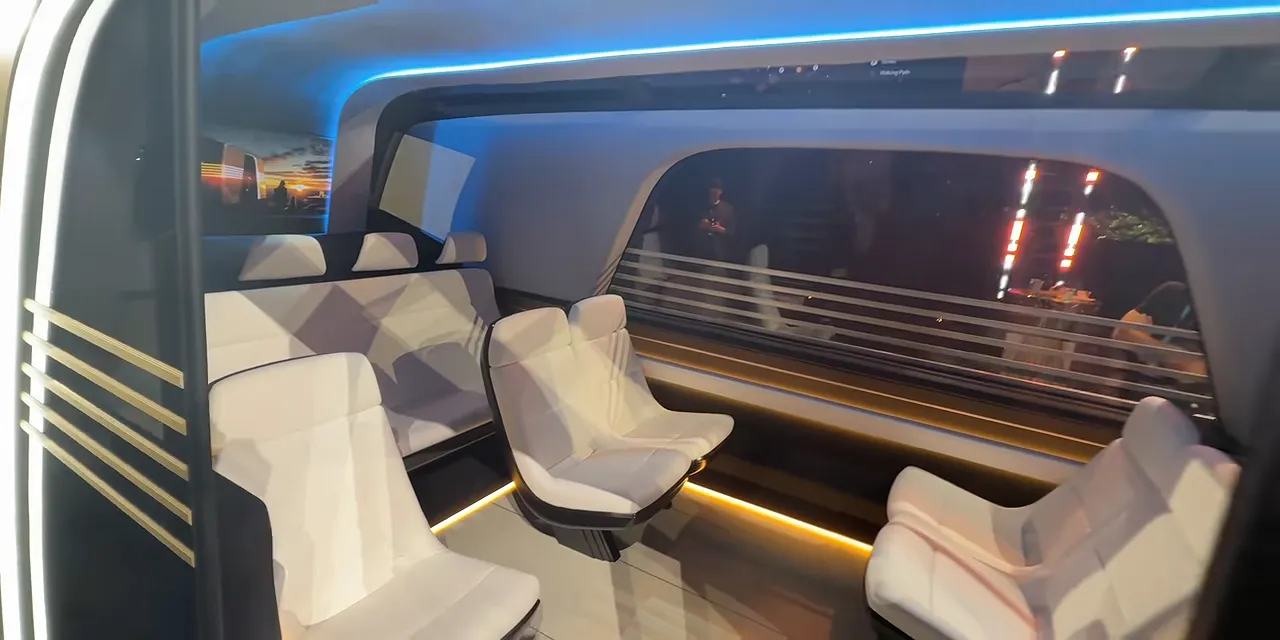
There’s a core group of people who are incredibly excited about these vehicles. And, to their credit, something like this probably will exist someday.
But the certainty surrounding the schedule is harder to take seriously. From outside the most devoted Tesla circles, the insistence that the company can do no wrong can get pretty cringey. Suggesting that people slow down a little is not the same as saying the technology will never happen.
I wouldn’t be surprised if, over the next ten years, more major companies become comfortable announcing vehicles without steering wheels or pedals as autonomous driving advances.
That possibility does not make a promise for the end of 2026 any more realistic.
For Now, the Bet Stands
I still like the idea of the Cybercab. I still think autonomous rides can be useful. And I can acknowledge that Tesla has made progress without treating every new sighting as proof that its original promise has been fulfilled.
The test remains straightforward: a driverless, two-seat Cybercab, without a steering wheel or pedals, delivered to regular customers for $30,000 or less before 2027.
If that happens, I’ll shave my head on camera and donate to cancer research. I’m planning to donate in January regardless of the result.
For anyone convinced I’m wrong, the other side of the wager is straightforward too: if Tesla misses that promise, you shave your head at the end of 2026.
As of the September event, there are about three months left to prove me wrong. Until then, I’m keeping my hair.


