The Google Pixel 10a might be the closest thing to a phone re-release I’ve ever held.
You know how some new phones only add one or two things? A faster chip, a slightly different design, maybe a new camera? This isn’t even really that. Put the Pixel 10a next to last year’s Pixel 9a, and the biggest difference might genuinely be the name.
Same design. Same chip. Same cameras. Same battery. Same $499 starting price.
There are differences, and I went through the spec sheets to find them. But the interesting question here isn’t just what Google changed. It’s whether this needed to be a new phone at all.
Quick Summary
- The $499 Pixel 10a retains the Pixel 9a’s chip, cameras, battery capacity, and core design.
- Upgrades include a brighter display, newer cover glass, faster charging, and regional Satellite SOS support.
- Pixel software and seven years of updates remain stronger selling points than the minimal hardware changes.
Pixel 10a vs. Pixel 9a: Almost Everything Carries Over
On the outside, these phones are incredibly difficult to tell apart. The Pixel 10a has the same dimensions and shape as the 9a: safe, generic, and very flat. There’s still aluminum around the sides and plastic on the back instead of glass.
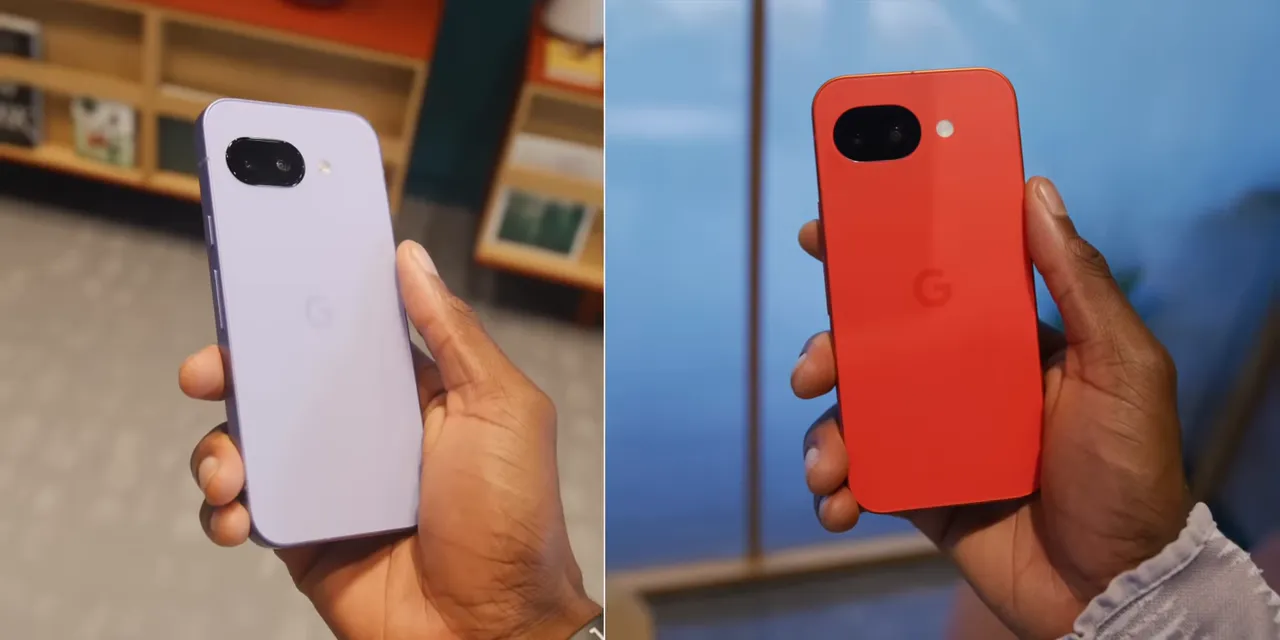
I do appreciate the approach Google started taking last year. Making the phone a little thicker creates room for a bigger battery and gets rid of almost all the camera protrusion. The 10a takes that last part a tiny step further, which we’ll get to, but the basic idea remains good.
The battery is still 5,100mAh, which is very welcome at this price. The buttons, antenna lines, ports, and speakers are all in the same places. IP68 certification carries over, too.
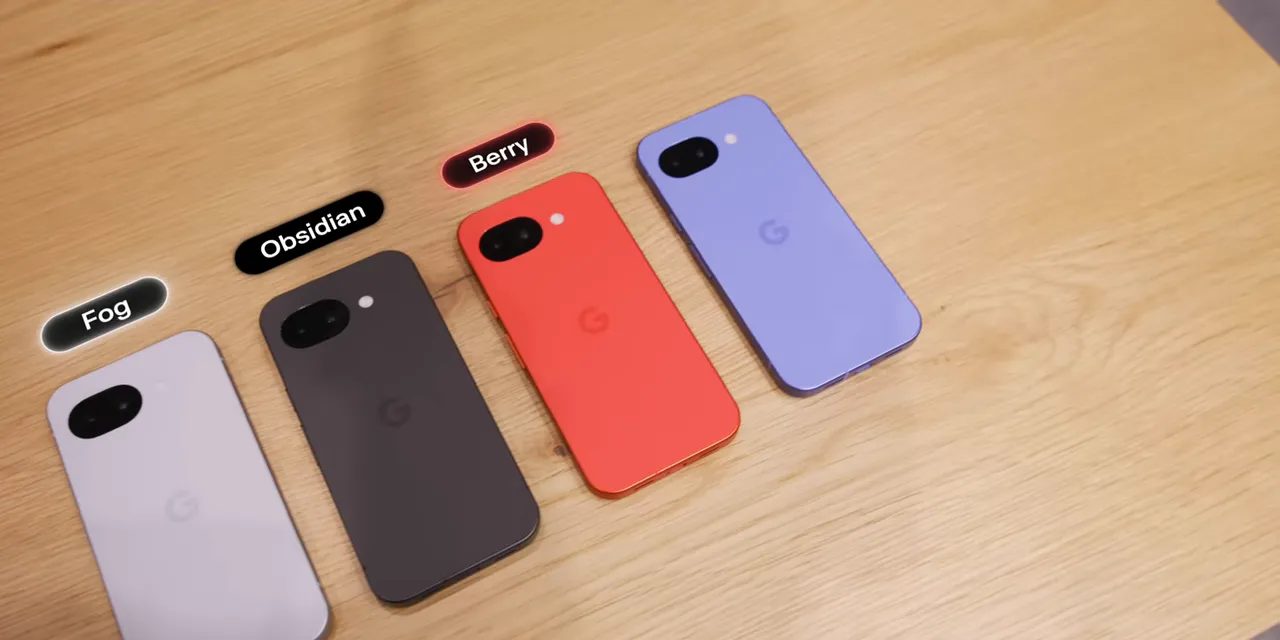
The easiest way to identify the new phone is by its slightly different colors. And I do mean slightly. This year’s options are:
- Fog
- Obsidian
- Berry
- Lavender
The same display fundamentals
Up front is another 6.3-inch display with rounded corners, moderately thick bezels, a centered hole-punch camera, and a fingerprint reader under the glass.
Resolution and pixel density are unchanged. It’s still a 60 to 120Hz display, and yes, it still comes set to 60Hz by default. The higher refresh rate is available, but you have to enable it.
There are a couple of display-related upgrades, but the overall screen experience starts from essentially the same hardware specification.
No chip or camera upgrade
As far as I can tell from the specifications, the rear cameras are the same pair as before: a 48-megapixel main camera and a 13-megapixel ultrawide.
Inside, it’s still the Tensor G4. Not a newer chip with a familiar design around it. The same chip.
That’s paired with the same 8GB of RAM and 128GB of starting storage. And all of it lands at the same $499 starting price as last year’s phone. Given how much carries over, that price is hardly surprising.
Everything That Actually Changed
To be fair, Google hasn’t literally put a new name on an identical phone. Beyond the colors, here is the complete list of differences I found comparing the Pixel 10a with the Pixel 9a:
- A brighter display: Peak brightness rises to 3,000 nits, an increase of about 10%.
- Newer cover glass: Gorilla Glass 7i replaces Gorilla Glass 3.
- Slightly thinner bezels: Google says the borders around the screen are a little smaller.
- Faster wired charging: Peak charging increases from 23W to 30W.
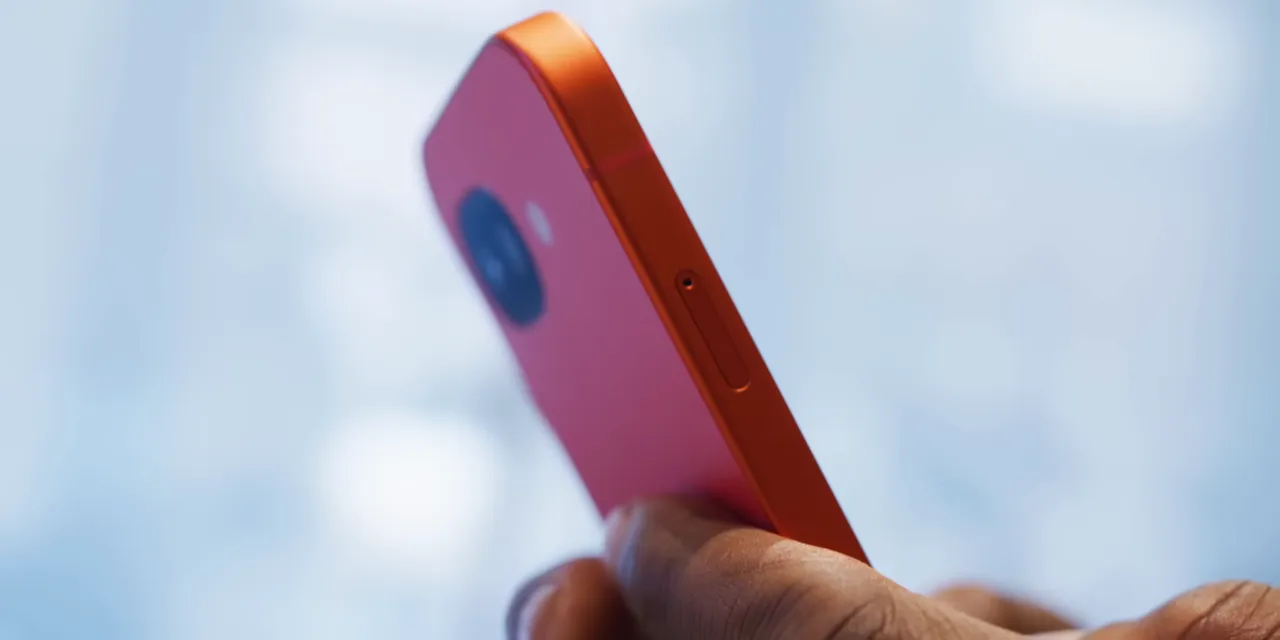
- A truly flush camera: The 9a technically had a tiny camera protrusion. The 10a eliminates that remaining bump.
- Faster wireless charging: The rate increases from 7.5W to 10W.
- More recycled content: The 10a uses more recycled material than its predecessor.
- Satellite SOS in some regions: It can contact emergency services through satellite connectivity when there’s no cellular signal.
And that’s the list.
Some of these are useful improvements. Faster charging is nice. Satellite SOS could be important in the right situation, subject to regional availability. If you want background on the new cover material, Corning has more information about Gorilla Glass.
But taken together, these changes still make the 10a feel much closer to a refreshed 9a than a new generation.
The Upgrades I Wish Google Had Made
I don’t want to ask for change just for the sake of change. If something works, keeping it is fine. A familiar design isn’t automatically a problem.
But there are a few obvious changes that would have given A-series buyers something more meaningful.
Pixel Snap magnets
This feels like the easiest one: put magnets in the back.
The lack of MagSafe in the iPhone 16e was a baffling omission. Google had an opportunity to make a clear statement by bringing Pixel Snap across the entire Pixel 10 range, from the 10 Pro Fold down to the 10a.
Instead, the least expensive model misses out. The 10a gets slightly faster wireless charging, but not the magnetic attachment system that would have made it feel more connected to the rest of the lineup.
256GB of starting storage
It’s 2026. Moving the base storage from 128GB to 256GB would have been a welcome statement about what a $499 phone should offer.
That would be an easy improvement to understand. No need to study spec sheets or look closely at bezel thickness. Just more storage for the same starting price.
At least a newer chip
For years, part of the Pixel A-series formula was that it arrived later than the flagship phones but still brought along their flagship chip.
This year, Google has the Tensor G5, yet the 10a stays on the aging Tensor G4. Even that familiar generational step is missing.
Any one of these changes would have helped. Without them, the new name is doing a lot of work.
The Software Is Still the Pixel’s Best Argument
My read is that Google is leaning harder into the Pixel as a software-defined product.
And there’s a reasonable argument for that. Ask an A-series buyer whether they would notice the difference between Tensor G4 and Tensor G5 more than the features that make a Pixel feel like a Pixel, and the software might win.
The Pixel 10a includes Auto Best Take, which analyzes faces across multiple frames of a group shot and combines them into a single group photo. There’s also Camera Coach, which guides you through taking better pictures.
Neither feature is particularly useful to me personally. But those sit on top of a much stronger foundation:
- Call Screening
- Hold for Me
- Clear Calling
- Now Playing
- Seven years of software and security updates
Those everyday Pixel features are the things I genuinely miss when I switch to other phones. They’re less flashy than a new design, but they’re a real part of the appeal.
Then there’s Quick Share interoperability with AirDrop. At this point, that native compatibility is available on Pixel phones, letting Apple devices and Google Pixels share files with each other. If you use devices from both ecosystems, that’s pretty sweet.
So the software story is good. The question is whether that story explains the hardware staying still, or makes a new hardware release harder to justify.
Why Release a New Phone at All?
If the hardware barely needs to change because the software is what matters, why release a new piece of hardware every year?
Nothing has already pushed back on the idea that a company needs to churn out a new flagship annually just to keep the cycle going. Google could choose a different schedule, too.
My impression is that the Pixel 10a exists largely because this is the routine now.
Even getting hands-on with it at Google’s setup in the city, the whole thing felt a bit like an afterthought. Not proof of what anyone inside Google thinks, just the feeling I came away with: here’s this year’s phone, because this is when we do this year’s phone.
That’s the default annual product cycle companies fall into. There needs to be a new model on the shelf with the current number attached.
There is a practical counterpoint, though. You don’t have to replace your phone every year, but every year is somebody’s third year with a phone.
Someone coming from a phone they’ve had for two, three, or four years isn’t necessarily looking for a dramatic leap over the Pixel 9a. They’re looking for a good replacement at a reasonable price. A familiar design, a large battery, useful software, and long update support can still make sense for that person.
That’s where I land on the Pixel 10a. It feels unusually close to the same phone with a new name, and Google passed up several obvious opportunities to make it more compelling.
But at $499, it’s still a decent deal. It’s just a much easier phone to explain as a replacement for an older device than as a meaningful new generation.
Something That Actually Is New for 2026
Our MKBHD merch has had a proper refresh for 2026, with new designs, different materials, and fits we’re really proud of. Unlike this phone, it’s definitely different from last year.
|


