A lot of minimal phones promise to help you use your phone less. Then they give you a touchscreen, cameras, an internet connection, and just enough apps to get yourself into trouble.
The VTech Bluey Ring Phone takes a different approach. No internet. No cameras. No Bluetooth. Not even phone calls.
Now that is commitment.
I found this thing while scrolling through top-rated phones on Amazon. The ratings were excellent, and somehow it hadn’t made it onto my review desk yet. Maybe I’m not on the review program. So I ordered one myself for $10.99. Ten dollars and ninety-nine cents. Expectations adjusted accordingly.
Unboxing: Some Assembly, Mostly Cardboard Destruction
The first unusual thing is that the phone ships exposed in an open-faced cardboard box. You can see the entire front before opening anything. Not exactly the mysterious, carefully choreographed flagship unboxing experience.
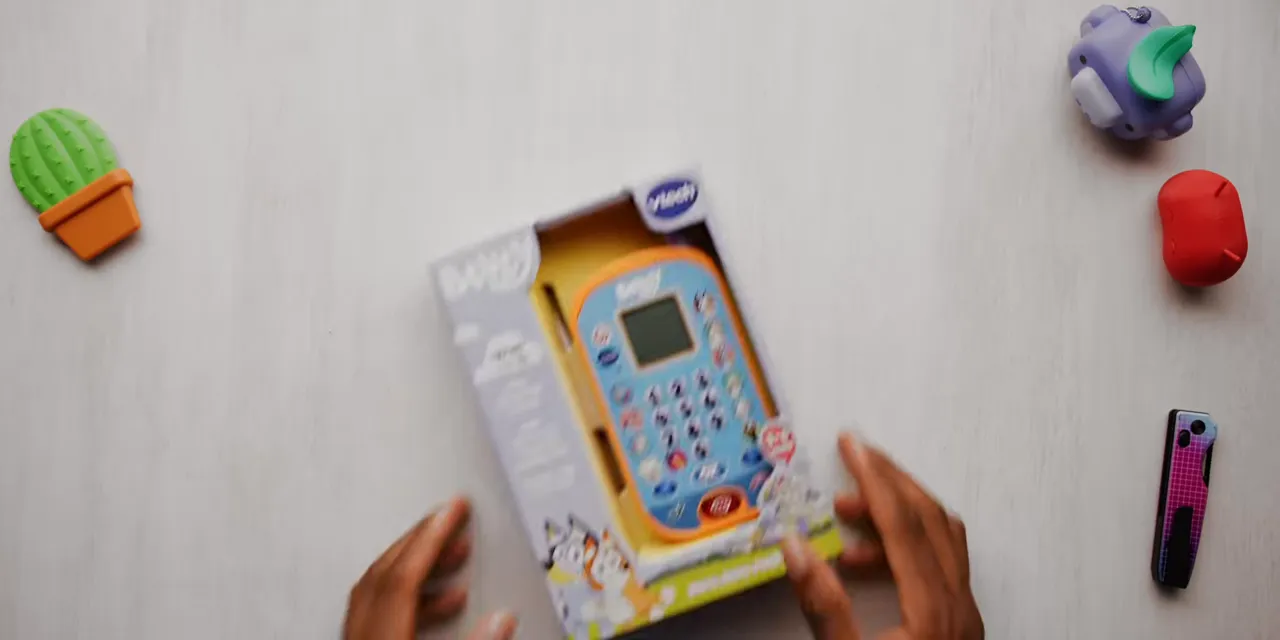
Actually getting it out is less straightforward. I had to tear some cardboard to reach the fasteners behind the phone, then untwist those to release it. Not particularly intuitive. Not particularly premium. Also, again, $10.99.
There’s no charger in the box. No cable, either. But there are removable batteries, which is a pretty rare feature for a phone in 2026. Opening the battery compartment requires a tool, and that tool is not included.
Fortunately, mine arrived with enough power to turn on immediately. No charging setup required. Just press the button and get straight into the experience.
Hardware: A Very Different Definition of a Phone
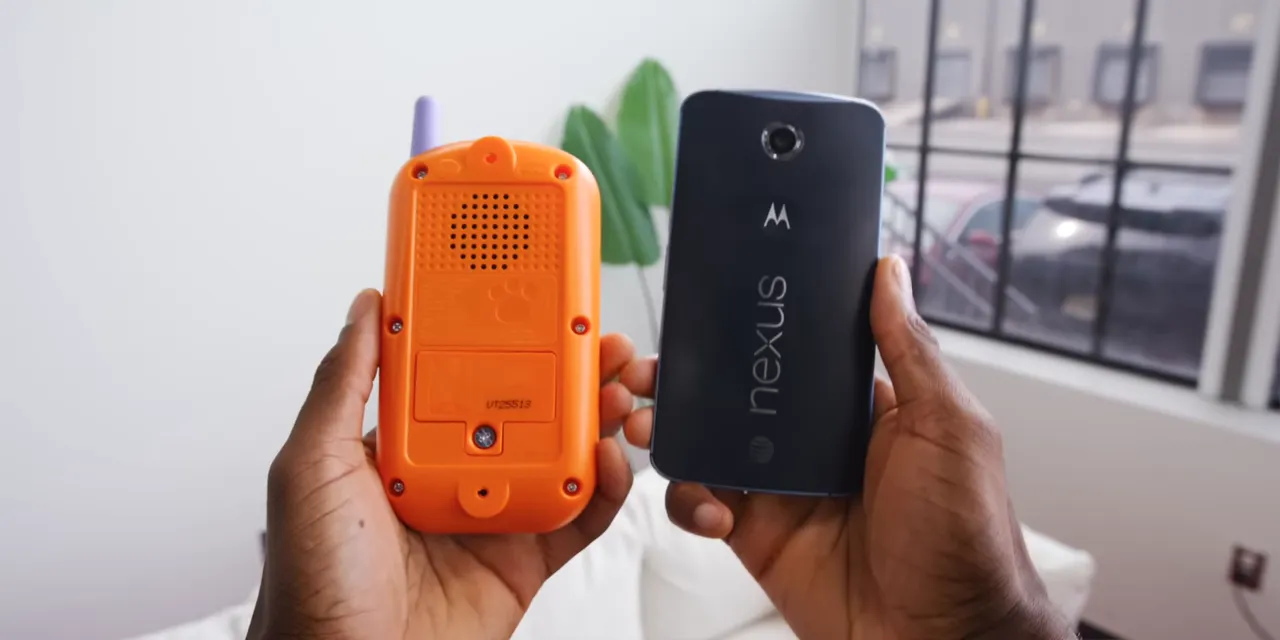
The Bluey phone is fairly big, but not outrageously big. It’s roughly in Nexus 6 territory, actually a little smaller. We’ve been here before.
Most of that front surface is dedicated to physical buttons. Up top, you get a 1.7-inch black-and-white display. Beside it are character buttons, and below it is an actual number pad. No giant touchscreen demanding your attention.
There’s even a little antenna. You might assume that means some kind of wireless connectivity. You would be incorrect.
- No cellular radios.
- No internet connection.
- No cameras anywhere.
- No Bluetooth, despite the blue phone and the Bluey branding practically setting up the joke.
- Physical buttons for everything.
And what happens when you type a number? It reads that number aloud. Press six, hear six. Press seven, hear seven. It does not place a call.
So, yes, there are some compromises in the phone department.
Around back, there’s a single speaker with three volume levels. Normally, a rear-facing mono speaker wouldn’t be much to celebrate. Here, the grille is large enough that it’s difficult to accidentally cover the whole thing with your fingers. Thoughtful design. Credit where it’s due.
Games, Instant Startup, and a Very Selective Chat Feature
There are a few built-in games, which might seem like a strange choice for something I’m calling a minimal phone. But there’s a pretty big difference between a little self-contained activity and an endless TikTok or Instagram feed.
My favorite is the bubble game. You blow into the microphone, and bubbles appear on the display. That’s the interaction. No account setup. No recommendation algorithm. Just bubbles.
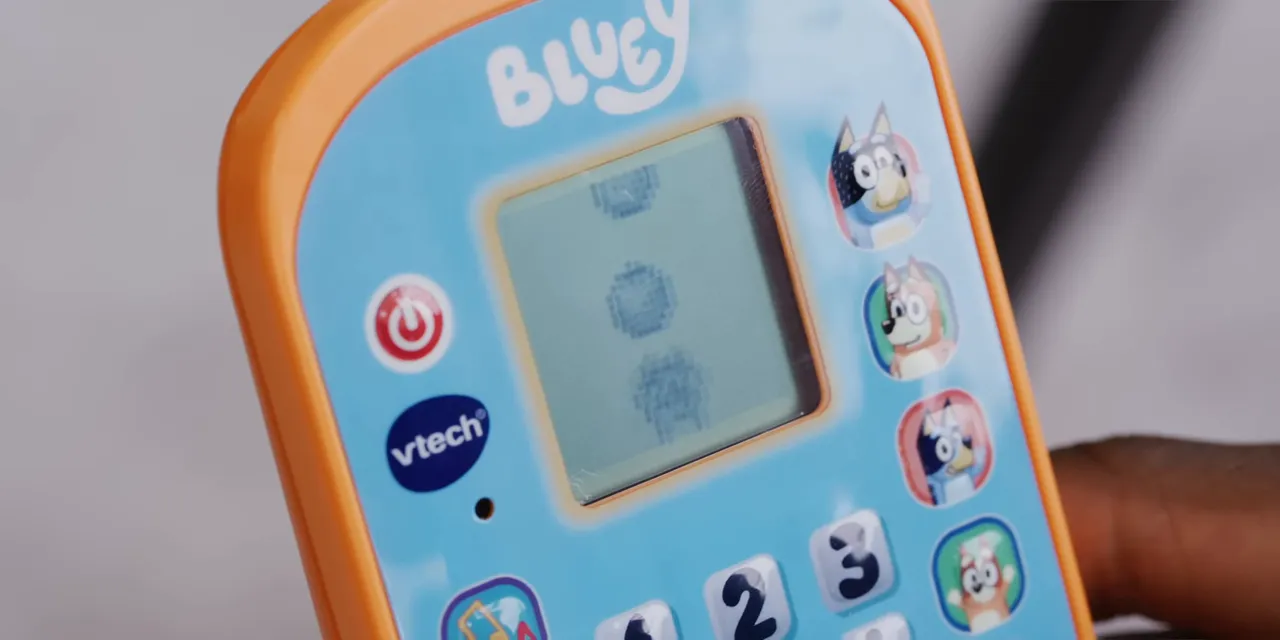
It also starts up impressively quickly. Press power, get a cheerful invitation to play, and you’re ready to go. By the time you’d normally be settling in for a boot animation, this thing is already waiting for your next move. Performance.
There’s a chat feature, too. And I know what that sounds like. A minimal phone with chat? Have we somehow ended up with an AI assistant in here?
Nope. Your available conversation partners are Bluey and Bingo. The dogs. That’s the contact list.
Honestly, an impressively focused communications strategy.
The Minimal-Phone Argument, Taken All the Way
I do know people who are switching to minimal phones because they want to spend less time on their devices. That makes sense. But a lot of those products still leave the door open to the exact behavior they’re supposed to discourage.
An E Ink display is cool. It doesn’t necessarily stop you from finding your way onto Instagram on a Boox Palma, though. A quieter-looking screen is still a screen connected to the internet.
The Bluey phone removes that ambiguity entirely. There is no feed to open. There is no camera to launch. There is no browser-based workaround. You cannot accidentally spend an hour scrolling something that the hardware cannot access.
And the display is operating on an entirely different scale from a smartphone. We’re talking fewer than a thousand total pixels and animation that looks like three or four frames per second. These are not laboratory measurements. They’re also not specifications that suggest you should start preparing a benchmark comparison.
I’m not even sure its processor could run one.
But that stripped-down approach is the whole point of the joke, and there’s a real idea underneath it: removing capabilities is a much firmer boundary than asking yourself not to use them.
With almost nothing to power, the pitch shifts toward battery life measured in weeks rather than days. With almost nothing to get lost in, screen time becomes minutes rather than hours. That’s the minimal-phone logic taken to its absurd conclusion, not a long-term battery-test result. Doomscrolling, at least, really is reduced to zero.
Verdict: Hard to Beat on Commitment
Comparing this thing against more expensive flagships misses the point. It isn’t going to win on thin bezels or benchmark scores. I wouldn’t even count on it taking down the heavy hitters in the $13, $15, or $20 category.
But as an exercise in minimalism? It commits harder than almost anything else.
Of course, the VTech Bluey Ring Phone is a toy, not a replacement for a working mobile phone. The inability to make calls is a fairly significant clue. Treating it like the next big digital-wellness device is the gag.
Still, for $10.99, you get physical buttons, removable batteries, quick startup, bubbles, and absolutely no opportunity to check Instagram. A surprisingly complete answer to a very specific problem.
Good work, Bluey. Also, check the date.


