Apple finally gave the iPad mini the redesign it needed. It’s thinner, lighter, faster, and built around a beautiful OLED display. On the surface, that sounds like exactly the update we’ve been asking for.
But the more I use it, the more I realize this might be the most Apple product we’ve gotten in a long time. There’s genuinely impressive engineering here, right alongside some very deliberate limitations and a price ladder that is working overtime.
I really like this little tablet. I also wouldn’t buy it for myself. Both of those things can be true.
Quick Summary
- The OLED iPad mini combines a thinner, lighter design with substantial A20 Pro performance headroom.
- Storage tiers determine chip capabilities, while nano-texture requires upgrading beyond the base configuration.
- The 60 Hz refresh rate remains the biggest compromise at this premium price.
- IP67 resistance and the acoustic display introduce genuinely useful hardware changes.
The Small iPad Finally Gets a Big Update
The iPad mini had started to feel like the afterthought of the lineup. It got a chip refresh and some improvement to jelly scrolling in 2024, but the basic design and 60 Hz LCD had essentially been hanging around since 2021.
This eighth-generation iPad mini is a much more substantial change. The new body is approaching movie-prop levels of thin, and the centerpiece is an 8.5-inch OLED display.
We’ve wanted OLED on the smallest iPad for years. It makes a lot of sense for a device built around reading, browsing, and carrying around everywhere. The screen looks great, gets plenty bright, and makes this feel like a properly modern little tablet.
My review unit also has the nano-texture finish. Interestingly, that texture stops before the bezels. Your fingers glide across the soft-feeling display surface, while the glossy border gives you a little more grip. It’s a small detail, but it works.
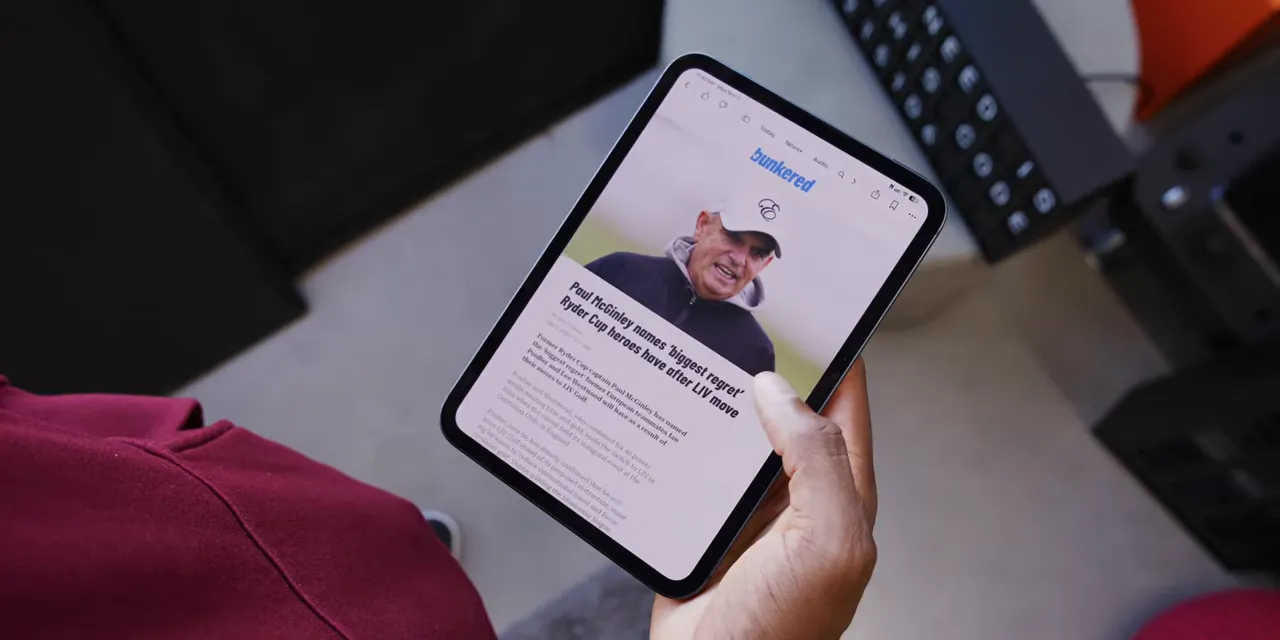
Reading articles one-handed is pretty much the perfect use case. The combination of size, weight, and screen quality makes me want to take it everywhere.
It weighs almost the same as an iPhone 18 Pro Max, just spread across a much larger surface. Imagine somebody stepped on the phone and flattened it into a tablet. That’s roughly the vibe.
A20 Pro Performance, With Plenty of Headroom
Inside is the A20 Pro, the same chip family as the iPhone 18 Pro models. There’s an important qualification to that, which I’ll get to with the pricing, but the broad takeaway is simple: this is more performance than most people will ever need in an iPad mini.
Battery life is basically unchanged. The real benefit is the amount of performance headroom. This feels like the sort of hardware that could remain useful for five, six, seven, maybe eight years. That’s an expectation, not a guarantee, but there’s a lot of power available for such a small device.
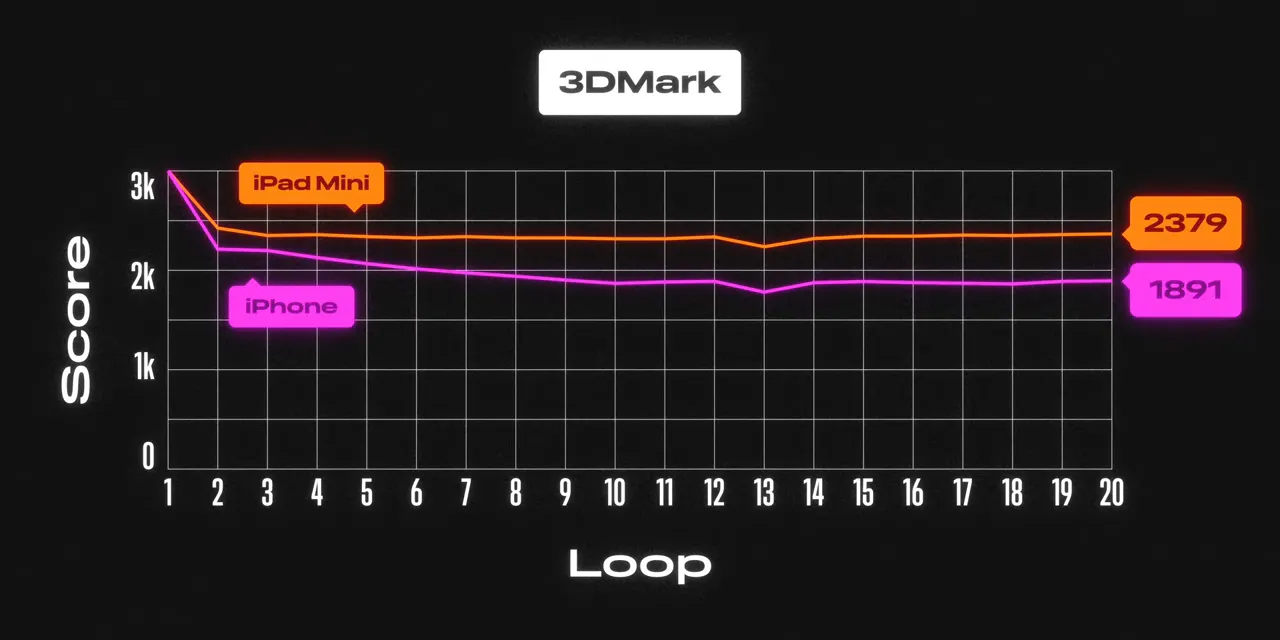
I was curious whether making it this thin would hurt sustained performance. Could it actually cool worse than an iPhone with a similar chip?
Apparently not. It’s still an iPad, with more area to spread heat. In a longer benchmark running through 20 loops, it stayed more consistent and throttled less than the iPhone 18 Pro.
So far, this is the easy part of the review. Take a fun little device that had fallen behind, modernize it, and make it more appealing to carry. Great.
Then you open the configurator.
The Price Ladder Starts at $699
You might remember the iPad mini as the roughly $500 tablet you could pick up for reading, casual use, or a kid. The new one starts at $699 with 128GB of storage.
That’s already a pretty big change in positioning. And in 2026, at this price, I’d really like to see 256GB as the starting point.
Apple is very good at making the next upgrade look just reasonable enough. Here, storage is only the beginning.
Storage Also Determines Which A20 Pro You Get
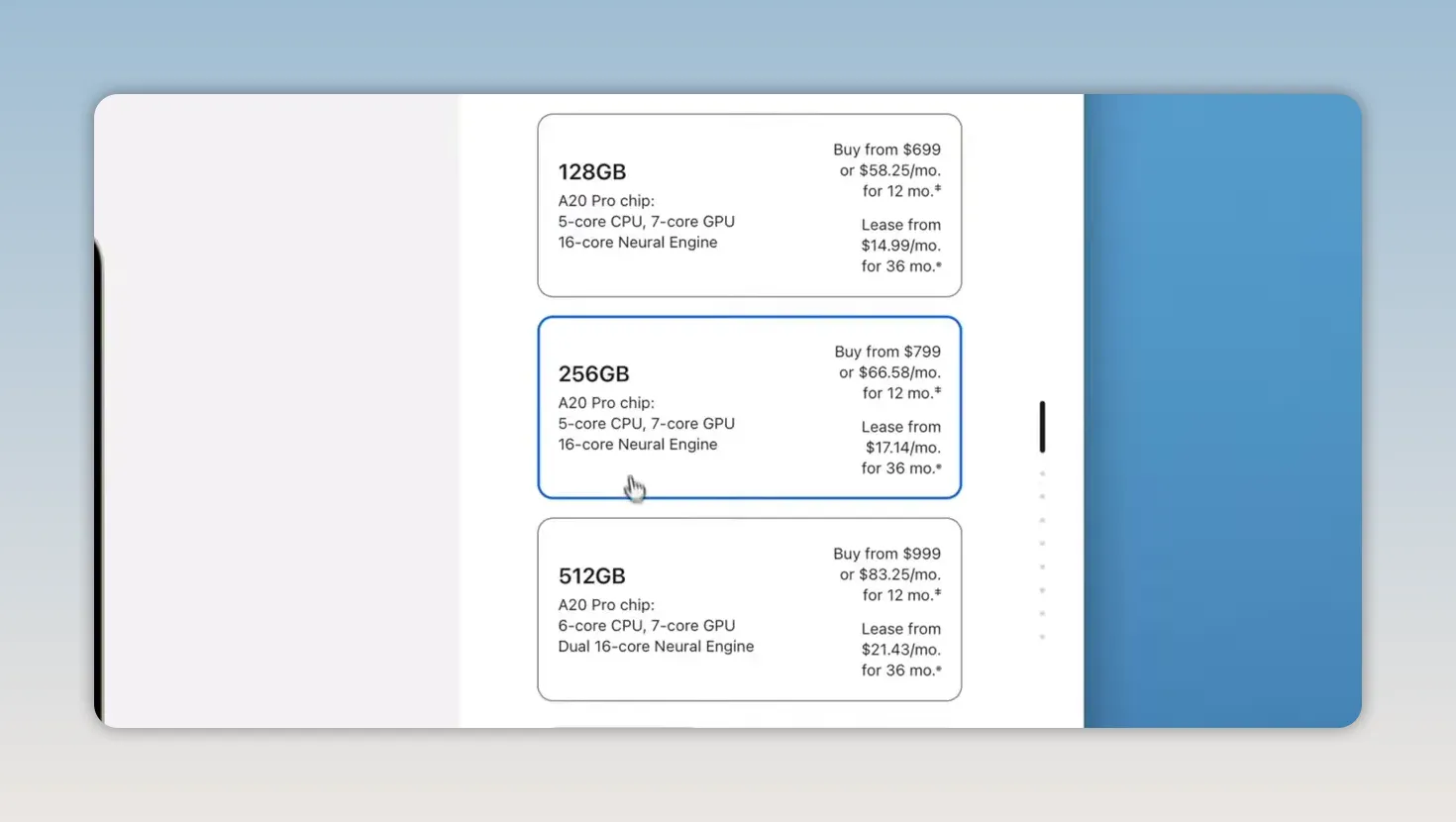
The A20 Pro is binned differently depending on the storage tier. In other words, every configuration has the same chip name, but they don’t all have the same enabled hardware.
- 128GB, $699: A 5-core CPU, 7-core GPU, and a single 16-core Neural Engine.
- 256GB, $799: More storage, but the same reduced chip configuration.
- 512GB, $999: A 6-core CPU, 7-core GPU, and dual 16-core Neural Engine configuration.
We’ve seen this kind of segmentation in Apple’s lineup before. It’s mildly annoying, but it’s also not the part that bothers me most.
How much are you actually going to notice one extra CPU core or the additional Neural Engine hardware while reading an article or browsing the web? Probably not much. The lower-tier chip is still more than powerful enough for those jobs.
If you’re comfortable with 128GB, taking the binned chip and saving the money is a completely reasonable decision.
Nano-Texture Requires a Storage Upgrade First
But what if you want the nano-texture display?
That seems like a particularly good fit for an iPad mini. The finish has gotten better over time, does a great job reducing reflections, and is also good at rejecting fingerprints. For a tablet you want to read on in different environments, that’s a useful upgrade.
Except you can’t add it to the base model.
You first have to pay $100 to move from 128GB to 256GB. Only then do you unlock the privilege of paying another $100 for nano-texture.
That makes the least expensive nano-texture iPad mini $899, or roughly $900.
I’m not sure what storage capacity has to do with the finish on the display. There’s no obvious connection between those two things from the buyer’s perspective. But there is a very obvious connection to the price ladder.
Very Apple.
A Beautiful OLED Display That Still Runs at 60 Hz
Here’s the part I can’t get past: this new OLED display, with all its improvements and its optional nano-texture finish, still runs at 60 Hz.
On a tablet starting around $700, and easily reaching $900 with a useful display option, that’s frustrating.
Yes, some people don’t care about 120 Hz. Some won’t notice it. If that’s you, great. But this isn’t only about whether I personally can see and feel the difference. At this price, I think you deserve it.
A display’s refresh rate is separate from whether it uses OLED technology. Getting OLED doesn’t automatically mean you’re getting the smoother motion of a higher-refresh-rate screen. This iPad mini is a very clear example of that distinction.
I wouldn’t be surprised if the panel technology were capable of more than Apple is enabling here, but that’s speculation. I don’t know that it is.
The “Pro Features” Argument Doesn’t Really Work
The usual explanation would be that 120 Hz is ProMotion, and ProMotion belongs on Pro devices.
Except Apple put 120 Hz on the base iPhone 17 last year, and that was a welcome improvement. Also, this iPad mini already has a chip literally called A20 Pro. So the boundary around what counts as a Pro feature is clearly flexible.
My read is that this is more about protecting the rest of the iPad lineup.
The more expensive iPad Air still has a 60 Hz display. Give the mini 120 Hz first, and suddenly people might move down the price ladder to get the smoother screen. That doesn’t fit the way Apple wants the lineup to work.
So 120 Hz remains exclusive to the iPad Pro. The mini gets a much better display, but not the complete display upgrade it deserves.
IP67 and an Unusually Clever Speaker Design
Then there’s the other side of Apple: solving a hardware problem with something surprisingly ambitious.
The new iPad mini is IP67 rated, making it the first and only iPad in this lineup with a formal water and dust resistance rating. That’s a welcome addition for something this portable, especially if it’s going outside regularly or ending up in a kid’s hands.
Apple also removed the conventional speaker holes and developed a new system called the acoustic display.
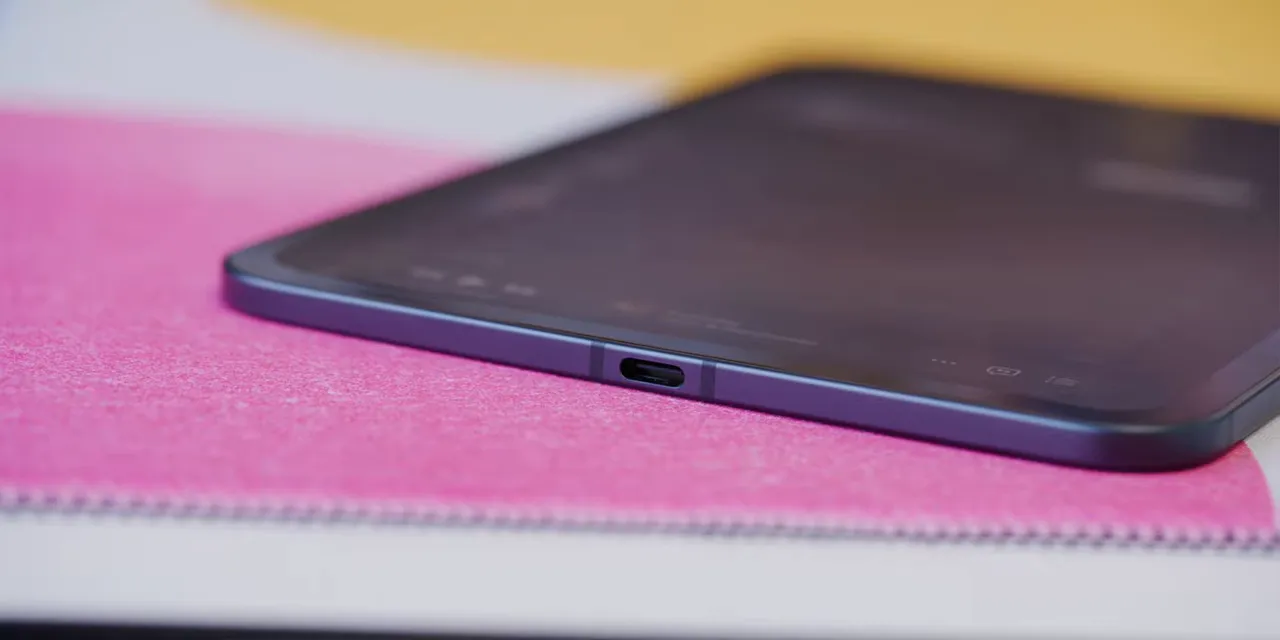
The speakers are still positioned on either side, but they’re hidden behind the display. Look closely and you can see extremely narrow slots near the edge of the metal. Some sound comes through those openings, but even when I cover them with my thumbs, audio still comes toward me.
That’s the practical upside: the sound is directed at the person holding the tablet, rather than out through side-facing holes that are easy to block.
The downside shows up at high volume. You can feel the tablet vibrating a little in your hands, almost as if the whole thing is a speaker cabinet. It doesn’t feel cheap, exactly. You’re just very aware that the object you’re holding is producing sound.
What makes this especially interesting is that water resistance doesn’t inherently require removing speaker grilles. Plenty of IP-rated devices, including iPhones, still have them.
So I do wonder whether this is a trial run for something else. With rumors around a 20th-anniversary iPhone redesign, an almost invisible speaker system feels like the sort of technology Apple might want to bring over. That’s just a thought, not a confirmed roadmap.
The Smaller Changes: Cameras, Touch ID, and Colors
A few other updates round out the redesign:
- Landscape front camera: The Center Stage ultrawide camera moves to the landscape edge, slightly off-center, matching the direction of the other iPads.
- Rear camera: It appears to retain the single 12-megapixel camera, with a revised camera bump to accommodate the thinner body.
- Touch ID: Fingerprint authentication remains in the top button, alongside the volume controls.
- Two finishes: Midnight and Starlight are your choices.
Or, as I think of them, slightly not black and slightly not white.
I like having color options. But Apple, you could also just make a black one. Please.
I Like It. The Refresh Rate Is Still a Dealbreaker.
I’ve liked small tablets since the Nexus 7 days. There’s something genuinely useful about a lightweight device that’s excellent for one-handed reading without becoming another big thing you have to carry.
It’s also pretty funny that this tiny iPad can do the same windowed-app multitasking as an iPad Pro that’s roughly twice its size. Whether that’s how you want to use an 8.5-inch screen is another question, but the capability is there.
With cellular, the mini is especially appealing as a companion to a more minimal phone setup. Some people want one phone that handles everything. Others might really enjoy a simpler phone experience paired with a small tablet they bring everywhere.
This iPad mini makes that second setup look pretty great.
But for me, 60 Hz is a dealbreaker. Every other display I use has been higher refresh rate for years. This is smooth for a 60 Hz screen, but I notice the difference constantly, and it annoys me.
At this price, ProMotion would make the whole package much easier to justify.
My wish is pretty straightforward: an iPad mini Pro. Keep this size and portability, add a 120 Hz OLED display and Face ID, and stop worrying so much about preserving every rung of the price ladder.
I’d be very interested in that. As it stands, this is an excellent small tablet with a limitation I can’t ignore. Impressive engineering, careful segmentation, and an upgrade path that keeps asking for another hundred dollars. The most Apple product they’ve ever Appled.
Sponsor: dbrand’s iPad Accessories
dbrand, the sponsor, has expanded beyond iPad skins with its Folio Grip case and iPad Prism screen protector.
The Folio Grip has a fully detachable magnetic cover. You can remove the cover while using the iPad, then snap it back on before putting it in a bag. It also folds into a magnetic kickstand and includes a place to hold the Apple Pencil while it charges.
The Prism uses an installation tray: place it over the iPad, pull the tab, swipe along the dotted line, and squeegee out any remaining bubbles. Each box includes two protectors.
Both accessories come in sizes for the iPad mini, regular iPad, and iPad Pro models. Bundling the Grip and Prism saves $10, and they’re available through dbrand and Best Buy nationwide.


